![MaritimeJournal[Seawork]](https://www.maritimejournal.com/wp-content/uploads/2026/09/MaritimeJournalSeawork.svg)



ZF launches non-clutchable marine transmission series
Global technology firm ZF has developed an ENC (electric non-clutchable) transmission series designed explicitly for pure electric vessels such as tugs and ferries.
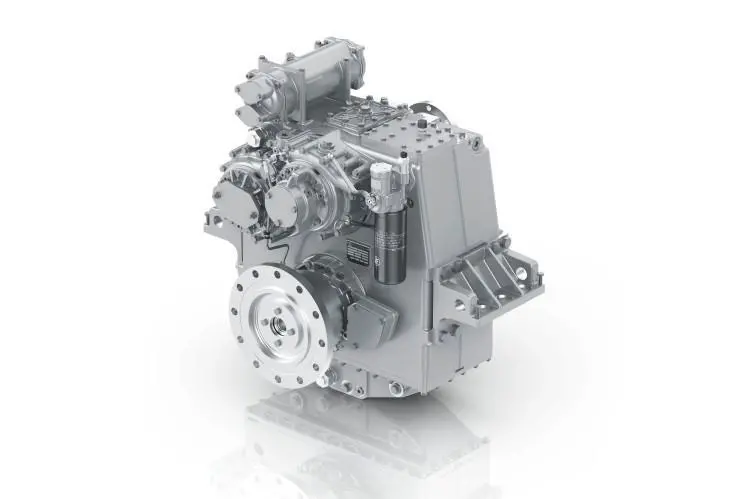
Based in Germany but with a UK aftermarket branch that will be exhibiting at Seawork next week, ZF says its lightweight ENC transmission is available for all drive solutions in its portfolio and offers optimised efficiency on electric motors, improving its range, comfort on board and ongoing operating costs.
ZF cites forecasts that say the global market for electric ships is expected to grow to a value of $17 billion by 2032 from just $4 billion in 2024.
“This proves that electromobility in shipping is not a short-term trend, but – in more than one sense – a sustainable development on global waters,” it says.
ZF says battery-electric drives on coastal or shorter routes are a ‘sensible alternative’ to conventional or hybrid units as long as charging infrastructure can be implemented easily.
“The ENC series was designed in such a way that the drive power of the electric motor is optimally transferred to the propeller even at high speeds and high ratios – a common scenario in electric shipping,” said Wolfram Frei, sales manager Commercial and Fast Ships at ZF. “This improved efficiency reduces energy consumption, delivering a greater range and better economy.
“Unlike conventional and hybrid transmissions, this transmission series dispenses with a hydraulically actuated multidisk clutch (ENC = electric non-clutchable). As a result, the oil supply quantity can be significantly reduced, since a ‘peak consumer’ is also eliminated by omitting the clutch. In addition, the system oil pressure can also be lowered. Both factors ultimately result in a smaller oil pump and also increase mechanical efficiency. Depending on the customer’s requirements, the oil volume is supplied either via an electrically operated pump or a bidirectional mechanical pump.”
The ENC series covers a power range from 650kW to 3,900kW and is suitable for fixed and variable pitch propellers and waterjet drives.
“The ENC is therefore ideally suited to electrify the operation of commercial vessels such as ferries, tugs, supply boats or river cruise ships on short routes,” said Frei.
Related Articles
 ACCESSORIES & EQUIPMENT
 OTHER NEWS
 EQUIPMENT