

French wind industry set for expansion
France is the fourth largest wind energy market in Europe, but, perhaps surprisingly, up until now none of its installed capacity has been located offshore.
This is largely because of the country’s cumbersome legal framework governing offshore economic activity, which has severely hampered offshore wind development.
However, this may all be about to change. Late last year, France’s Environment and Energy Minister Jean-Louis Borloo issued a tender for 3,000 MW of offshore wind farms worth €10bn, for contracts to build 600 offshore wind turbines around the French coast. The objective is to achieve a total offshore wind capacity of 6,000 MW by 2020.
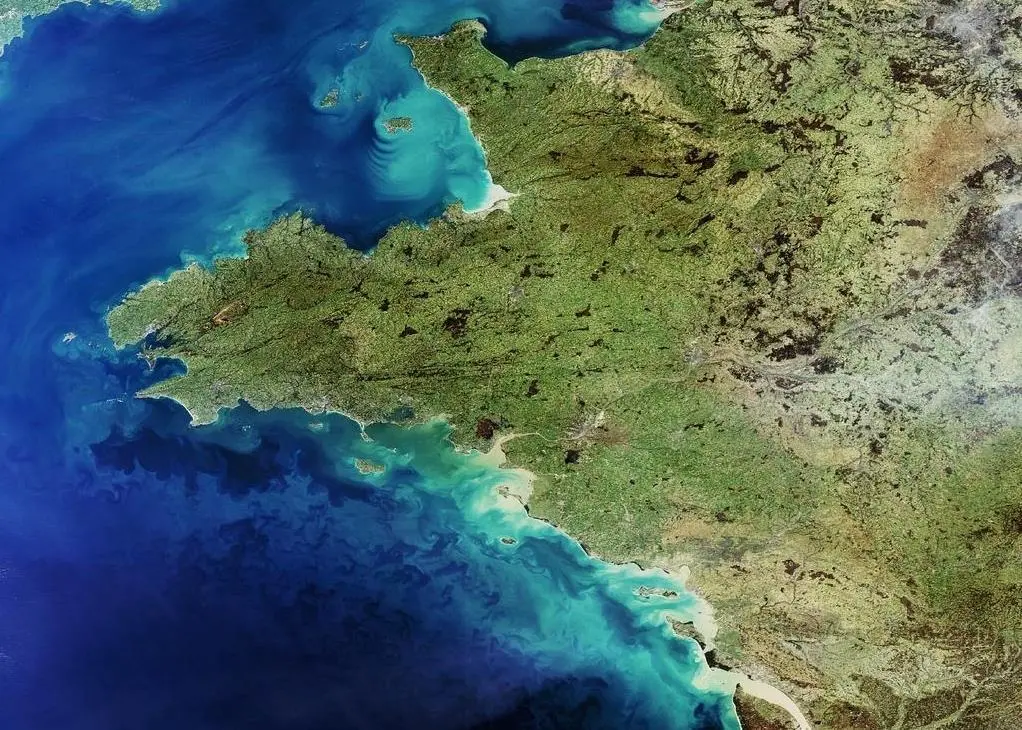
The turbines will be constructed across five to ten designated areas, likely to be located at sites in Brittany, Haute-Normandie, Pays de la Loire, Languedoc, Aquitaine and Provence-Alpes-Cote d’Azur.
According to Marion Lettry, Deputy Head of French Renewable Energy Association Syndicat Des Energies Renouvelables, it is likely that the ultimate location will be influenced by geographical factors.
‘The north coast of France is the most appropriate for the [location] of offshore turbines because of the [more shallow] depth at the coast’, she said.
An existing scheme, known as the ‘Deux-Côtes’ project, has also been criticised by homeowners, fisheries and environmental groups, opposition that may also emerge against future developments.
Although France’s ambitious plans are likely to proceed as expected, concerns also remain over how effective tender schemes are at delivering offshore wind. This is partly because tenders employ ‘price discovery’ to distinguish between bids, creating a highly competitive construction environment.
‘Offshore wind investors are exposed to substantial construction risks which can ultimately end up inflating project energy costs and render it unprofitable’, said Charles Hodges, senior analyst at Bloomberg New Energy Finance.
So, how much of France’s energy demand will be served by wind in the future? The market grew by 1,088 MW in 2009, representing 41% of all new generation capacity installed in France. In the same year, wind turbines generated 7.8 TWh of electricity, a 40% increase on 2008, but still only 1.6% of total power consumption.
Although overall figures are still relatively low, wind electricity production has multiplied twenty times over the last six years. This upward trend looks set to continue, with Lettry predicting annual generation of 50 TWh/25,000 MW by 2020 (19,000 onshore and 6,000 offshore).
‘This will represent 10% of the national electricity demand’, she said.
However, the current growth rate might still not be sufficient for the country to meet its renewable energy objectives. According to EU Directives, France must increase its renewable energy output from 10.3% in 2005 to 23% by 2020.
After a long period in the doldrums, France looks set to substantially increase its offshore wind capacity over the next decade or so. However, the slow pace of development could mean that it may be some time yet before the country emulates the relative success of neighbours like the UK.
By Andrew Williams
Related Articles
 OTHER NEWS
 MARINE CONSTRUCTION
 ENVIRONMENT