


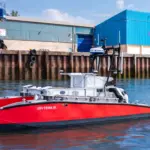

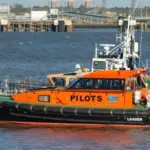

FEATURE: Inside the design of next-generation electric tugs
With developments in battery technologies, energy management systems and power electronics, could the electric tug segment see a design evolution and operational shift?
Progress in design requires a deep understanding of the subject area, technological limitations and historical challenges, as well as a keen eye and a sharp pencil.
In the electric tug segment, companies are looking ahead towards the next generation of drivetrain systems for their fleets, but remain unconvinced that going fully electric is the only solution.
Making space
Early electric tug designs typically focused on one key area: the integration of the drivetrain. Instead of developing entirely new concepts, companies used traditional diesel tug platforms and simply replaced the combustion engine with electric propulsion. This created several issues.
“The biggest challenge was integrating a complete electric drivetrain into a platform originally developed as a diesel tug without increasing the vessel’s dimensions,” Erik van Schaik, Product Manager Tugs, Damen Shipyards tells Maritime Journal.
“We set ourselves the clear objective of fitting the entire electric propulsion system within the same principal dimensions of the RSD Tug 2513.
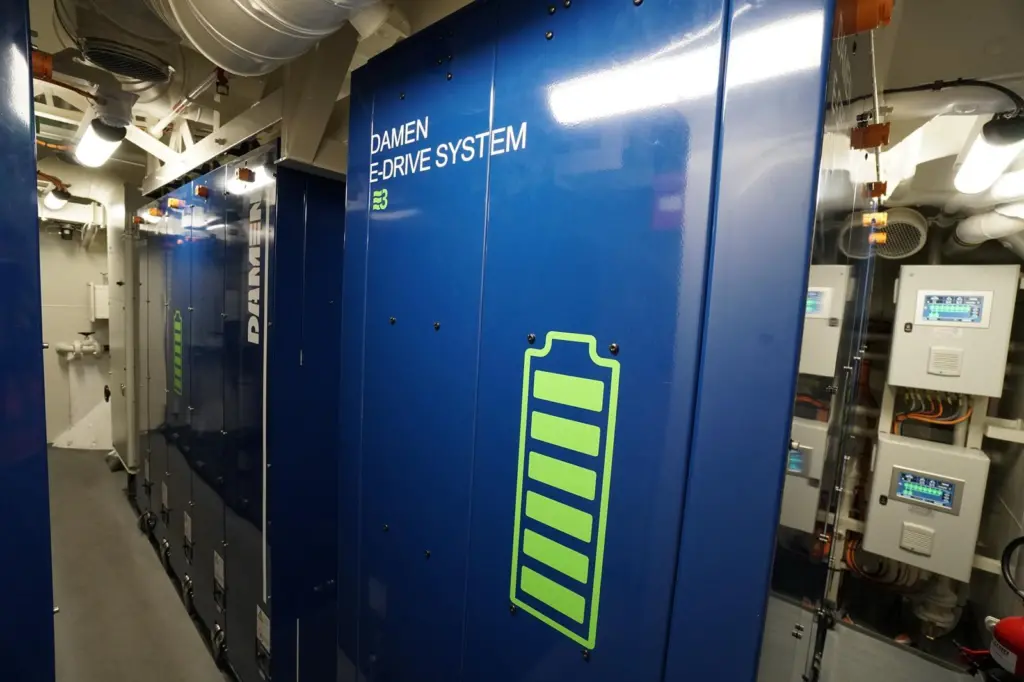
But an electric tug requires significantly more components below deck, including batteries, power electronics, cooling systems and safety installations. Integrating all of this within the same footprint required careful engineering and optimisation.”
Damen began developing hybrid and fully electric tug concepts in 2010. The company’s first hybrid tug, delivered in 2012, was very much a learning project.
At the time, says Shaik, the technology, supply chain and regulatory frameworks were still developing. Damen continued to invest in electrification, strengthening its internal expertise in automation, electrical systems and system integration. By 2021, it had delivered its first fully electric prototype tug, the RSD Tug 2513 E.
Above deck, the electric tug is almost identical to its diesel counterpart, ensuring familiar handling characteristics and working conditions for crews. But below the main deck the layout has been redesigned. Apart from the main bulkhead positions, the machinery arrangement was adapted to accommodate batteries, electric propulsion motors and associated systems.
This allowed Damen to combine a proven hull design with new propulsion technology while maintaining operational performance.
“What makes Damen’s approach distinctive is that we do not see electrification as an isolated trend,” Schaik says. “We design our tugs with flexibility in mind. Depending on the operational context, vessels can operate electrically, hybrid or with fuel-flexible concepts.
“For every foreseeable scenario we aim to provide a technically sound solution so that operators are not confronted with unexpected limitations as regulations and infrastructure evolve.”
Identifying operation profiles
There are numerous requirements and challenges when designing electric propulsion systems for tugs versus traditional diesel systems.
Before pen hits paper, designers and engineers must be clear on the use case of each tug to ensure each of these challenges are met.

“Designing an electric tug requires a deep understanding of its operating profile; for example, high peak loads for short durations combined with long periods of standby,” Torsten Büssow, Director, Electrical & Power Systems Business at Wärtsilä Marine, tells Maritime Journal. “Unlike diesel systems, electric propulsion systems must balance energy availability with practical charging windows, meaning the sizing and placement of an energy buffer becomes central to the vessel’s lifetime performance.
“The challenge lies with engineering a system that delivers instantaneous power for heavy‑assist manoeuvres while ensuring efficient, low‑emission operation during idle and transit periods.”
This demands precise energy management, Büssow says, as well as robust thermal control and integration with shore‑charging infrastructure where available.
Wärtsilä has been active in the electric and hybrid tug segments for more than a decade, delivering its first battery‑hybrid tug in 2018 in Luleå, Sweden. Today, the company is one of the world’s largest integrators of marine battery and hybrid systems, with around 400MWh of installed and ordered capacity across global fleets.
This means roughly every fourth battery at sea comes from Wärtsilä’s electrical integration teams, giving the company a wealth of experience in battery technology, DC grids, power electronics and advanced energy management.
For the tug sector, Wärtsilä offers modular electrification architectures that are designed to improve responsiveness, reduce emissions and optimise operating costs, whether fully electric for harbour duties or hybrid systems for extended range operations.
“Wärtsilä’s designs build on fully integrated hybrid‑electric architectures that bring together batteries, power electronics, and energy management into one optimised system,” says Büssow. “Rather than focusing on single components, our advantage comes from system‑level efficiency, redundancy and performance proven across a large global fleet of hybrid electric vessels.”
Design development
The design of electric tugs is evolving, enabled by various improvements to critical systems. Büssow highlights the advancement of battery chemistries, and voices his excitement of the wider adoption of lithium iron phosphate (LFP). These batteries, he argues, offer higher C-rates, improved thermal stability and longer life cycles, making them well suited for the high‑load, high‑demand profiles of tug operations.
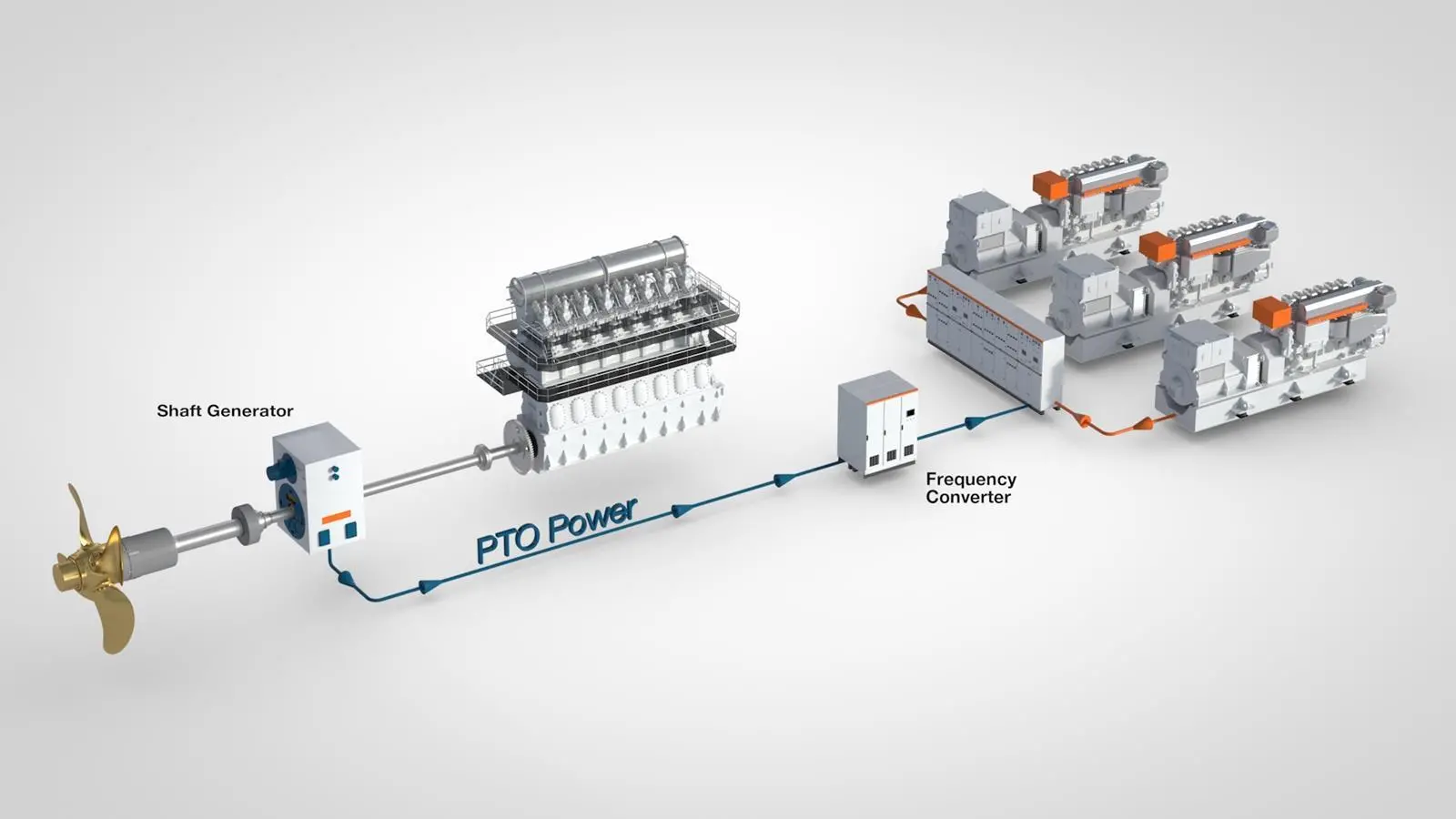
Alongside LFP batteries, Büssow acknowledges continued improvement to energy management systems (EMS) and power electronics. This is enabling smarter load balancing, predictive control and seamless integration between batteries, motors and shore‑charging systems. “Together this improves efficiency, reduces operating costs and extends component lifetimes across the vessel’s full duty cycle,” he says.
Although the technology is advancing, fully electric tugs are currently limited to operation within harbours. The predictable operating patterns with long periods of low-load standby and short, intense bursts of power for manoeuvring and escort duties makes it easy to plan charging periods, and ensures they are relatively close to on-shore charging infrastructure.
Hybrid systems are a suitable alternative when a tug requires longer endurance, wider operating areas, or faces limited charging opportunities.
“While the core architecture is similar, the balance of energy storage, charging and engine capacity changes depending on whether the vessel is designed for pure electric or hybrid use,” says Büssow.
This point is emphasised by Schaik. He describes the energy density of batteries as a ‘critical factor’ for on-going electric tug development, and predicts that battery technology and power electronics will ‘evolve rapidly’ over the next few years.
But he also expects hybrid systems to continue playing a role for the foreseeable.
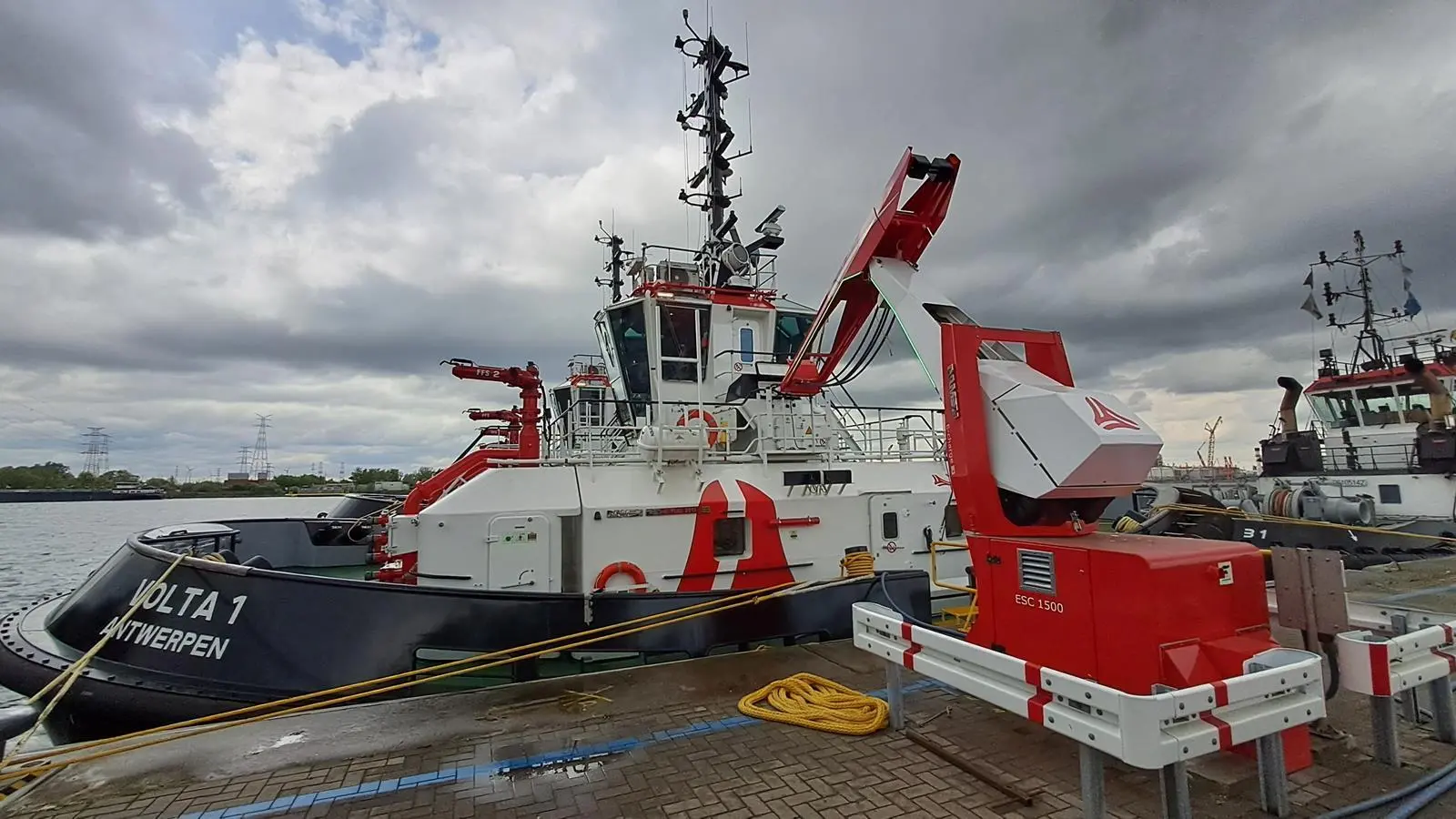
“Battery electric propulsion charged by shore power is highly effective for typical harbour manoeuvring operations, particularly in ports with reliable access to green electricity,” he says. “In certain operational profiles with high annual running hours, the higher initial investment can be offset by lower energy costs over time. However, infrastructure availability, electricity pricing and regulatory incentives differ widely by region.
“For that reason we do not view electrification as a universal solution. Hybrid and fuel-flexible concepts offer operators flexibility and reduce exposure to future uncertainty.”
Calling for collaboration
As well as continued design development of the tugs themselves, Büssow stresses the importance of wider collaboration between the numerous players involved in the tug sector.
He also believes that shipyards and architects have an important role to play.
“Successful electrification relies on close collaboration with shipyards and naval architects from the earliest design stages,” says Büssow. “Every cable, foundation, cooling line and power component must be precisely integrated into the vessel’s structural and mechanical layout.
“At Wärtsilä, we manage the electrical and automation integration – covering batteries, converters, motors, and EMS – while working closely with designers to ensure seamless installation and optimal performance.
“This collaborative approach ensures that an electrical system is not simply added to the vessel, but fully engineered into its architecture, supporting reliability, safety and efficient service throughout its operational life.”
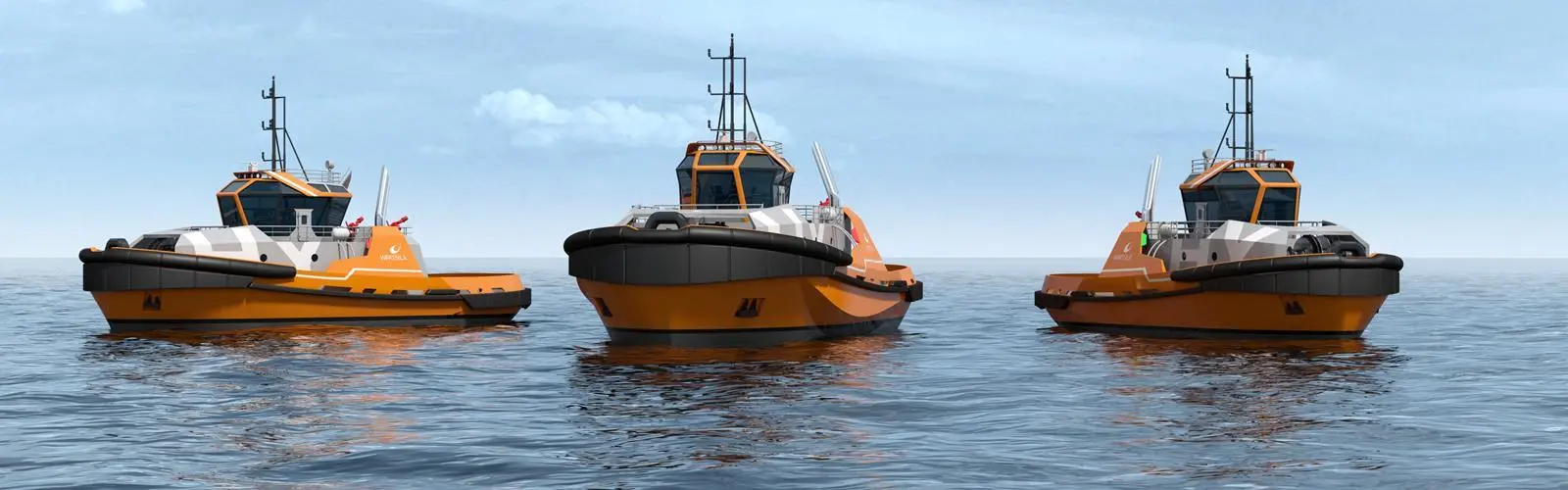
Schaik holds a similar view. He believes fully electric tugs should be seen as part of a broader transition towards the electrification of fleets. However, this requires understanding and shared experience between numerous players.
“Ports and operators operate under different economic models,” Schaik says. “Port authorities may prioritise emission reduction based on public policy objectives, while fully commercial tug operators must carefully assess return on investment.
“Our role is to provide technically robust and commercially realistic solutions that support both sustainability goals and operational continuity.”
Related Articles
 OTHER NEWS
 SPONSOREDSTORY
 INDUSTRY NEWS