![MaritimeJournal[Seawork]](https://www.maritimejournal.com/wp-content/uploads/2026/09/MaritimeJournalSeawork.svg)



International study poses questions on remote pilotage
The International Maritime Pilots’ Association (IMPA) is taking the bull by the horns and asking manufacturers and system integrators to join a study on the potential opportunities and prerequisites of remote pilotage.
Despite having little to do with autonomous navigation (yet), it’s a hot topic.
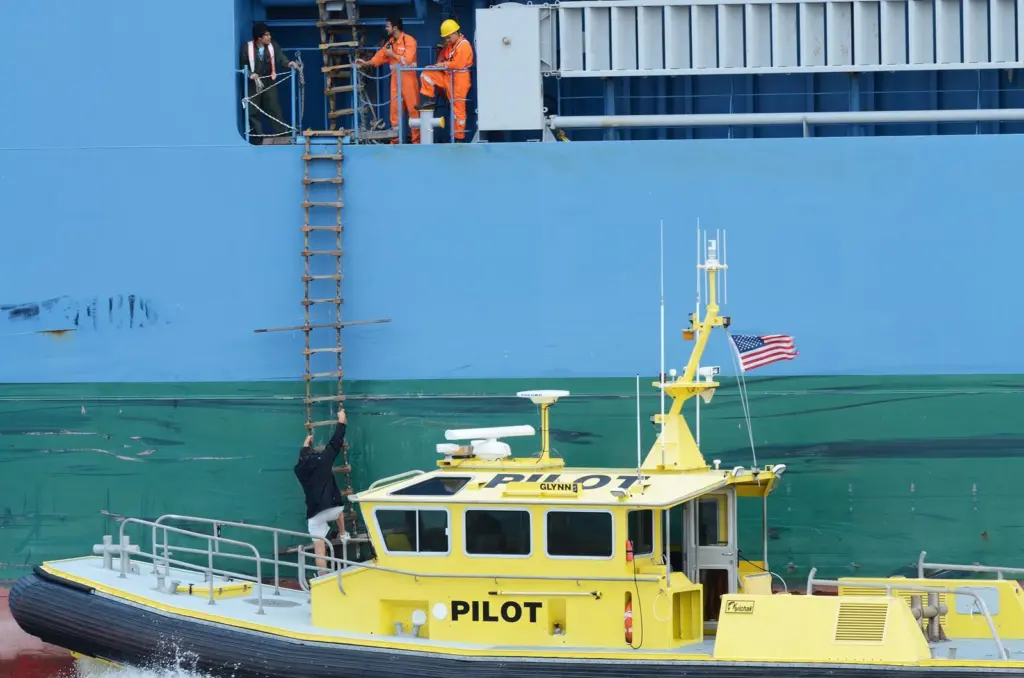
Simply put, remote pilotage is directing the navigation of a ship from pilot station or boat in high-risk areas “where a qualified, licensed pilot is still the only appropriate risk control option,” underlines Matthew Williams, secretary general of the IMPA.
However, a growing interest in the topic has been driven by various factors, including Covid.
Potential – and challenges
It’s not all positive.
Some organisations, like the Standard Club, went as far as voicing ‘concern’ about its take up.
Captain John Dolan, deputy director, Loss Prevention wrote: “….systems still malfunction and occasionally in a manner that is not detected by the bridge team in time to prevent a casualty.”
So IMPA and its collaborators (the Canadian National Centre of Expertise on Maritime Pilotage and the Canadian Coast Guard) have decided it’s high time to put it to the test and properly evaluate the technology’s potential – and its challenges.
That means asking for solutions that may be capable of delivering the kind of secure, low latency ship-shore exchanges necessary for remote pilotage.
In short, the study is looking for technology that could establish a robust, shared awareness between ship’s bridge, pilots and shore teams.
It will need to function across various environments, from open sea anchorage to river passages, as well as coordinating services in both normal and emergency situations.
Three-phase trials
Trials will take place in three phases.
The first (in 2025) will be by simulation; the final two will see supervised applications, principally in Canada: one on the country’s Coast Guard vessels, the last (beginning in 2027) on commercial ships.
It’s also worth noting that besides meeting minimal compatibility requirements for the trials, proposals will need to be scalable for multiple vessels.
This iterative evaluation will ensure the project gets what it needs to deliver unbiased, science-based and authoritative insight, says Williams.
“It requires rich data and observation sets, including consequential operational and human factors,” he says.
While entering this study will require a certain level of commitment, IMPA underscores the benefits, including free, rigorous, unbiased technical, operational and comparative assessments. Further, being a member of the advisory group will result in exposure to regulators, pilots and their authorities, shore-based services and other important stakeholders.
Finally, the process and methodology will be disclosed in publicly available material for future re-use by pilots’ organisations, competent authorities, industry and academia.
Interested manufacturers and system integrators are invited to submit proposals (in English) to Captain Alain Arseneault (aarseneault@pilotage-expertise.ca) by 31 December 2024.
The full text of the Request for Information is on the IMPA HQ website here.

Related Articles
 INDUSTRY NEWS
 SEAWORK NEWS
 INDUSTRY NEWS