





Vessels shun shorepower due to energy costs
A £20 million shorepower project at one of the UK’s busiest ports has been lying idle despite being installed and ready to go.
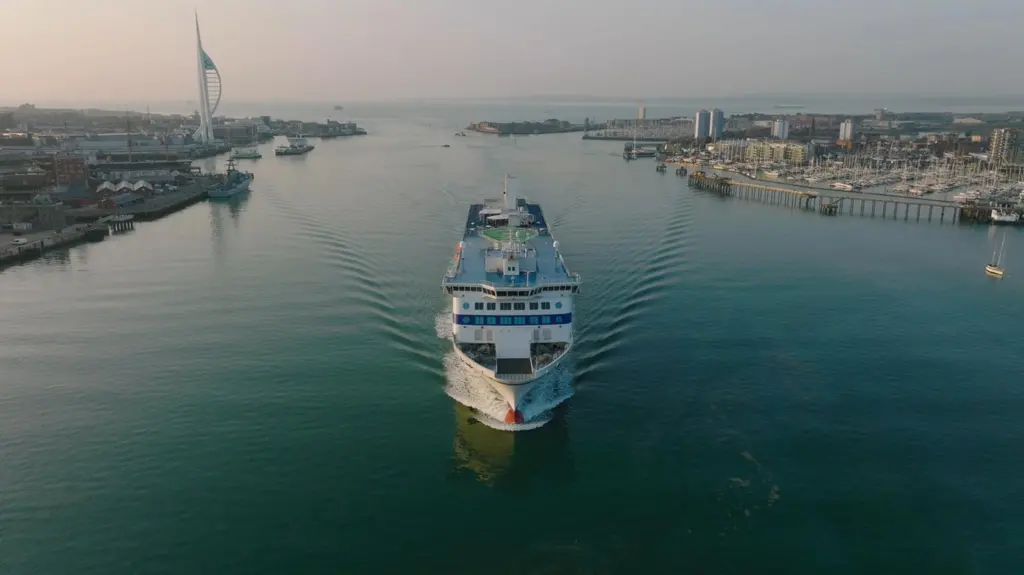
The cost to vessel owners of plugging in is so high that they are sticking with diesel while at berth, in complete contradiction to the goal of the ‘Sea Change’ project at Portsmouth International Port.
And unless energy policy in the UK changes, says chief executive of the British Ports Association (BPA) Richard Ballantyne, there will be a reverse move away from alternative fuels and shorepower.
Both Ballantyne and Mike Sellers, the port director, have expressed frustration at the cost of Britain’s energy, making projects like this, which aim to make their operations ‘greener’, simply unaffordable.
In a letter to the secretary of state at the, Peter Kyle, BPA Ballantyne called for an urgent meeting to look at how government strategy needs to support port competitiveness and sustainability.
“We are growing increasingly alarmed at the failure of the industrial strategy, and government policy more broadly, to articulate how UK ports can remain competitive as energy costs continue to rise,” he said.
“Electrification is a key pathway for port and maritime decarbonisation and we expect port demand for electricity to grow by several orders of magnitude in the next decade. Energy availability and costs will be increasingly important to our competitiveness.
“Current policy risks simultaneously increasing the cost of maritime decarbonisation while weakening UK port competitiveness. As a result, we expect reversals in efforts to decarbonise port operations this year, including a move away from the use of low-emission biofuels and the cancellation or delay of electrification and shore power projects.”
Calls for policy shift
The UK’s energy is the most expensive in the world, and shows no sign of becoming cheaper.
Once the UK and EU Emissions Trading Scheme is expanded to cover shipping this year, reducing port emissions and offering shorepower will be central to a port’s long-term competitiveness, Ballantyne said.
In countries like Italy, where discounted electricity schemes for ports will be introduced, and power at berth will be VAT exempt, shorepower will be much more affordable. The UK does not have similar discounts.
“Wrapped up in electricity charges are transmission costs, standing charges, and the unit cost, as well as connection fees, which means this is a high cost to the port and makes electricity significantly more expensive than marine diesel for shipping companies,” said port director Mike Sellers.
“The unit price of electricity in the UK is four times higher than the EU, where it is also zero tax rated for VAT as a marine fuel, unlike here. Additionally, transmission costs are set to increase by 97% in April. Ports have also been excluded from the government’s proposed British Industrial Competitiveness Scheme (BICS), which offers foundational industries energy cost reductions from 2027.
“It’s not a question of ‘if’ the power will be switched on. The concern we have is when we are connected to the grid, whether ships will connect to shorepower due to the excessively high electricity costs.
“The government needs to align its policies to encourage this, rather than place barriers to decarbonisation. There are simple solutions such as removing VAT, as with other marine fuels, and including ports as a foundational industry in the BICS, reducing electricity for high-energy users from 2027.”
Sea Change project
In 2023, Portsmouth Port hailed its Sea Change project as a ‘green revolution’ securing a £19.8 million grant from the UK government’s Zero Emissions Vessels and Infrastructure (ZEVI) competition in partnership with ABB, Brittany Ferries, BPA and others.
The project was to design, build and operate a shorepower system across Portsmouth’s busiest three berths to allow ferries or cruise ships to turn off their engines while in port.
Two LNG-electric hybrid ferries by Brittany Ferries were to run from 2025 on liquefied natural gas and battery power – but with the power not switched on, the batteries cannot be charged.
Related Articles
 OTHER NEWS
 SPONSOREDSTORY
 INDUSTRY NEWS