

Joint Italian-Turkish dredger launched
The first ever cutter suction dredger to be built in Turkey, an Italian designed model SGT 500C, is being launched this month.
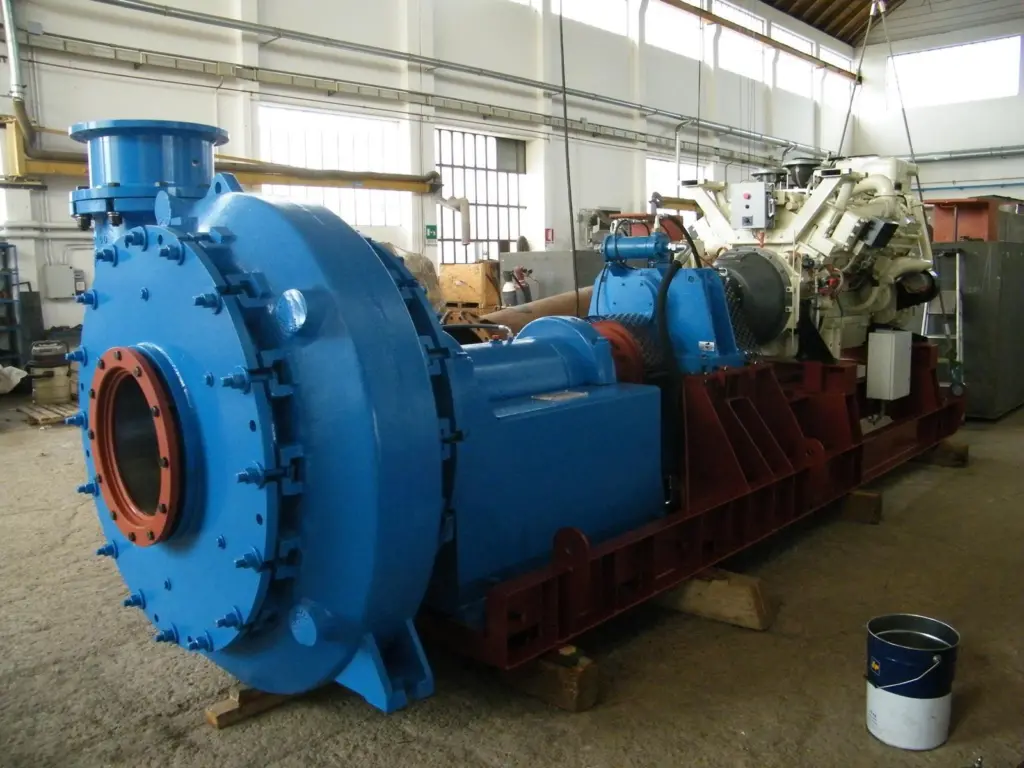
The vessel in question, to be classed by Turkish Lloyd, was designed by the Italian dredger manufacturer Italdraghe SPA and is being jointly built with Gozuyilmaz at its Izmir shipyard. The dredger engines (Cummins KTA 38 and Iveco C13), dredging pump (Italdraghe PD 500R type), reduction gear and all control cabin instrumentation are being supplied directly from Italy.
Installation of all the engine room equipment supplied by Italdraghe was completed under the close supervision of the Italian company’s technicians working on site at the shipyard.
This Italdraghe SGT 500C is being handed over this month to city authorities of the industrial port city of Izmir. The Gulf of Izmir has long been an important commercial centre, however, over the last four decades, due to industrial development around the coastal area, the sea has become very polluted. Following on from a recent multi-billion dollar investment programme, non-treated industrial waste no longer flows into the sea. However, large scale dredging is still required to remove the previously accumulated dirt and mud from the seabed.
In order to ensure that the local government will be able to run the dredger at full production capacity from the start, Italdraghe is providing a month long practical training course to the local dredger operators immediately after the vessel launch.
Meanwhile, two Italian coastal protection projects have recently been completed utilising the effective long distance pumping power of Italdraghe booster stations.
In the first, near Marina di Ravenna, on the east Adriatic Coast, an SGT 350 booster played a fundamental role in creating an underwater quarry sand barrier at a distance of 600m from the coast.
The second project, at Punta Ala on the northwest Tyrrhenian Coast, involved using an SGT 200 Italdraghe booster to fill geotextile tubes positioned 300m away from the shore with sand brought in from local quarries.
In both cases the advantages of the boosters proved to be limited set up requirements, non-disturbance of tourism-related activities, rapid project completion time, and reduced costs compared to traditional barrier creation methods.