![MaritimeJournal[Seawork]](https://www.maritimejournal.com/wp-content/uploads/2026/09/MaritimeJournalSeawork.svg)


Cost rockets for major port transformation
A multi-million euro engineering project to transform the Italian Port of Genoa has had its first stone laid – as the cost estimates for the works shot up by 30%.
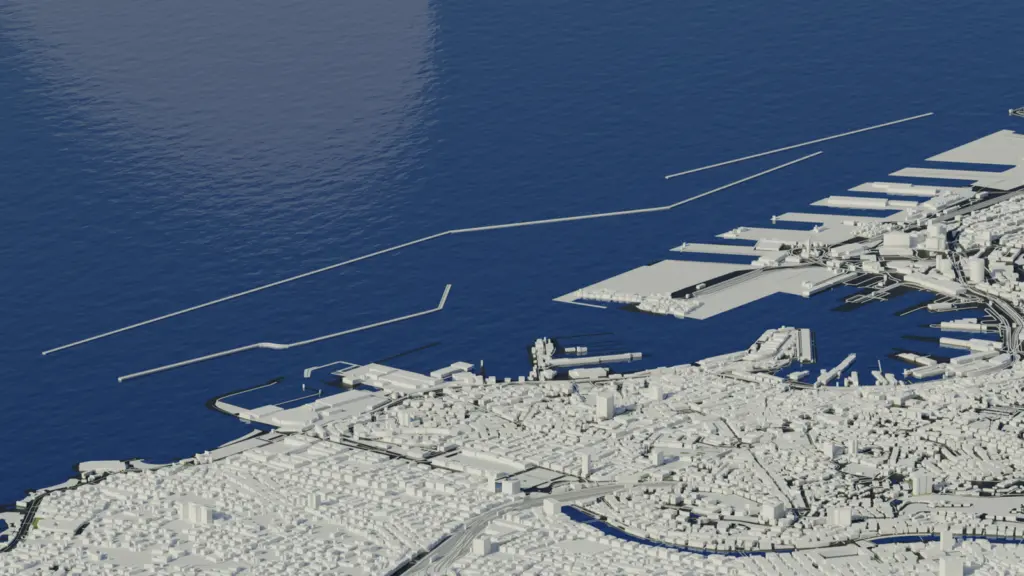
Last October, the Pergenova Breakwater Consortium, led by Italian building firm Webuild Group, won a contract from the Western Ligurian Sea Port Authority to build a 6,200m breakwater for €930 million.
Last week, at the stone-laying ceremony, the figure had gone up to €1.3 billion.
Webuild Senior Manager – International Media Relations Gilles Castonguay would not say why the cost had gone up since the contract was awarded, however he did say the project was unique in the world for scale and complexity.
The new 6.2km breakwater will be built on a base as deep as 50 metres, constructed with seven million tonnes of rock material and 100 prefabricated, reinforced concrete caissons each similar in height to a 10-storey building.
It will provide safe access for modern ships up to 450 metres in length, which at the current port cannot manoeuvre within a basin built in the 1930s.
“Once completed, the port will have a turning basin of 800 metres, giving more space for freight, passenger and cruise ships,” says Webuild. “This will enable the Port of Genoa to compete on an equal footing with Europe’s biggest hubs and raise its standing among those of the Mediterranean.
“It is estimated that the new breakwater will ensure a progressive annual growth in commercial traffic of 22-30% from 2027 to 2030, when the second phase of the project will be completed.
“The port authority estimates the economic benefit will be €4.2 billion in terms of greater income from container traffic, and from port rights and taxes.”
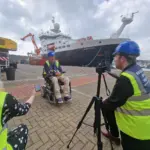
Speaking at the ceremony last week held to mark the opening of the work, Webuild chief executive Pietro Salini said the breakwater was ‘the dream of a country that thinks of the future, of our children, of how to be competitive in the world, and of how to build quickly the infrastructure that is needed’.
“This project is not a challenge for Webuild or the government but for the entire country that must have infrastructure that is innovative and strategic,” he said.
Other members of the consortium include Fincantieri Infrastructure Opere Maritime, civil engineering firms Fincosit and Sidra, who have been tasked with completing the first phase of the project by 2026.
Brenner Base Tunnel and other projects
It’s not just the port that is undergoing major change: other public works in the Ligurian region and northern Italy have been worked on at the same time as the port so that Genoa can become a major part of the Rhine-Alpine Corridor in the Trans-European Transport Network (known as TEN-T).
These other works include a high-speed railway through Italy’s longest tunnel under the mountains connecting Genoa with Milan and beyond (Terzo Valico dei Giovi-Genoa Juncture); and a TELT high-speed railway between Turin and Lyon.
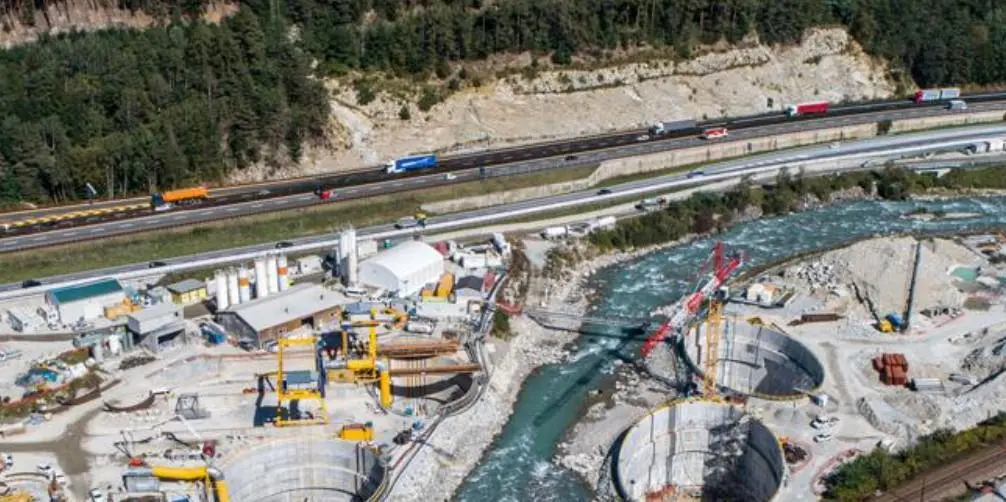
On top of that and touted as being the longest of its kind in the world is the 64km Brenner Base Tunnel, which will have to pass under the Isarco River, two motorways and another railway line to connect Fortezza in Italy with Innsbruck in Austria.
The Brenner tunnel is being developed by BBT, a European public limited company half of which is owned by the Tunnel Ferroviario del Brennero (TFB) on behalf of Italy, the other half by Austrian railway firm Österreichische Bundesbahnen.
Webuild says the tunnel excavation under the river will have to be done in a particular way to avoid diverting the river’s natural course, as well as use liquid nitrogen to freeze the ground so that a second tunnel can be excavated without the risk of water leaking into it as the work is carried out.
Two bridges have had to be built over the river so that transport connections can be maintained while the tunnel is built, which is not scheduled to be completed until 2032.
Related Articles
 INDUSTRY NEWS
 MARINE CIVILS
 MARINE CIVILS