![MaritimeJournal[Seawork]](https://www.maritimejournal.com/wp-content/uploads/2026/09/MaritimeJournalSeawork.svg)





‘Offshore Power Zones’ plans revealed to ease port pressure
Plans to set up ‘offshore power zones’ to enable vessels to charge at sea have been revealed in a white paper just published.
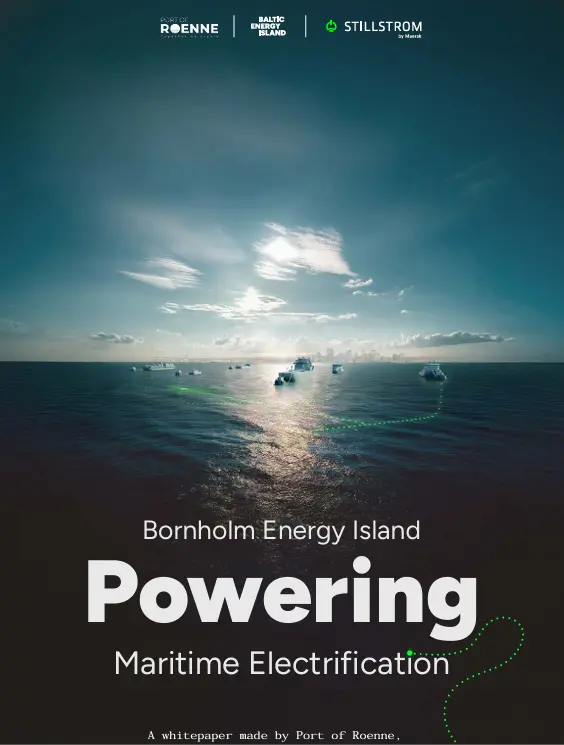
The paper, Powering Maritime Electrification: Bornholm Energy Island, was co-written by offshore energy charging firm Stillstrom, the Port of Roenne on Bornholm, and Baltic Energy Island, a foundation created to develop solutions for energy islands and help turn Bornholm into an energy hub.
It says a new network of offshore charging hubs could transform how ships access electricity along some of Europe’s busiest shipping lanes.
The proposal centres on the creation of Offshore Power Zones – designated areas at sea where vessels could plug into high-capacity charging infrastructure while idling, or recharge onboard batteries during voyages.
Positioned close to offshore wind farms and major shipping routes, the zones are designed to function as maritime charging hubs, reducing reliance on congested ports and extending the range of battery-powered vessels.
The white paper presents the Danish island of Bornholm as a potential test case for the concept. Situated in the Baltic Sea, where roughly 60,000 vessels pass each year, the island sits at the centre of plans for the Bornholm Energy Island project, a proposed 3GW offshore wind and transmission hub expected to come online in the mid-2030s.
The Power Zones
According to the report, Offshore Power Zones would allow ships to access electricity without entering port, enabling vessels to maintain onboard hotel loads while anchored or to fast-charge batteries between destinations. The authors liken the concept to motorway charging infrastructure for electric vehicles, with a chain of offshore charging points eventually supporting an ‘electric shipping highway’ stretching from France to Finland.
The proposal comes as European ports face mounting pressure to provide shore power for vessels under the EU’s Alternative Fuels Infrastructure Regulation (AFIR), which requires key TEN-T ports to provide shore power for certain passenger and container vessels from 2030 onward. The paper says offshore charging could ease pressure on ports where local electricity grids are already constrained.
Bornholm’s Port of Roenne is given as an example of the challenge. The port, which serves ferries, cruise vessels and offshore industry traffic, is expected to require substantially more electricity to support vessel charging and shore power services than the island’s current grid can provide. The white paper says linking ports and Offshore Power Zones directly to offshore wind infrastructure could offer a faster route to expanding supply.
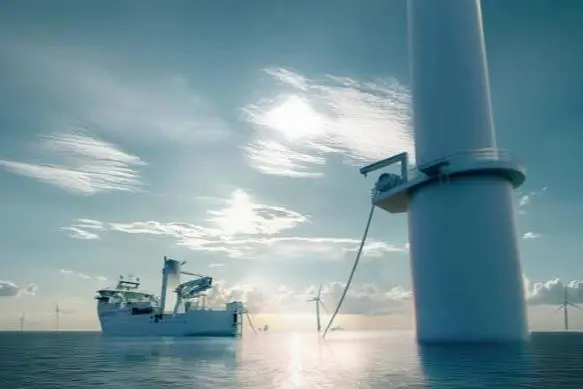
Stillstrom, backed by shipping giant A.P. Moller-Maersk, has already been developing offshore charging technology for vessels operating around wind farms, particularly service operation vessels (SOVs) used to maintain turbines. The report says the first battery-electric (SOV) capable of charging offshore is expected to be operational by 2027, providing an early indication of how offshore charging could work in practice.
Ambitions
The technology envisioned for larger commercial shipping remains more ambitious.
Offshore charging points could eventually deliver between 50MW and 75MW of power to larger ships, allowing substantial battery charging during planned stops at sea. Although such systems remain under development, the authors say many of the technical standards required already exist through shore power systems used in ports.
Operationally, ships entering an Offshore Power Zone would manoeuvre into position at a designated charging point, secure themselves using mooring systems or dynamic positioning technology, connect to a power cable and receive electricity before resuming their route. The process, the paper says, would build on existing offshore operating procedures already familiar to vessels working in the wind sector.
For supporters, the attraction of Offshore Power Zones lies in their ability to shift part of maritime electrification away from crowded port infrastructure. By placing charging facilities close to offshore wind developments and shipping corridors, the report says, vessels could access power where they need it most while avoiding some of the bottlenecks associated with expanding land-based electricity networks.
Whether Offshore Power Zones become reality will depend on regulation, infrastructure investment and industry uptake. But with governments, ports and energy developers increasingly looking at how electricity can be supplied both in harbour and at sea, the idea of ships stopping offshore to plug in may be moving from concept to commercial possibility.