![MaritimeJournal[Seawork]](https://www.maritimejournal.com/wp-content/uploads/2026/09/MaritimeJournalSeawork.svg)





Port electrification charged up by UK’s largest battery
The UK’s largest battery storage system (BESS) will provide electric power to ports in the north of England with the first switch-on expected in 2028.
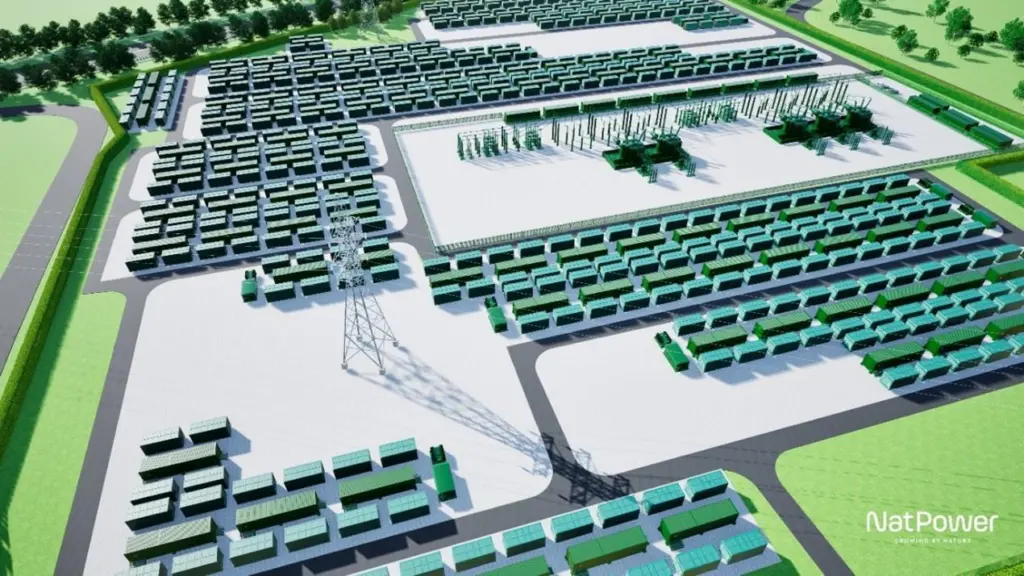
£1 billion (€1.1 billion) of private money will be used to deliver the Teeside GigaPark on a 32-acre site. It will store 8GWh of electricity, or discharge 1GW of power for 8 hours.
”NatPower aims to connect the GigaPark to the National Grid by 2028, with infrastructure designed from the outset to power ships at berth (cold ironing) and recharge electric propulsion systems for future vessel types,” the energy company statement said. “NatPower UK has secured an agreement with Sembcorp Utilities (UK) Limited, a wholly-owned subsidiary of Sembcorp Energy UK, for a 32-acre site at Wilton International in Redcar to deliver a 1GW / 8GWh lithium-ion Battery Energy Storage System (BESS), one of the UK’s highest-capacity and longest-duration projects and the first to combine utility-scale grid storage with dedicated port electrification infrastructure.”
Energy storage is desperately needed in a country where despitge having installed the second largest amount of wind energy in the world after China, millions are spent each year just paying producers to switch off their turbines because the power grid cannot cope with the amount generated.
A spokesman for the National Energy System Operator (NESO) told Maritime Journal that last year, £411 million was paid to ‘curtail’, or switch off, wind farms. Almost half of this, £176 million, was paid to offshore wind developers.
The project has a 1GW connection agreement with NESO for a 400kV connection to the National Grid’ substation. The aim is to connect the GigaPark, in stages, to the grid by 2028.
“With electricity demand forecast to rise by 50% by 2050 and an extra 15% expected from shipping electrification, the UK grid faces unprecedented pressure,” said the statement. “The multi-gigawatt system will store surplus renewable electricity from offshore wind and other generators when production is high, then release it instantly during periods of peak demand or low generation.”