![MaritimeJournal[Seawork]](https://www.maritimejournal.com/wp-content/uploads/2026/09/MaritimeJournalSeawork.svg)




Seabed lease unlocks offshore phase of Liverpool Bay CCS project
The UK Crown Estate has granted a seabed lease for the offshore phase of a carbon capture and storage project in Liverpool Bay.
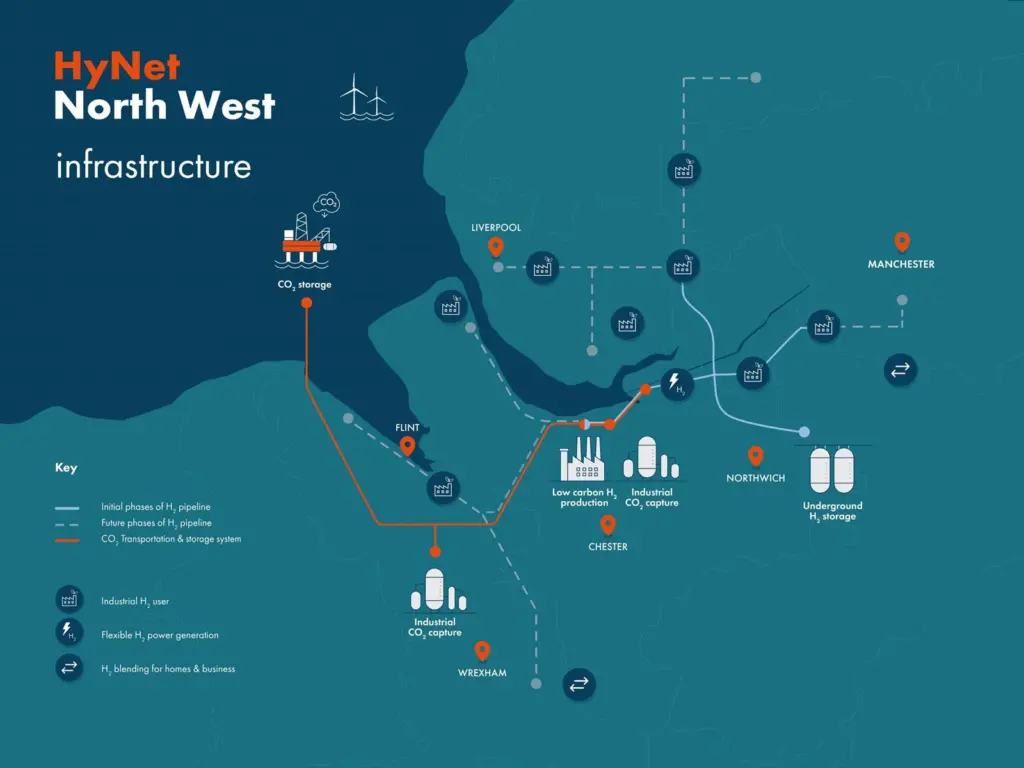
It clears the way for Liverpool Bay CCS Limited (LBCCS) to start the offshore transport and storage network needed for the HyNet industrial cluster in North West England and North Wales.
HyNet is one of two UK CCUS clusters currently progressing as the Government’s Track-1 projects, the other being the East Coast Cluster covering Teesside and the Humber.
The lease gives LBCCS, part of the Eni CCUS Holding group, the legal rights to occupy the seabed and re-purpose existing oil infrastructure to transport and permanently store carbon dioxide beneath Liverpool Bay.
Announcing the agreement, The Crown Estate said LBCCS would re-purpose existing offshore oil an gas infrastructure rather than build an entirely new pipeline network.
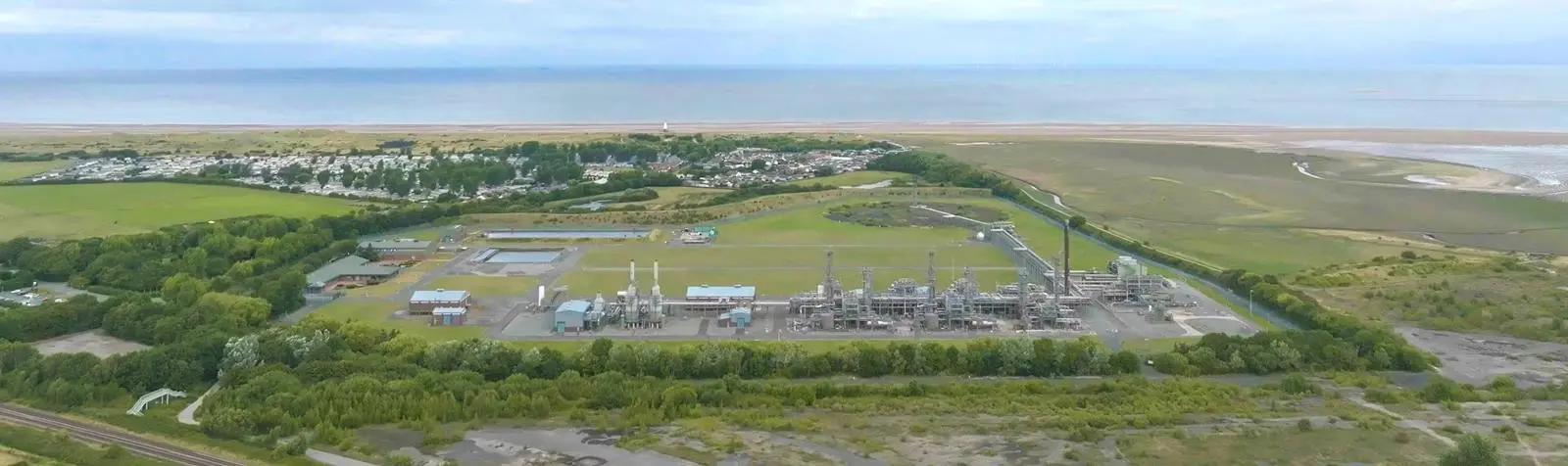
More than 75 miles of existing offshore pipelines, three offshore platforms and the Point of Ayr gas terminal will be converted to transport captured carbon dioxide from industrial sites across North West England and North Wales to depleted natural gas reservoirs beneath the seabed. Around 21 miles of new pipeline will connect industrial emitters to the transportation and storage network.
Although the lease itself is the latest milestone, the project has been progressing steadily since Eni reached Financial Close with the UK Government in April 2025. Construction is now well under way, with Eni confirming in May that “more than 30% of construction works have already been completed, in line with the original schedule,” while first operations remain targeted for 2028.
Engineering at sea
The engineering programme includes platform conversion, subsea pipeline inspection and modification, new pipeline installation, offshore structural works, well conversion, subsea intervention and marine logistics.
That is expected to generate demand for a broad range of specialist marine contractors and vessel operators, including offshore construction vessels, survey vessels, multicats, dive support vessels, ROV support vessels, tugs and crew transfer craft throughout the construction programme.
Eni has described Liverpool Bay CCS as “the backbone infrastructure of the HyNet industrial decarbonisation cluster” and said the project is expected to become operational in 2028 with an initial storage capacity of 4.5 million tonnes of CO₂ per year, rising to as much as 10 million tonnes annually during the 2030s.
By extending the productive life of mature offshore oil and gas assets through conversion rather than decommissioning, Liverpool Bay CCS is set to become one of the UK’s most significant marine civil engineering programmes, with opportunities spanning offshore construction, subsea engineering, workboats and port logistics over the next several years.
Financing
There are no publicly released figures on how much the Liverpool Bay project itself will cost, but the UK government has committed up to £21.7 billion over 25 years to support the UK’s first carbon capture clusters.
Individual elements of HyNet, including the Liverpool Bay transport and storage network, industrial carbon capture facilities and hydrogen production plants, are financed separately through a combination of private investment, commercial lending and government-backed revenue mechanisms.
Eni, through Liverpool Bay CCS Ltd, is developing and operating the transport and storage system, but the project only reached Financial Close in April 2025 after agreeing a long-term Revenue Support Agreement (RSA) with the UK Government. Rather than providing an upfront capital grant, the RSA is designed to underpin the future revenues of the transport and storage network, giving investors confidence that the project will generate stable returns over its operating life.
In May 2026, Eni announced that Eni CCUS Holding had agreed a financing package worth more than £500 million with a syndicate of 13 international banks.
“The financing demonstrates the strong confidence that the financial market places in Eni CCUS Holding’s strategic vision and execution capabilities,” the company said.
In the longer term, the transport and storage system will also be funded by the industries connected to the HyNet cluster. Companies capturing carbon dioxide from power generation, hydrogen production and heavy industry will pay regulated tariffs to transport and permanently store their CO₂ using the Liverpool Bay network.