![MaritimeJournal[Seawork]](https://www.maritimejournal.com/wp-content/uploads/2026/09/MaritimeJournalSeawork.svg)




Steel signed for £200m Ro-Ro terminal transformation
Construction has started on Associated British Ports and Stena Line’s new £200 million (€233 million) ro-ro terminal.
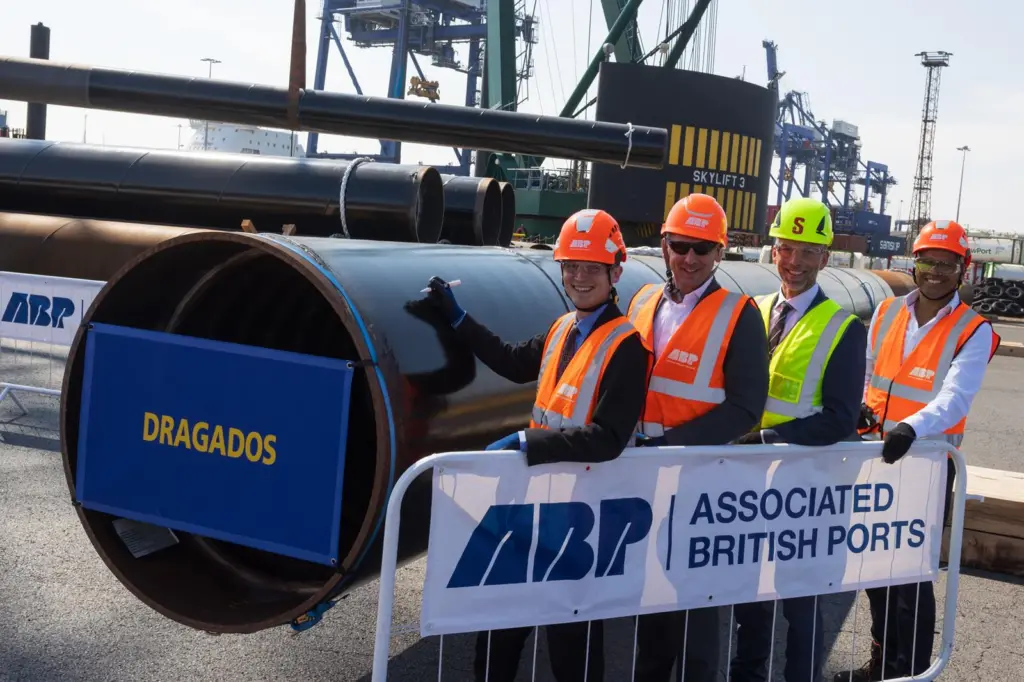
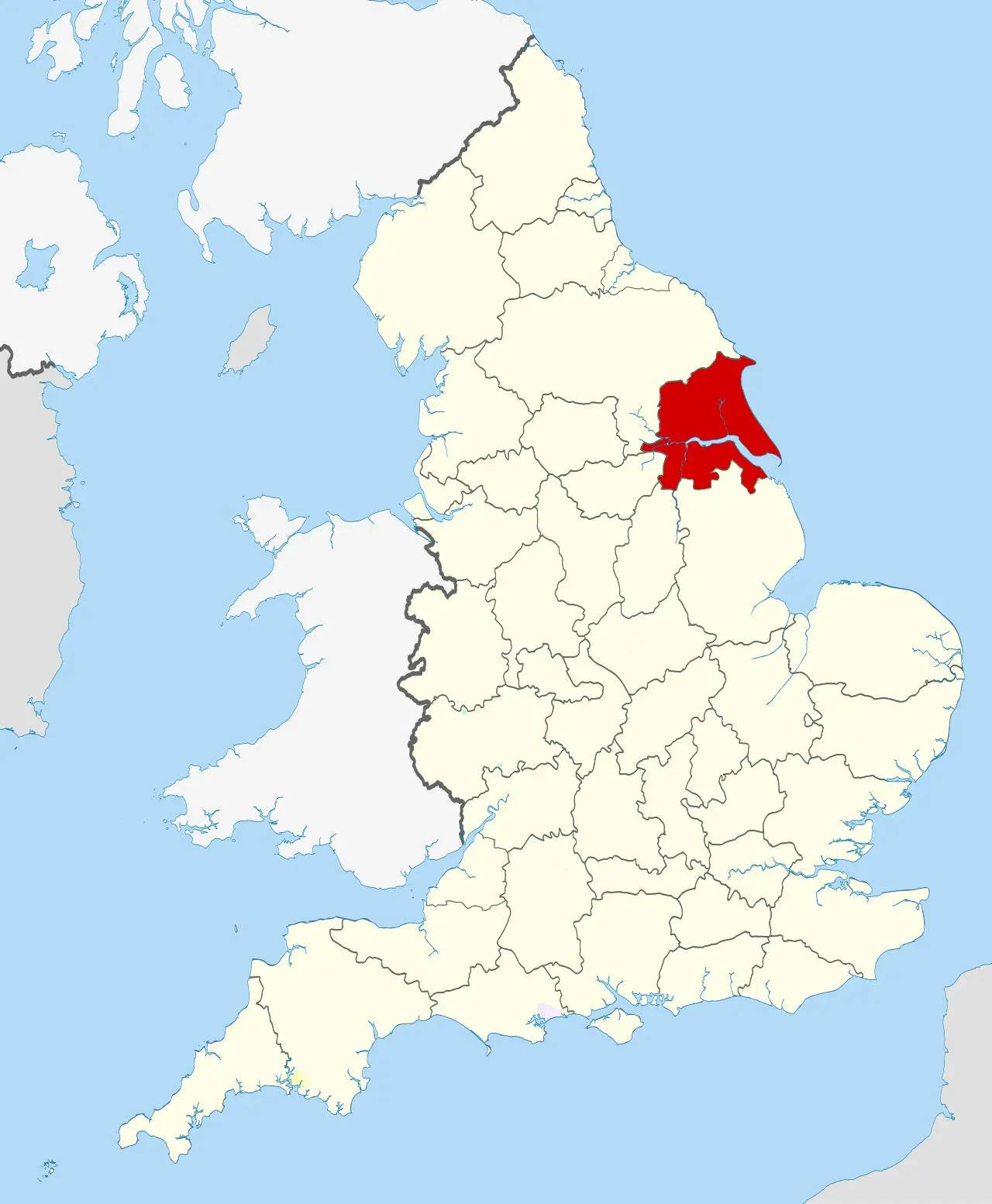
Immingham Eastern Ro-Ro Terminal, on the east coast of England, is set to be transformed by 2028 in major works contracted to Dragados by ABP and Stena Line to accommodate more freight traffic and larger ro-ro vessels between the UK and continental Europe.
Dragados is a Spanish construction company, part of ACS Group, with a UK and Irish operation that will take charge of the works.
The project is being dubbed ‘IERRT’ and will strengthen the River Humber’s role ‘in supporting an effective, efficient, competitive and resilient UK ro-ro freight sector’, said Andrew Hawes, regional director of the Humber ports.
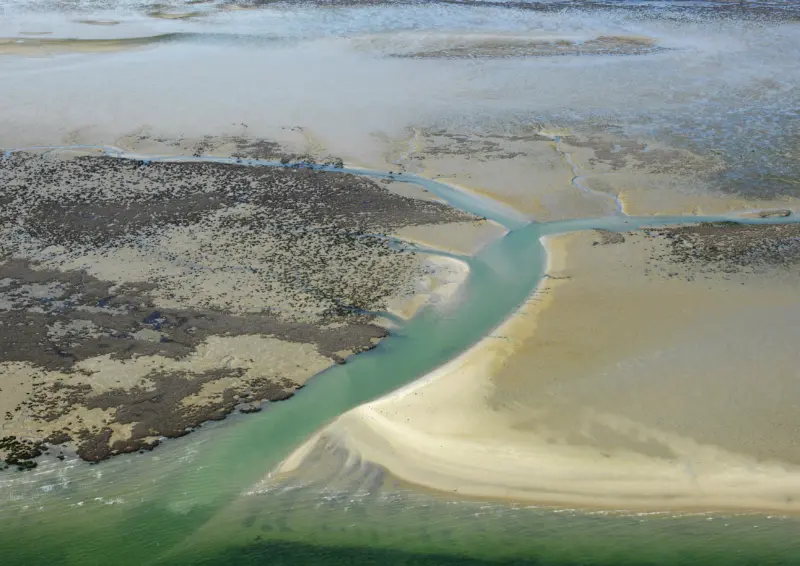
The new terminal will extend into the Humber Estuary and needs a new piled berth structure, floating pontoons, linkspans and a substantial capital dredging campaign.
At its heart will be an open-piled approach jetty, carrying vehicles and wheeled freight between the shore and the new berthing facilities. ABP’s project documentation describes the jetty as approximately 288m long, with a deck around 11.6m above Chart Datum and up to 58 piles. It will cross the existing sea defence and pipelines before reaching a new bankseat – a heavy structural support built at the shore end of a bridge, jetty or linkspan to provide the fixed point from which the structure extends out over the water – supporting the main linkspan.
The approach structure is being designed as a two-lane roadway, with a footway, utilities, lighting and environmental screening. The crossing of existing infrastructure is itself a substantial engineering exercise: ABP’s plans call for two abutment structures, each supported by six piles, together with a short bridge section spanning the sea defence and pipelines.
From the bankseat, a linkspan of approximately 90m by 10m will connect the fixed approach structure to the first floating pontoon. Its design allows the connection to accommodate the Humber’s tidal range, with the free end resting on the pontoon as it moves vertically with the tide.
Pontoons and piers
The two pontoons will each measure approximately 40m by 90m. They will provide the landing surface for the stern ramps of ro-ro vessels and will themselves be connected by a short linking bridge. Each pontoon will be restrained by two substantial concrete dolphins, each supported by piles, allowing the pontoons to rise and fall while remaining laterally controlled.
Beyond the pontoons, two open-piled finger piers, each approximately 264m long, will form the main berthing structures.
The northern pier will have berthing faces on both sides, while the southern pier will have a berthing face on one side, which means there will be three operational ro-ro berths. The piers will incorporate fender panels and mooring equipment.
Dredging
ABP’s environmental assessment estimates a capital dredge of about 330,000m³ across a maximum area of approximately 90,000m² to reach a maximum depth of around 9m below Chart Datum, while the area beneath the pontoons will be dredged to approximately 5m below Chart Datum.
The dredged material is expected to consist principally of sand and silt, together with a smaller quantity of boulder clay. ABP says it has considered opportunities for beneficial use of the material, but its assessments indicate that much of it may not be suitable for reclamation or construction purposes. If no beneficial alternative is identified, the material is expected to be transported by barge to licensed disposal sites.
The dredging itself is expected to be undertaken principally using a backhoe dredger, although ABP’s engineering assessment also allows for the use of a trailer suction hopper dredger depending on sediment conditions and contractor availability. Dredging was assessed as potentially operating continuously until completion, with an earlier construction scenario allowing approximately 100 days for the campaign.
Piling
Piling is another major element of the marine works. ABP’s construction assessment envisages the use of vibratory and percussive pile-driving equipment, with piles installed to substantial depths. The project documentation identifies crane barges, including one equipped with a 350-tonne crawler crane, alongside 150-tonne crawler cranes, tug or multicat support vessels and deck or hatch barges among the likely construction plant.
That gives the project a sizeable marine spread: dredging equipment, piling plant, crane barges and construction barges will work alongside the tugs and multicats required to move and support equipment and materials around the construction site.
The scale of the marine works reflects the terminal’s intended role.
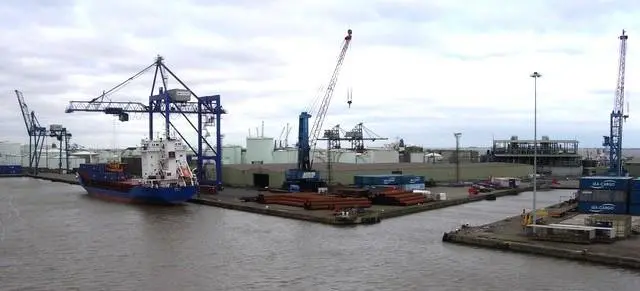
ABP and Stena Line say the facility will provide additional capacity for the growing unaccompanied-freight market and allow larger vessels to use the Humber. The terminal is expected to create around 700 construction jobs, followed by approximately 200 permanent operational positions.
ABP and Stena Line have positioned the project as a long-term investment in the Humber’s freight infrastructure, bringing a sizeable programme of piling, dredging, barge work and marine-structure installation to the Humber.
“We’re working with industry to unlock private investment into UK maritime – including through the National Wealth Fund” said Keir Mather, Aviation, Maritime and Decarbonisation Minister. “I look forward to seeing this project deliver for communities across Yorkshire and the Humber ahead of its opening in 2028.”