




New marine terminal receives first delivery
Almost 3,000 electric cars arrived at the Port of Zeebrugge in Belgium as the first stages to double its size are completed.
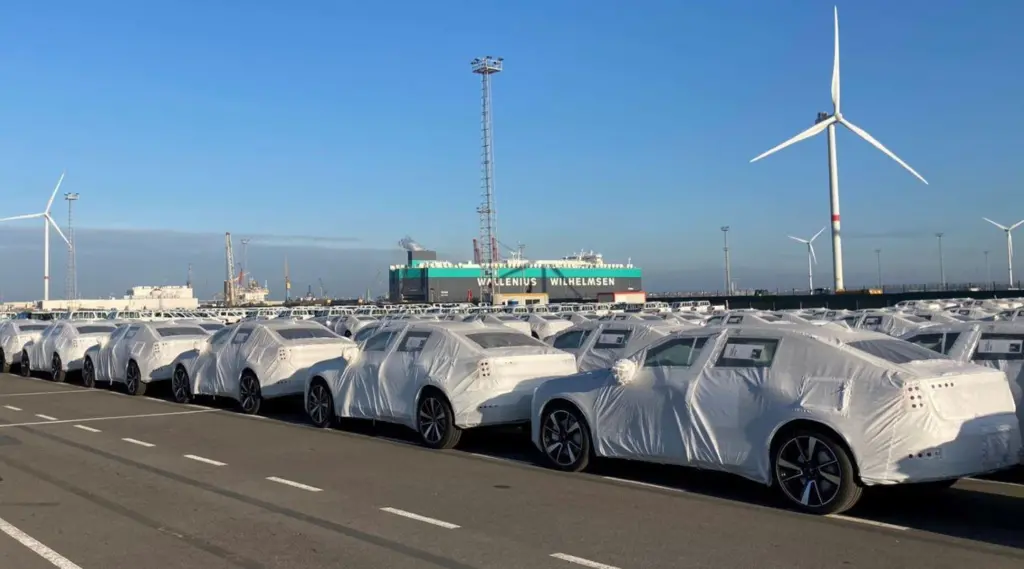
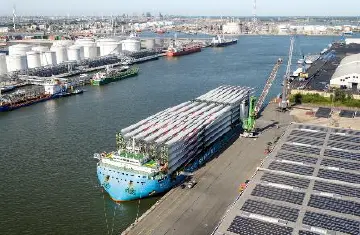
Almost 3,000 electric vehicles have been delivered to Belgium’s Port of Zeebrugge in the first delivery at its new expanded marine terminal of Bastenaken West.
The vehicles have been produced by Polestar and other automakers.
The expansion to double terminal was announced in February 2018 and has been completed ahead of time because Ro-Ro shipping and logistics firm Wallenius Wilhelmsen Logistics (WWL), which developed the terminal, said it fast-tracked construction due to increased cargo throughput and ongoing port congestion around the world.
The expansion includes three new berthing positions and 50 hectares of yard to process vehicles and equipment for the automotive, equipment and breakbult industries through a vehicle processing centre.
“Operations will be gradually ramped up as initial construction phases are completed, and several hundred jobs will be created once fully operational in 2027,” WWL says.
The expansion is being carried out to support the predicted rise in global manufacturing volumes, said Mike Hynekamp, COO Logistics Services with WWL, as well as increasing requirements of OEMs for vehicle processing sergices, which prepare cars for delivery.
“We expect that commercial vehicle growth will outpace that of passenger vehicles, in addition to increased heavy equipment and project cargo demand,” said Hynekamp.
One of the drivers will be the electric cars that made up the first delivery, with European sales of EVs overtaking diesel models for the first time in December, he said.
“Our operation at Zeebrugge, including the existing terminal and the expansion, is perfectly positioned to process these vehicles and transport them throughout Europe.”
The new terminal is at the corner of the Verbindingsdok with the Boudewijn Channel, and has two new quay walls to accommodate its three new berthing places.
It will have three wind turbines to supplyu what it says will be tghe entire site’s energy needs, with the potential to sell the energy back to the grid. It will also have EV charging points.
“The port, which handles 2.2 million units of cargo annually, serves as an important hub for us, with a network of deep-sea, short-sea and inland transport connections,” said Hynekamp.
Related Articles
 OTHER NEWS
 ACCESSORIES & EQUIPMENT
 OTHER NEWS