


New buoys mark Angolas LNG terminal
UK based navaids specialist Tideland Signal has supplied SB-2200 and SB-138 polyethylene buoys along with mooring equipment to the new LNG port at Soyo, Angola to mark the newly dredged access channel and turning circle.
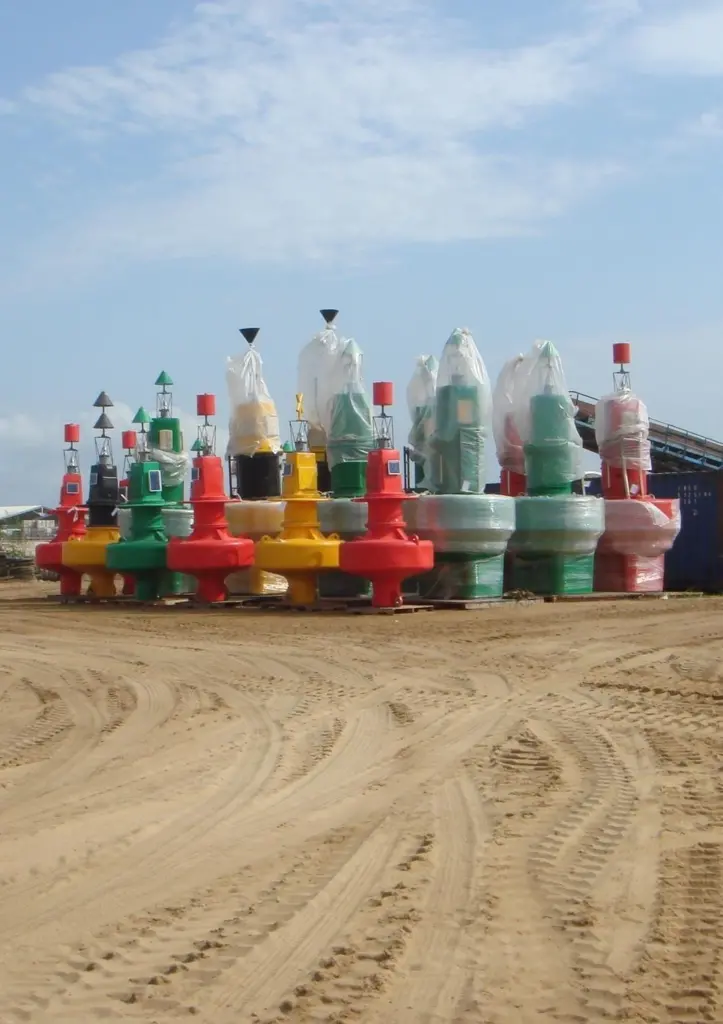
The buoys have been supplied complete with MLED-140 marine lanterns fitted and a high performance MaxiHALO-60 LED Flasher.
The installation was conducted in collaboration with Boskalis, which was responsible for civil engineering aspects of the project, including the dredging and reclamation of 140 hectares of land. In addition to supplying the aids to navigation, Tideland supervised the installation of the nine large buoys and ten of the smaller SB-138s, complete with lanterns, mooring kits and sinkers.
A Tideland SeaBeacon2 System 6 racon is installed on one of the larger buoys configured as a Cardinal Marker with an MLED-140 MaxiHALO lantern to mark a reef outside the channel. Four pairs of SB-2200s with MLED-140 MaxiHALO lantern (range 5nm) are deployed to mark the port and starboard extremes of the entrance to the approach channel. The SB-2200 buoys feature an asymmetric twin keel hull design that enables them to remain upright in fast currents, optimising the performance of the lantern beam for range and visibility.
Both the SB-2200 and the SB-138 are entirely manufactured from rotationally moulded polyethylene with a solid core of expanded polystyrene foam and are virtually unsinkable, as the integral foam core will prevent excessive water ingress in the event of a collision.
The rotational moulding process ensures a seamless body, using a mould which provides increased thickness of polyethylene at major stress points in the structure. Before moulding, the polymer is compounded with UV inhibitors and pigment so that the wall thickness is evenly UV-stabilised and colour is permanent and uniform throughout. As a result, painting is never necessary.
The Angola LNG project is the country’s largest single investment ever and utilises natural gas that would otherwise be flared off. In addition to reducing flaring and greenhouse gas emissions, it facilitates continued offshore oil field development, and contributes to the development of a future natural gas based industry within Angola.
Related Articles
 VESSELS
 MARINE CONSTRUCTION
 VESSELS