![MaritimeJournal[Seawork]](https://www.maritimejournal.com/wp-content/uploads/2026/09/MaritimeJournalSeawork.svg)



AMI launches BNWAS at Europort
AMI Marine (UK) Ltd launched its new Bridge Navigation Watch Alarm System (BNWAS) at Europort 2009 this month and has reported significant interest in the product.
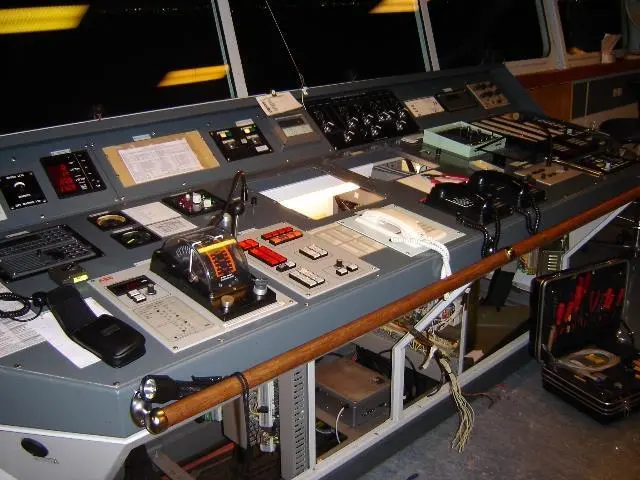
The company has already incorporated the latest changes following the release of the final draft international standard (IEC 62616) on 23 October into the fully tested BNWAS, which is compliant with IMO regulation MSC128(75) and is currently undergoing type approval.
AMI UK developed the new Bridge Watch Alarm System (BNWAS) following the IMO Committee’s decision to adopt the mandatory fitting of this equipment on all vessels of 150gt (keel lay base) or over.
Stuart Newman of AMI Marine said, ‘AMI is always at the forefront of interfacing and retransmission solutions and this is a good example of our immediate response to regulatory requirements. BNWAS already has the necessary specification for the IEC’s standards and we are now finalizing the type approval and expect to be one of the first fully approved systems on the market.’
The BNWAS System’s alerting procedure is designed to be unobtrusive yet easy to use. The smart touch screen system consists of a main alert panel, a remote alert panel and a watch alert panel for second and third stage alerts. Other outputs from BNWAS include a third stage active watch alarm for the general ship alarm and a fourth stage to activate the Ship Security Alert Distress System (SSAS).
Under the IMO specification two options are offered, either push button or motion sensor activation. With the first option, the system requires the Officer on Watch to push a button at regular intervals, which automatically triggers an alarm if they fail to do so.
The second option, using the BNWAS motion sensor, removes the need for the Officer to manually press a button to stop the alarm. The sensor detects movement from the Watch Officer which, once detected will not allow the alarm to trigger.
Design work for the system has been ongoing to interface with other bridge equipment under the standard. If any equipment capable of transferring an alarm by contact closure or equivalent circuit is not acknowledged within a specified period, then the BNWAS second stage alarm is automatically activated.
BNWAS also provides an interface for the NMEA standard alarm code, which needs to be recorded by the ship’s VDR or displayed by the ship’s alarm and monitoring system. Should there be a power failure, BNWAS is fully operational running on battery power for six hours. AMI’s system also incorporates resets from an input by the Officer of the Watch, which registers physical movement and mental alertness, using motion sensor equipment.
Related Articles
 ACCESSORIES & EQUIPMENT
 ACCESSORIES & EQUIPMENT
 ACCESSORIES & EQUIPMENT