![MaritimeJournal[Seawork]](https://www.maritimejournal.com/wp-content/uploads/2026/09/MaritimeJournalSeawork.svg)


Best EFFORTS have been rewarded
The research and development programme EFFORTS, an acronym for the title EFFective Operations in poRTS, is supported by the European Commission with € 8m.
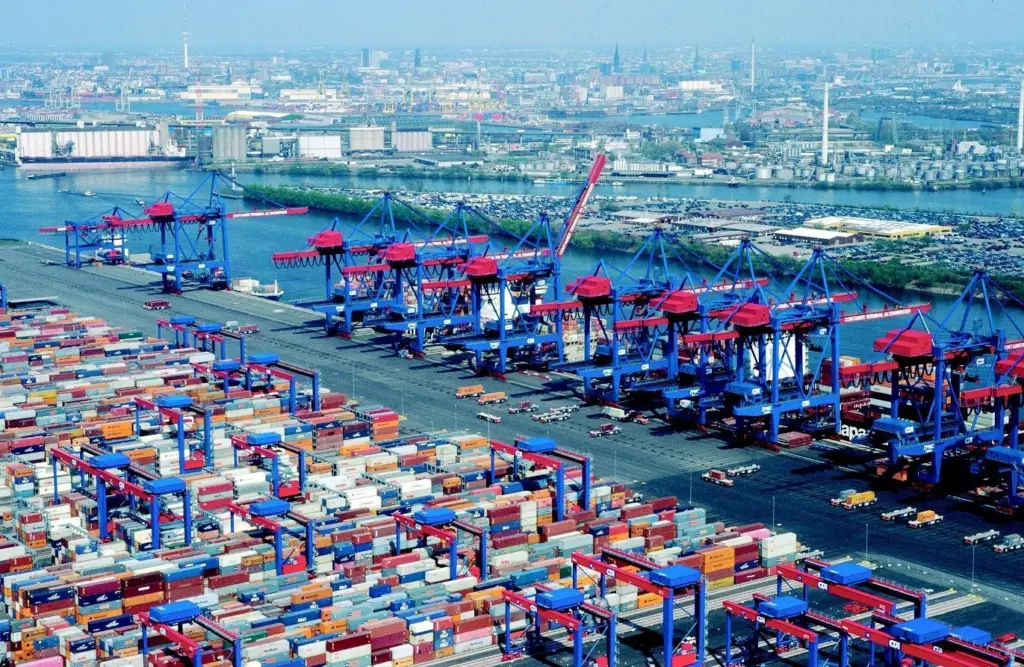
After three years of intensive European teamwork the first major EU Programme in ports will come to an end this month. Now, the results of the EFFORTS Team will face the litmus test of practical applicability.
By covering the specific topics
- Navigation in Ports
- Ports and Environment
- Port Operations
as well as the cross-sectional topic
- Training, Education and Human Resources Development
the programme partners faced a considerable challenge. But with 37 collaborators from all over Europe, sufficient professional competence could be mustered to compose special teams for each topic area. The results read like a wish list of every Harbour Master:
Navigation in Ports
Ships are getting larger and need to be dispatched ever faster, but ports can, if at all, only grow slowly. The important EFFORTS results for safe and fast port turnaround comprise:
- Further improvement of a simulator for the training of tug masters by mathematically modelling the hydrodynamic influences tug and large vessel exercise on each other
- Elimination of weak points of portable pilot units (laptops with positioning device) for extremely accurate track keeping of large vessels: The present units are considered too heavy and too cumbersome and time consuming to set up on the bridge of a vessel
- Substantial improvement of the capabilities of ECDIS to fulfil the requirements of the ports for extreme accuracy, for presentation of port specific objects and for a three-dimensional representation of the underwater morphology on a ‚Port ECDIS’. Present electronic nautical charts can only present two dimensional depth contours with individual depth identification as supplement information. It is obvious that not only navigation benefits from this development, but in particular dredging for the maintenance of shipping lanes and waterways.
Port and Environment
- Method to optimise the energy management in ports by reducing energy consumption, by avoiding consumption peaks, and by realising own energy production potentials, i.e. wind power and solar panels. Saved energy does not only reduce energy costs but also improves the Carbon Dioxide Footprint of the port, a concept that receives growing attention.
- Biocides, in conjunction with filter systems, are up to now the only known effective method to prevent the intrusion of our ports and coastal waters by foreign invasive species that are carried in the ballast water of ships. The effectiveness of selected biocides on these species as well as possible negative effects of biocide-contaminated ballast water on indigenous marine species were investigated and evaluated.
Port Operations
Port processes are of particular relevance when evaluating the effects of operational risks on safety, security and the environment for preventive measures and for effective contingency plans.
EFFORTS support problem solving in these areas through
- Methods and tools for analysing and controlling port processes both as technological-functional processes and as business processes
- Knowledge base and tools for risk assessment and risk controlling
Training, Education and Personal Development
EFFORTS proposes:
- To implement a European Port Skills and Competence Passport as standardised proof of qualification
- To establish a university network that offers education opportunities in specialised knowledge by way of formal lectures as well as via electronic media that are accessible from any arbitrary location and that will lead to accepted recognised academic degrees.
EFFORTS is guided and technologically-scientifically coordinated by ISSUS, the Institute of Ship Operations, Shipping and Simulation at the Technical University of Hamburg. One of the most spectacular results of the programme, the Port ECDIS, has been achieved by and under the expert responsibility of the hydrographic and survey department of the Hamburg Port Authority. Nielson & Partner is responsible for the analysis and standardisation of the business processes. TuTECH Innovation took over PR and Lütgens & Reimers contributed substantially to the development of the tug operations simulator. The Hamburg partners are, thus, responsible for the lion share of the programme volume.
Related Articles
 ACCESSORIES & EQUIPMENT
 ACCESSORIES & EQUIPMENT
 ACCESSORIES & EQUIPMENT