![MaritimeJournal[Seawork]](https://www.maritimejournal.com/wp-content/uploads/2026/09/MaritimeJournalSeawork.svg)

Bunkering hub planned for Thames Estuary
A UK based marine fuel supplier is to establish a ship bunkering hub in a busy part of the Thames Estuary aimed at taking advantage of the close proximity to a number of major shipping lanes.
The operation will involve the services of the local port authority to enhance safety in a location that provides natural protection from the worst weather conditions.
Better known as a London based marine oil trader, Cockett Marine Oil are drawing on the resources of South African parent company The Grindrod Group together with Unicorn Shipping and Rotterdam based Associated Bunker Oil Contractors to provide the service from three anchorage positions in the Queens Channel around five miles north of Margate on the north Kent coast.
The location is at the heart of the shipping routes to and from the Thames and Medway and close to the Sunk VTS area and approaches to Harwich and Felixstowe. The busy Dover Strait Traffic Separation Scheme is around 15 miles from the planned site. The area is also experiencing a proliferation of service vessels involved in offshore wind farm developments, expected to increase further when work starts shortly on the giant London Array wind farm, which can be expected to bring a significant amount of extra traffic into the area. Five wind farms are currently at various stages of development in the estuary.
The location will be attractive from a commercial point of view but safety in this busy area will also be an important factor and Cockett has worked closely with the Port of London Authority in developing the plan. As the location is within the seaward limit of the PLA’s area, the authority’s involvement should enhance the safety and environmental considerations. The area comes under control of the London VTS coverage with extensive radar, communication and weather monitoring facilities covering it.
The Queens Channel runs in an east to west direction parallel to the nearby dredged and buoyed Princes Channel, one of the main arteries to and from the Thames and Medway. It is unused by commercial shipping but is both wide and deep and benefits from being in the lee of the Margate Sand to the south, providing a natural shelter from the prevailing south westerly winds that could pose problems with such an operation in the more exposed waters of the outer estuary. The Tongue deepwater anchorage is also some five miles from the location.
Particular attention has been paid to environmental considerations and a tier-two spill response capability will be adopted, involving a rapid deployment facility including specialist craft, oil containment booms and associated kit together with personnel fully trained in oil spill response techniques. As well as the on-site facilities, an enhanced response capability will be based at nearby Ramsgate.
A range of both low and high sulphur fuel grades will be supplied by barge from Rotterdam and at the time of writing two tankers had been chartered for the service from Belgium owner Lauranne Shipping through Cockett’s sister company Unicorn Shipping.
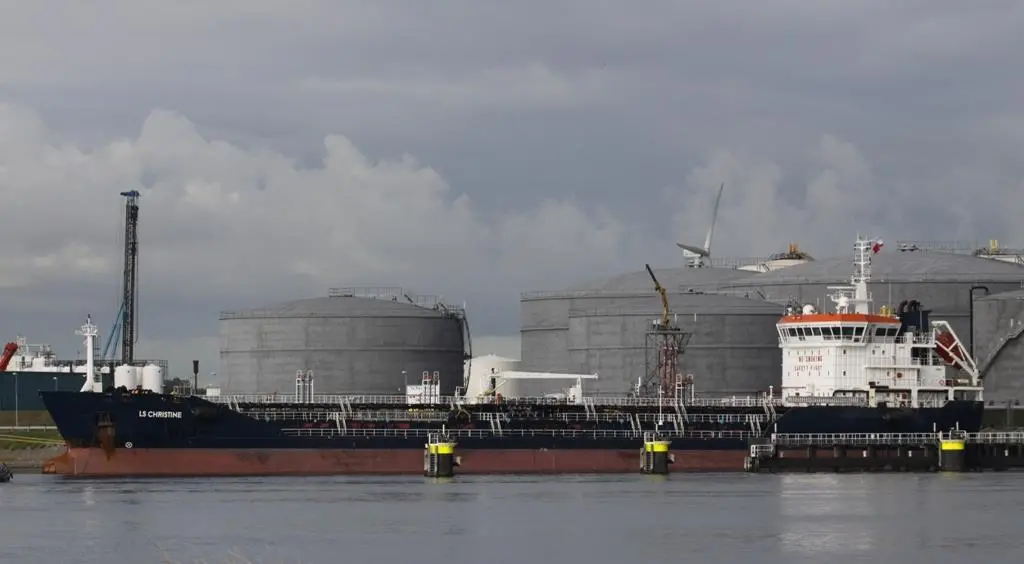
The 2009 built, 5,775dwt LS Jamie and the 2007 built, 8,673dwt LS Christine are double hulled, highly manoeuvrable vessels with segregated tanks able to hold a variety of products. Able to achieve a pumping rate of some 800 cu/m/hr, each vessel has dual centre and stern manifolds and a 20m crane height.
By Peter Barker
Related Articles
 ACCESSORIES & EQUIPMENT
 ACCESSORIES & EQUIPMENT
 ACCESSORIES & EQUIPMENT