![MaritimeJournal[Seawork]](https://www.maritimejournal.com/wp-content/uploads/2026/09/MaritimeJournalSeawork.svg)





Cold weather cable a flexible friend
Climate change is a reality that will have an effect on us for years to come. Controversial as it seems, the reduction of the Arctic ice has made changes that will make it possible to work in this region in a way which was not imaginable 20 years ago. Nevertheless conditions in this area are really rough, not just for people but also for equipment.
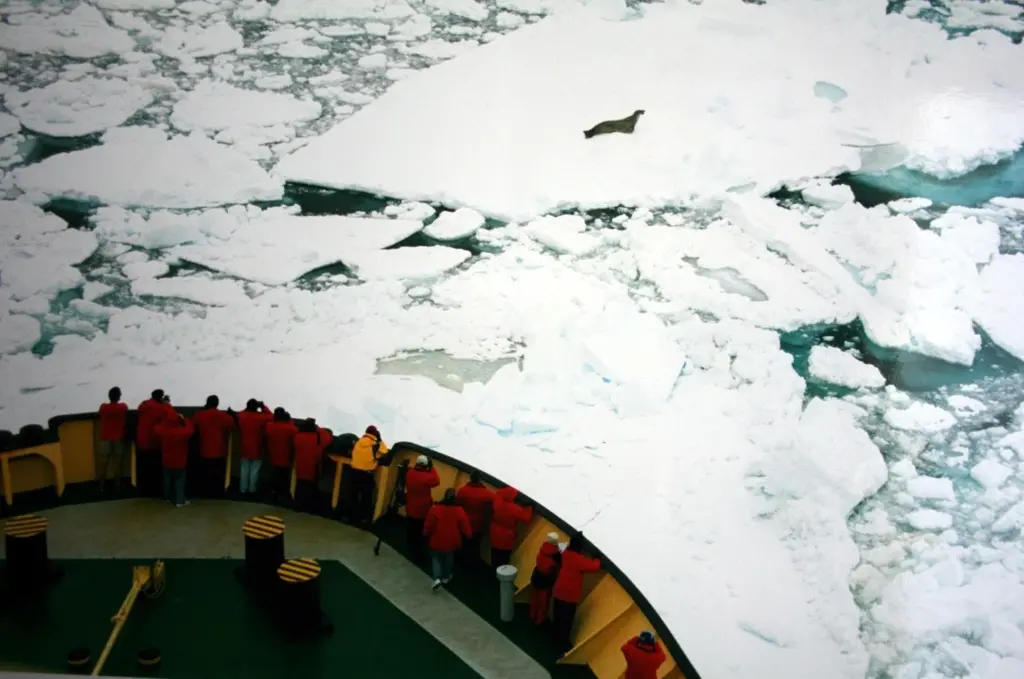
Cabling is by its nature is prone to becoming stiff and brittle with intense cold, but it has been given greater resilience by a new development that allows it to remain flexible at temperatures even as low as – 50°C.
Nexans, a well known name in the cable industry, has launched Iceflex, the world’s first marine and offshore full range cable qualified for extremely low temperatures such as those experienced in the Arctic. This range of cable is intended for use in a wide variety of shipboard and offshore/onshore applications
Nexans’ Salvatore Di Giorgio told MJ, ‘The ability to withstand these environmental constraints is a major technical achievement.’ It is a point which has particular relevance for workboats and geosurvey vessels. As Mr Di Giorgio points out, ‘This will make it easier to safely develop oil and gas fields, shipping routes and processing plants in the high Arctic.’
The new technology works through extending the useful phase of the polymers. At low temperatures, all polymers are glassy, and soften to a more rubbery state upon warming. The key to ensuring that cables maintain these mechanical properties down to very cold temperatures (-50°C), remaining flexible rather than brittle, is to lower the glass transition temperature of the rubber insulation.
The concept is easy. The practice is very challenging, and the Iceflex project required some complex polymer engineering which called upon the expertise of Nexans’ R&D centres around the world. It wasn’t just the glass transition temperature that had to be cracked. To ensure that the cables did their job and remained reliable out in the field, the right material had to be found that was also highly fire retardant and resistant to oils, grease and aggressive fluids. The actual process involved is commercially confidential, but the result is the basis for Iceflex cabling.
Iceflex is available in two versions, Halogen-Free Flame and Fire Retardant (HFFR) and halogenated versions. The cables do not generate smoke, fire or toxic gases when heated and play a crucial role in maintaining power supplies for vital safety equipment, such as emergency lighting, fire pumps and communications circuits. The cables are fully certified by Lloyds Register.
The new cables have also been designed to be mechanically tough, standing up to UV, ozone and other chemicals. Iceflex won’t crack or break when subjected to sustained vibration or violent physical shocks which may occur during operations. It isn’t just the cold temperatures that are the problem. Iceflex will also stand up to wide and abrupt temperature swings in all directions.
Related Articles
 ACCESSORIES & EQUIPMENT
 ACCESSORIES & EQUIPMENT
 ACCESSORIES & EQUIPMENT