![MaritimeJournal[Seawork]](https://www.maritimejournal.com/wp-content/uploads/2026/09/MaritimeJournalSeawork.svg)



Electrically driven high power AHTWs due
Workboats are now having to operate further and further from shore, often in either deeper or simply more difficult conditions as all kinds of energy markets open up, from geo-exploration further into arctic waters to marine renewable energy projects with wind, tidal and wave power.
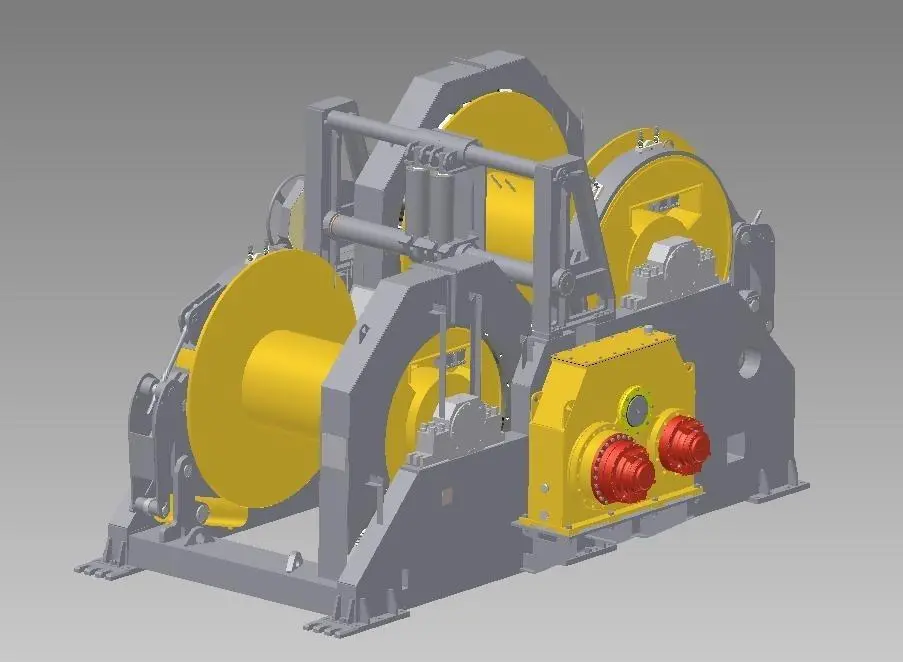
Equipment development must keep pace and MacGregor will soon be offering anchor handling towing winches (AHTW) with pulling powers of between 300 tons and 600 tons which it will be able to supply in both hydraulically and electrically driven versions.
Chai Chon Kim, executive director of MacGregor Plimsoll said, ‘The new winch range came about from a need to develop units that could handle heavier equipment at even greater depths. Therefore we embarked on a project to match these increases in size with winch pulling capabilities.’
Although traditionally supplied as hydraulically operated, the new range of AHTWs will also be available as electrically driven units. The target date for the launch of MacGregor’s new electrically driven AHTW is planned for the end of 2009, with an expected delivery for summer 2010.
‘Requests were made from some vessel owners regarding the possibility of using electric drive winch packages, as they believed that these would deliver better performance and be a significantly more effective technical solution than a hydraulic drive. Additionally, the electric drive solution is also the most environmentally friendly, explained Chai Chon Kim. ‘With these requests, as well as the advances in electric drive technology, we decided to look at further developments in the industry for electrically driven 300 ton to 600 ton AHTW packages.
‘The conceptual design of the electrically driven AHTW started around November 2008, after the first 300 tonne hydraulic design was completed. After almost six months of development, we produced a design that incorporates the majority of mechanical components used in the hydraulicdrive winch. ‘The design concept allows MacGregor to build up the winch, including drums, shafts bearings and frames, for either type of drive, and simply add on the hydraulic or electric drive package. This concept allows for the standardisation of components, which translates to savings in both the overall design and manufacturing costs.’
The electric drive versions have available many of the same features as the hydraulic ranges, with four speed ranges, dynamic braking, hydraulic spooling devices, electro-hydraulic power packs and pilot systems for the operation of clutch and brake cylinders and spooling systems.
Related Articles
 ACCESSORIES & EQUIPMENT
 ACCESSORIES & EQUIPMENT
 ACCESSORIES & EQUIPMENT