![MaritimeJournal[Seawork]](https://www.maritimejournal.com/wp-content/uploads/2026/09/MaritimeJournalSeawork.svg)


Expanded VTS for Port of Liverpool
Radio communication specialist, Northwest Radio has devised an intelligent radio system to assist in the management of vessel traffic in the busy port of Liverpool.
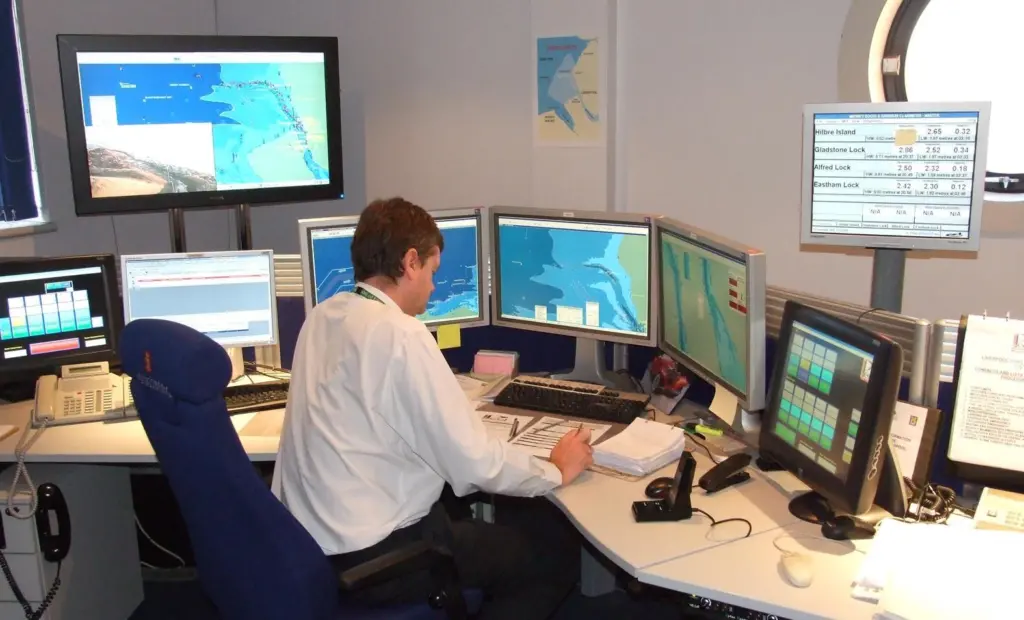
Vessel Traffic Services (VTS) are responsible for managing the VTS area which includes the Port, River Mersey and the port approaches. The new radio system allows VTS at the port to supply a range of services to ships, from the provision of simple radio communications to extensive management of traffic within the port or waterway.
The Port of Liverpool is one of the busiest ports in the UK. It is a gateway to trade from North America and more than 100 other non-EU destinations. In addition, the Port of Liverpool sees nearly 750,000 people per year travelling on Irish Sea ferry services and cruise ships.
The new radio system, installed last year, is equipped with seven radio PC consoles with large touch screen monitors and ten Icom repeaters to provide the necessary radio coverage. The system spreads its web across five locations via microwave links and fibre optics. A dual network path was installed to cater for the necessary bandwidth required by the new radio system and CCTV cameras.
The system covers the locks in Gladstone and Langton, which are controlled remotely from the central base, the Liverpool Grain Silo at the port, Lynas on the north Welsh coast and the Manchester Ship Canal.
Installation of the system was spread over the five sites across a seven day period running side by side with the older system. Switch over was in a quiet period and went straightforwardly. The new system is centrally controlled by VTS from the control room. The height of the Liverpool Grain Silo provides the system with excellent coverage.
Paul Clay, VTS manager at the Port of Liverpool said, ‘The system allows us to speak with incoming vessels over a wide area and record all voice communication. The system has to be incredibly fine tuned because of all the differing standards of radio equipment onboard some international vessels. We are able to coordinate the pilotage of large vessels throughout the Port. It is a difficult task with the various shipping hazards.’
Related Articles
 ACCESSORIES & EQUIPMENT
 ACCESSORIES & EQUIPMENT
 ACCESSORIES & EQUIPMENT