![MaritimeJournal[Seawork]](https://www.maritimejournal.com/wp-content/uploads/2026/09/MaritimeJournalSeawork.svg)






Filling in the missing pieces
Subsea lifting has risen enormously in complexity, but the standards, being based on the simpler operations of the past, have lagged far behind.
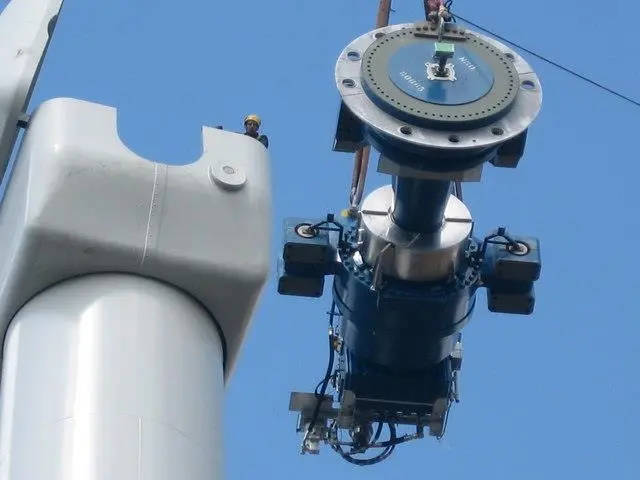
This has left “some missing pieces” for operators who want a solid basis for lifting plans, Ivar Kvaleid of DNV GL told Maritime Journal.
For example, installation or recovery in very deep water can result in resonance since the motion of the vessel can be close to the natural period of the lifting system. “This is normally not a problem in small depths, but with longer lifting ropes, the stiffness is reduced and the natural period increases,” he explained.
Further, while there are several systems that are designed to limit or compensate for vessel and wave motion to reduce the dynamic loads and/or reduce movement at the end of the line, the use of these systems can reduce the service life of the rope significantly, specially for larger diameters.
As the issue stretched from windfarm foundations and cable laying to other types of offshore structure the industry has responded with a three year joint industry project and the formulation of ‘recommended practices’ on the proper design and correct operation, as well as regular inspection and maintenance, of subsea cranes and related appliances: “What we have done is tried to fill in the missing pieces for subsea lifting operations,” Mr Kvaleid said.
However, while the existing rules and regulations “tended not to talk about subsea lifting directly beyond a few mentions” this didn’t stop a huge number of practical overlaps and Mr Kvaleid admitted the biggest challenge was tying it up: “It’s a very broad subject, so one issue was gathering sufficient information; another was that we had to refer to a lot of other standards and not to repeat or contradict them, and finally, we had to put it together so as to be useful, user friendly, rather than a massive document,” he said.
By Stevie Knight
Related Articles
 OTHER NEWS
 ACCESSORIES & EQUIPMENT
 ACCESSORIES & EQUIPMENT