![MaritimeJournal[Seawork]](https://www.maritimejournal.com/wp-content/uploads/2026/09/MaritimeJournalSeawork.svg)






Integration will only increase
Navigation and communication equipment for recreational vessels has marched ahead over the last couple of years. Now, the opportunities on the commercial side are on the increase with integration of systems the latest trend.
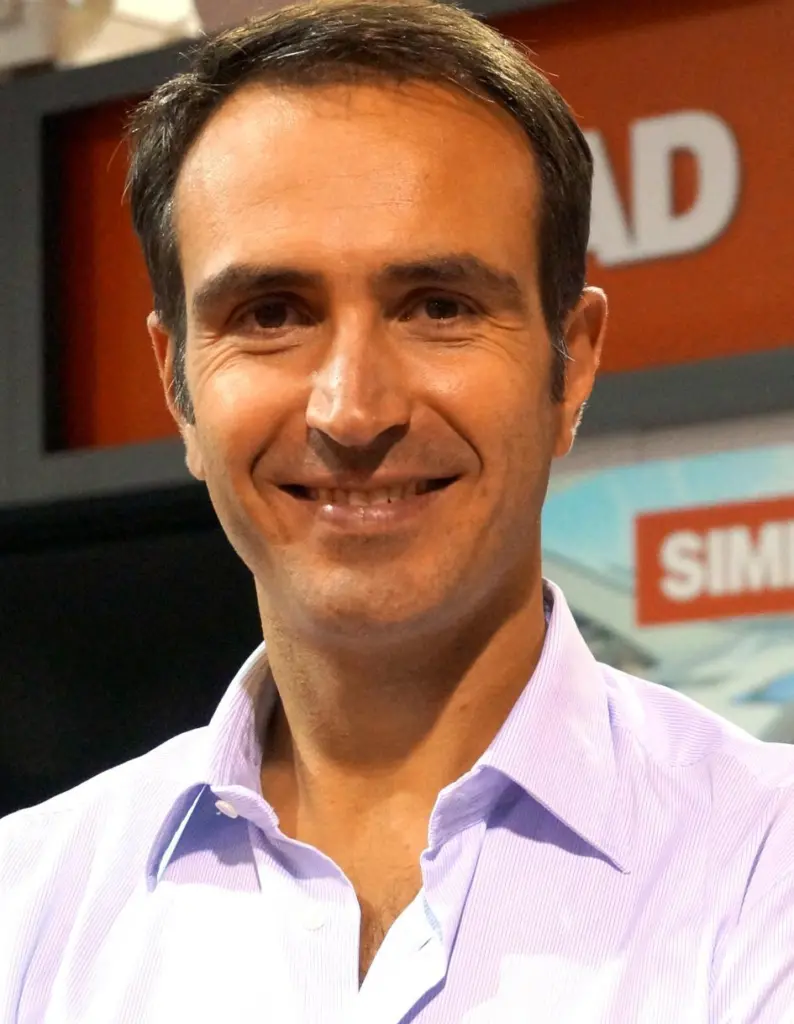
That’s according to Navico’s Jose Herrero EVP, MD Commercial Marine Division who told Maritime Journal that integration of the user interface and product innovation are only going to increase in the future.
“The performance in the consumer market has been much faster than in the commercial market,” he said. “It’s much more advanced in terms of technology. “Ships have always operated in a very fragmented way in terms of their instrumentation and navigation but that is changing.
“Integration is a large trend in the market – as broadband capacity is set to increase and prices become lower, connectivity has become easier and more reliable.”
Navico – parent company to the Simrad brand and which recently announced it had reached an agreement to acquire MARIS from The Grieg Group – is developing the latest electronic chart display and information system (ECDIS) and radar solutions product providing crews with a higher level of integration and improved ease of use.
Continuing the trend, the ECDIS will integrate with the autopilot, radar, and other bridge instruments.
“We’re investing heavily at the moment. Integration is a key fundamental platform.
“In the past the industry provided equipment in a very modular way,” added Mr Herrero.
“Integration across all the interfaces will come eventually and with our equipment we will be providing a very coherent solution. The equipment is becoming more standard in commercial vessels from the presentation and function of information to integration of the information from the vessel to onshore as well. It’s going to be very revolutionary.”
And with the products becoming more connected, information will also be able to be shared more easily between the vessels themselves and their shore side operations still allowing owners to monitor and track their vessels.
“It’s a lot of hard work and we need enough resources to do it as fast as we would like, but it’s a very exciting time and there will be a real impact on the user and fleet owner.”
Another aspect Navico has to consider with the increased integration is the fact that crews often work on different vessels and as such need to be familiar with all the different equipment this may entail.
“We need to ensure the same interface across our products and how the functionality in the future will be integrated, such as more homogeneous HMI for radar and charting tools, integration with other navigation equipment, how the information is collected and brought back to shore for analysis,” explained Mr Herrero.
“The instruments will be easier to use and the information easier to analyse. There will be a clear linkage between planning and navigation and monitoring of the ship; bridge planning will facilitate greatly the procurement and usage of information for navigation aid.
“Innovation is just going to accelerate. There are a lot of opportunities in the market and we’re working hard work our R&D teams and product development teams to bring more solutions to the market.”
But Mr Herrero is equally quick to point out that systems won’t be ‘all or nothing’ with customers still having the choice to purchase solutions that are modular and scalable to fit their needs and allowing them to operate in a safe yet cost-effective manner.
By Katina Read
Related Articles
 OTHER NEWS
 ACCESSORIES & EQUIPMENT
 ACCESSORIES & EQUIPMENT