![MaritimeJournal[Seawork]](https://www.maritimejournal.com/wp-content/uploads/2026/09/MaritimeJournalSeawork.svg)



Learning from the Australians
OMC has recently opened a UK office, to help promote its Dynamic Under Keel Clearance (DUKC) system and support its European installations. This technology has been proven in the difficult waters found around Australia.
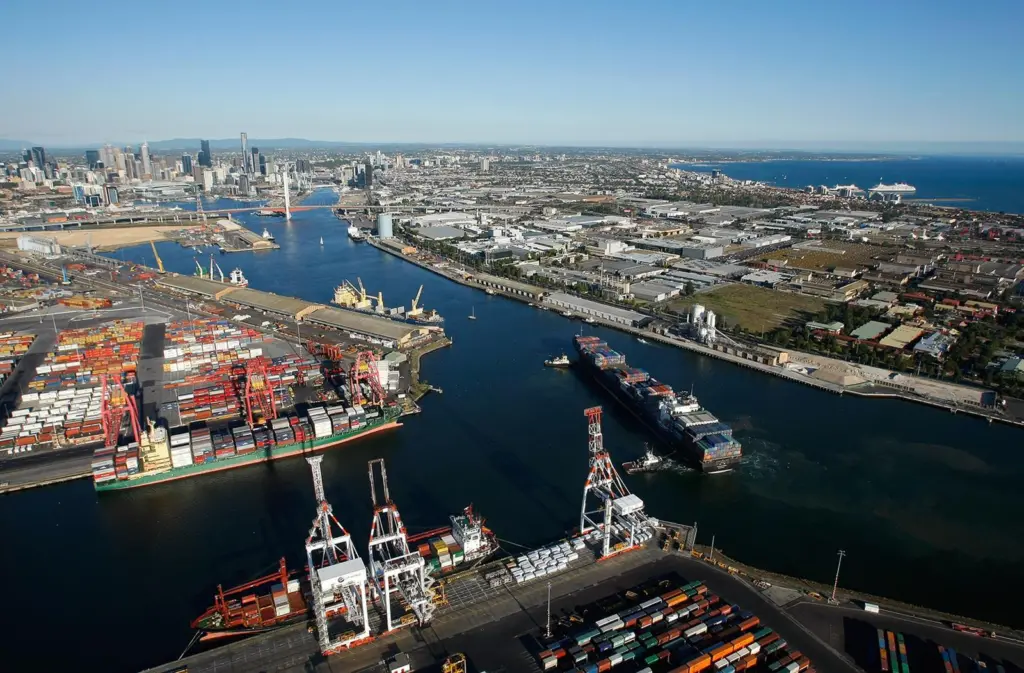
Melbourne for example has the Port Phillip heads at its entrance, where swells up to five metres can sometimes combine with a six knot ebb current, causing even large ships to plunge several metres downward.
In fact this June saw Melbourne’s port authority make the use of DUKC navigation compulsory for every deep draft vessel transiting its waters. All 35 Port Phillip sea pilots are now accessing the DUKC system on their PPUs (Portable Pilot Units) while in transit to and along Melbourne’s long approach channels and river.
Pilots will be provided with live data for all variables which affect the under-keel clearance of their vessel, and will be able to continuously monitor it and adjust speed as required to optimise clearance and manoeuvrability.
The system will also be integrated into Melbourne’s two VTS centres to provide port operators with the same underkeel predictions and grounding warnings as the ship’s pilot receives, so they can transmit it in case of PPU breakdown.
The system analyses data on waves, tides and currents and vessel dynamics in real time to produce the safest and most efficient transit of large vessels in and out of ports and along draught restricted waterways.
OMC founder and director Dr Terry O’Brien explains that DUKC is all about the vertical dimension where you deal with centimeters, not metres, in accuracy of clearance. ‘That is why we have to have very refined ship motion models and quality controlled environmental data inputs,’ he says. ‘With the horizontal dimension, pilots navigating down a channel can look out the window to get their visual cues, and to help them decide their course.
‘In the vertical dimension, looking out the window doesn’t tell you very much about how much clearance you have underneath you. You can feel a vibration usually when you are getting close to the bottom but that doesn’t tell you 200 metres further on that you are in danger of the ship striking the bottom. That is why accurate prediction is very, very important and has to be done with the use of sophisticated hydrodynamic models.’
He adds, ‘When a pilot takes a ship out into the Atlantic, with swells of five meters height and 12-14 second periods interacting with two to three knots of current and the ship is pitching, it is very difficult for the pilot to estimate whether the the movement dowards is going to be three, four or even eight metres.’
DUKC technology is already placed in 19 ports worldwide, including European locations that now include Bremerhaven and the Weser River waterway in Germany.
Related Articles
 ACCESSORIES & EQUIPMENT
 ACCESSORIES & EQUIPMENT
 ACCESSORIES & EQUIPMENT