![MaritimeJournal[Seawork]](https://www.maritimejournal.com/wp-content/uploads/2026/09/MaritimeJournalSeawork.svg)






LED lighting interference
There has been a significant switch on board vessels to LED lighting, but it could come with a price reports Dag Pike.
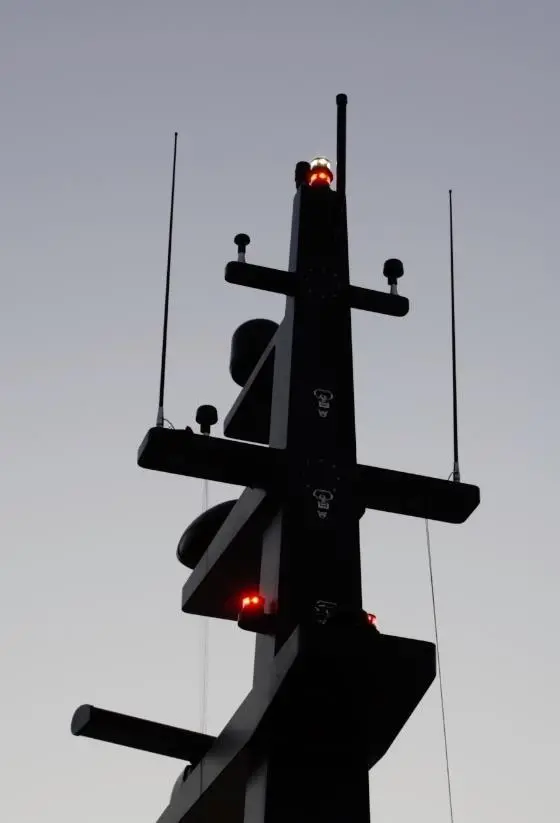
This has been particularly the case with smaller craft where LED bulbs are now widely used for navigation lights and search lights as well as interior lighting because of their increased brightness, dramatically lower power consumption and reliability over traditional filament bulbs. Now the maritime community is being warned that this form of lighting could significantly affect the operation of VHF radios and AIS systems.
The initial warning has come from the U.S. Coast Guard who says that it has received reports from crews, ship owners, inspectors and other mariners regarding poor reception on VHF frequencies that are used for radiotelephone communications, digital selective calling (DSC) and automatic identification systems (AIS) when these are operated in the vicinity of light emitting diode (LED) lighting on-board ships. The Coast Guard report says that this form of lighting is now widely used on board vessels of all types but the interference can be a significant factor for smaller craft where the LED light sources will often be installed much closer to the radios. Much of the lighting found in the wheelhouses of smaller craft can now be based on the use of LED bulbs and there have been reports of the radio frequency interference creating safety hazards.
AIS ISSUES
Examples for the hazards that have been created by the interference and its effects on communications come from a maritime rescue coordination center in one port being unable to contact a ship that was involved in a traffic separation scheme incident by VHF radio. The ship involved was experiencing very poor AIS reception. AIS is dependent of using the VHF frequencies on the VHF radios for their communication links and are often integrated into the VHF transceivers. Other ships have experienced degradation of the VHF receivers, including AIS, caused by their LED navigation lights. The problem can be particularly severe when the LED lighting is installed near to the VHF antenna which has been shown to compound the reception problems which could account for the focus on navigation light sources of LEDs.
TEST YOUR BOAT
It may be possible to test for the presence of LED interference by using the following procedures:
1. Turn off LED light(s).
2. Tune the VHF radio to a quiet channel.
3. Adjust the VHF radio’s squelch control until the radio just outputs audio noise.
4. Re-adjust the VHF radio’s squelch control until the audio noise is quiet, only slightly above the noise threshold.
5. Turn on the LED light(s).
6. If the radio now outputs audio noise, then the LED lights are causing interference and depending on the level of this interference it could prove difficult to receive valid signals on that channel. If the radio does not output audio noise, then the LED lights are not causing a problem.
If the interference noise is found to have been raised, then it is likely that both shipboard VHF marine radio and AIS reception are being degraded by LED lighting.
Other sources have suggested that the interference being experienced is caused by the way in which the LED lighting and its wiring can interfere with the very weak GPS signals, bearing in mind that timing from the GPS system is used to operate the AIS. This in turn is leading to speculation that the interference caused by the LED lighting could affect the validity of GPS positioning. Mariners have been asked to report any incidents of interference so that the scale of the problem can be established.
Related Articles
 ACCESSORIES & EQUIPMENT
 OTHER NEWS
 ACCESSORIES & EQUIPMENT