


Lone Worker Protection Progress
The Land & Water Group, a specialist marine civil engineering contractor, employs over a hundred people, many of whom work alone on sites around the UK which are on or near watercourses. Three years ago it developed (in house) a lone worker system which, if submerged in water, would send out an audible alarm and three text messages to pre-programmed destinations.
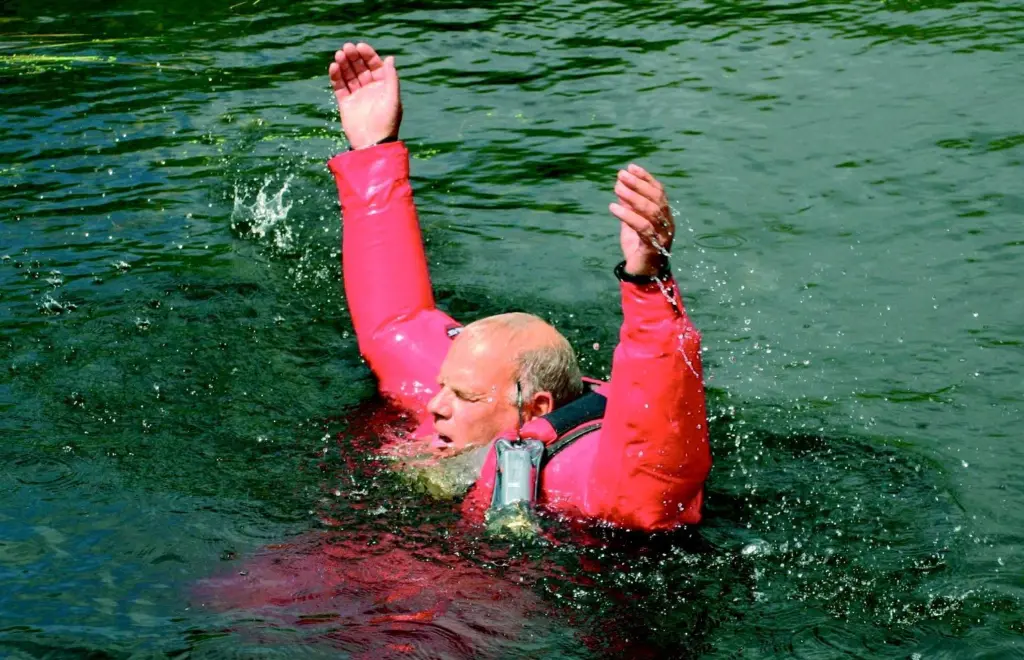
The system gave workers and customers radically improved levels of safety and for the first time it was possible for operators to work securely in remote areas.
However, over the three years it has been in operation, Land & Water realised that weaknesses existed which had to be resolved in order to make the Lone Worker system the most advanced on the market.
The key issue with the first system was that it relied on mobile telephone coverage to send out text alerts. Unfortunately, many of the areas Land & Water work in are rural and mobile phone coverage can be poor.
Therefore the most important requirement for a new system was that it had to work on any site where Land & Water would be likely to work, anywhere in the world. It quickly became apparent that the only practical solution was to use satellite technology, which ensures coverage as long as there is sky above the unit.
Realising that this was not a development which could be done ‘in house’, Land & Water approached several partners with specialist knowledge of lone working monitors and SBES, a dynamic provider of this type of equipment, agreed to research and develop a product in partnership to accommodate the needs of Land & Water.
The trials proved hugely successful and rather than being a system which only activated when submerged in water, by using satellite technology, the new Lone Working System enabled a range of other benefits including:
. The system can report its location as often as required . The system can be used remotely (in a rucksack or sewn into a jacket) or can be hard wired and to any vehicle.
. There are three different types of alert, a man in water alert, a man down alert or a panic alert.
. When an alert is sent out, the exact location can be downloaded onto street level mapping or a PDA device.
. The alerts are sent as an email which is faster and more reliable that the old systems texts which could take 15 minutes to arrive.
. The system is virtually maintenance free and couldn’t be simpler to use – all the lone worker needs to do is wear it, there are no on or off switches.
If it’s being worn, the system is active.
Following further trials, Land & Water and SBES believe the Lone Worker system will be beneficial to many other people who have lone workers in remote areas.
The system is currently undergoing trials with the UK Environment Agency which is testing it against their existing mobile phone based protection system.
MJInformation No: 22247
Related Articles
 ACCESSORIES & EQUIPMENT
 ACCESSORIES & EQUIPMENT
 OTHER NEWS