![MaritimeJournal[Seawork]](https://www.maritimejournal.com/wp-content/uploads/2026/09/MaritimeJournalSeawork.svg)

Long line is lifeline in emergencies
The inventor of a unique life saving throw line is concerned that lives are being lost in the UK because fire and rescue teams do not have appropriate safety equipment.
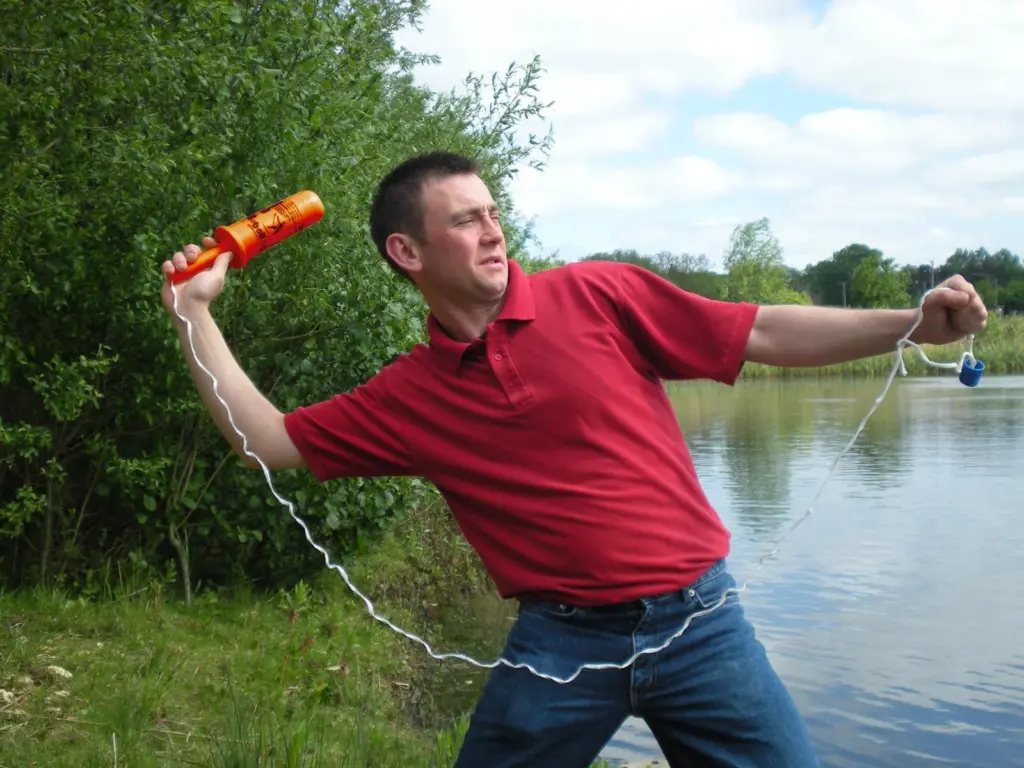
John Rinfret, inventor of the BELL throw line, has expressed concern following the drowning of a man in a frozen Northamptonshire lake where the fire and rescue team which attended the emergency had to watch the man drown because their throw line was not long enough to reach him.
John Rinfret invented the BELL throw line, a device that allowed anyone to throw it to the best of their ability up to its full length of 40m back in 1973. As a result it was recognised as a vast improvement on all traditional lifesaving equipment because it was able to reach drowning victims at much greater distances than had previously been possible.
The BELL is the only throw line to be certificated internationally for use at sea by both Bureau Veritas and the Maritime & Coastguard Agency as well as the United States Coast Guard, according to UK safety company and BELL supplier, Balcan.
“I am concerned that by recommending and using short lines there will be a greater number of deaths by drowning that could have been avoided if only the victims were able to be rescued by the much longer reach of the remarkable BELL, said John Renfret. “Because emergencies can occur at any distance from safety, it is logical that potential rescuers should have versatile equipment readily at hand to use just as quickly as they need to use it. It is also essential that equipment is capable of use by anyone without the need for prior training.”
In 2000, the BELL underwent trials by Naval Support Command and subsequently allocated NATO Stock Numbers (NSNs) by the Royal Navy, which assessed them as being easy to use with a much more accurate longer reach. It also has adequate strength of 118kg as internationally specified for the quoits and line used in lifeboats and liferafts. As a result BELLs are now widely used through the MoD and were previously used in the Falklands conflict.
The plastic capsule in which the line is packed is bright orange in colour so it can be easily seen on the surface of the water and remains distinctive from the recently introduced yellow coloured shorter 25m version. Both allow the capsule to be repeatedly thrown during a rescue attempt and to be easily repacked for storage purposes. It has to be recognised that repacking a long line takes longer than packing a short line.
In a bid to once again draw attention to the merits and the importance of the BELL as an essential life saving tool, Balcan has produced a new leaflet which it is circulating to Fire & Rescue teams, Constabularies and other relevant authorities in the UK.
Related Articles
 ACCESSORIES & EQUIPMENT
 ACCESSORIES & EQUIPMENT
 ACCESSORIES & EQUIPMENT