![MaritimeJournal[Seawork]](https://www.maritimejournal.com/wp-content/uploads/2026/09/MaritimeJournalSeawork.svg)



McMurdo down under
Techno-Sciences, a recently-acquired company of the UK headquartered McMurdo Group, the end-to-end search and rescue and maritime domain awareness division of Orolia (FRA) has announced that it has been chosen by the Australia Maritime Safety Authority (AMSA) and Maritime New Zealand (MNZ) to deploy their next-generation satellite-aided search and rescue systems.
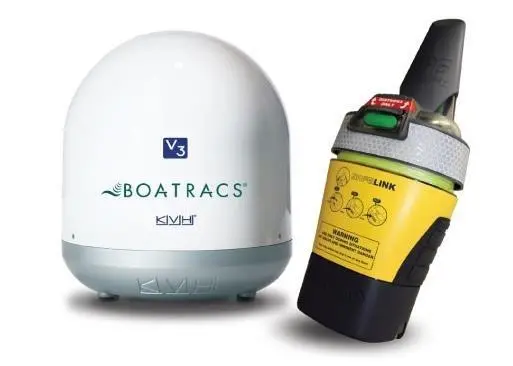
The MEOSAR (Medium-altitude Earth Orbit Search and Rescue) installations will be the first such systems in Asia Pacific and will significantly reduce the time between a distress beacon activation and the resulting emergency alert notification from hours to minutes, greatly accelerating the rescue coordination effort by SAR personnel. As a result, survivors will be found faster and more lives will be saved.
“Australia and New Zealand have two of the largest SAR regions in the world, and we are pleased to help them create a more responsive system for those needing assistance in an emergency,” said Jean-Yves Courtois, CEO of Orolia and McMurdo Group.
The deal, which exceeds €13 million includes a six-antenna MEOSAR satellite ground station system (MEOLUT) in each country, a common Mission Control Centre (MCC) in Canberra and associated support and maintenance. Installation is scheduled to start in September 2014 and is expected to take 15 months. The installation phase will be followed by a 10-year maintenance period.
In a typical satellite-based search and rescue scenario, ships, aircraft or individuals transmit distress signals from an emergency location beacon via satellite to a fixed ground receiving station, or local user terminal (LUT). The ground receiving station calculates the location of the emergency and generates an alert for the appropriate rescue authorities. Today, the beacon-to-alert process depends on a limited number of Low-altitude Earth Orbit (LEO) satellites and may take several hours before a position is confirmed. The development and implementation of MEOSAR will reduce this time to minutes.
“Australia has the second largest number of registered distress beacons in the world,” said AMSA’s Chief Executive Officer Mick Kinley. “AMSA is continually looking to take advantage of new technology in its search and rescue system, and the MEOSAR system will allow us to detect and respond to beacon activations in a more timely manner.”
TSi, which was acquired by McMurdo Group in May 2014, has been instrumental in the development of the COSPAS-SARSAT international satellite-based SAR program, which has helped to save nearly 37,000 lives worldwide since 1982. The company is also actively involved in MEOSAR, the next-generation COSPAS-SARSAT system, which will greatly improve the existing SAR process with near-instantaneous detection, identification and location of emergency distress beacons. MEOSAR, currently in its Demonstration and Evaluation phase, is expected to have Initial Operational Capability in 2016 and Full Operational Capability by 2018.
By Jake Frith
Related Articles
 OTHER NEWS
 ACCESSORIES & EQUIPMENT
 ACCESSORIES & EQUIPMENT