

Mobile simulator training for dredge masters
Although the dredging market has had a skills gap for quite some time, there are now fewer barriers to training crew.
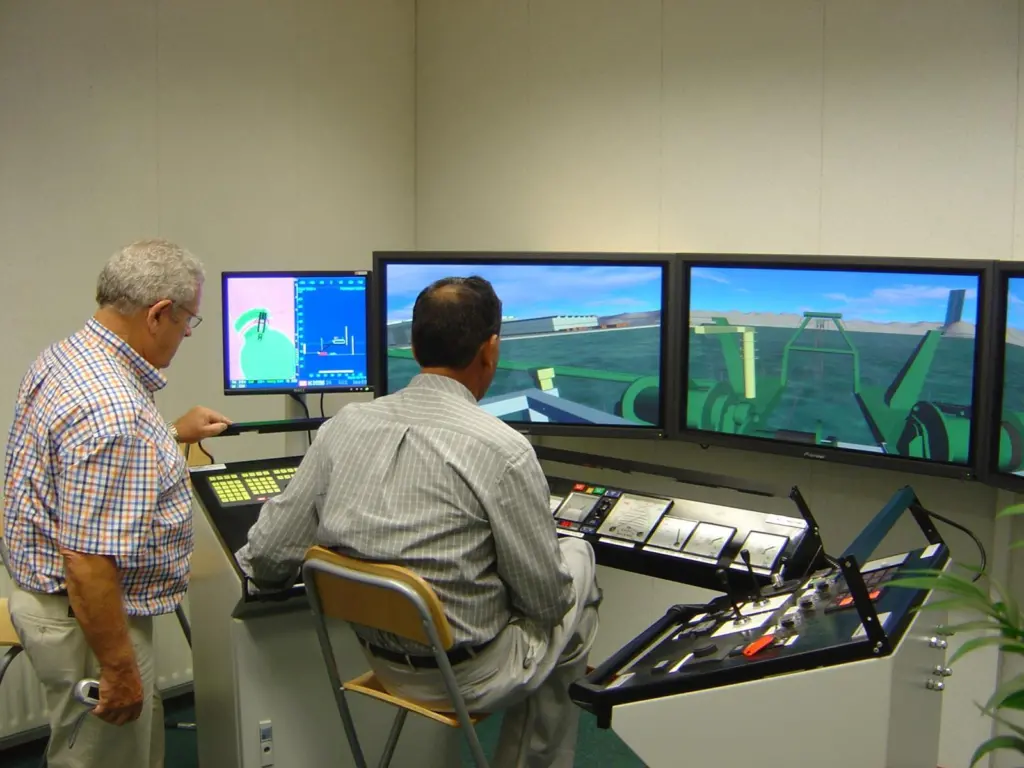
One of the most notable advances is technological, several new mobile dredger simulators have appeared on the market recently. Although the simulators are expensive, the Netherlands’ Training Institute for Dredging (TID) has invested in two cutter suction dredger simulators purchased from its sister company, IT Systems.
Sergio Ooijens of TID explains that, while the mobile simulator is based in the Netherlands, TID flies it all over the world. The other TID simulator is in China and the training team there is kept continuously busy according to Mr Ooijens.
Mr Ooijens believes the investment is worthwhile, especially since the mobile simulator means that TID can now put in place a training programme anywhere there is a power supply.
The training structure is effective, he explains, because it puts together a combination of simulator and hands-on training. ‘We put people onto the simulator first, and then move to training in the field, with the last pieces of advice delivered in a follow-up’, he explains, going on to add that a lot of the most intensive work actually takes place on dry land.
‘The good thing with the simulator is that you can create situations such as dredging in difficult conditions on differing types of surface like clay or rock, or with certain constraints such as trenching for pipe laying to specified depths, that are not easy just to go and find in the field.’ There are also other difficulties that can be programmed in, such as combinations of soil types, waves, currents and winds, all of which put the trainees through their paces and make sure that they know what can happen. ‘We do get people into trouble on purpose,’ joked Mr Ooijens.
As for results, the company was recently in a position to see a crew trained by TID working alongside a cutter crew that hadn’t had this benefit. ‘The two dredgers were almost identical in everything but efficiency’ said Mr Ooijens. ‘Even better, the clients could see it too.’ The TID trained crew had a more stable dredger and higher production rates. ‘This was really good because the clients could see that the two dredgers had significant production level and operational differences. It is risk, not just production that is important, downtime causes a problem for everyone.’
TID is also now launching a complementary web-based training in the new year, making training opportunities even more flexible, and global.
Related Articles
 ACCESSORIES & EQUIPMENT
 ACCESSORIES & EQUIPMENT
 OTHER NEWS