![MaritimeJournal[Seawork]](https://www.maritimejournal.com/wp-content/uploads/2026/09/MaritimeJournalSeawork.svg)


MPSA forms for passive ship safety
Miko Marine AS of Oslo has signed on as one of the founder members of the Paris based Maritime Passive Safety Association (MPSA).
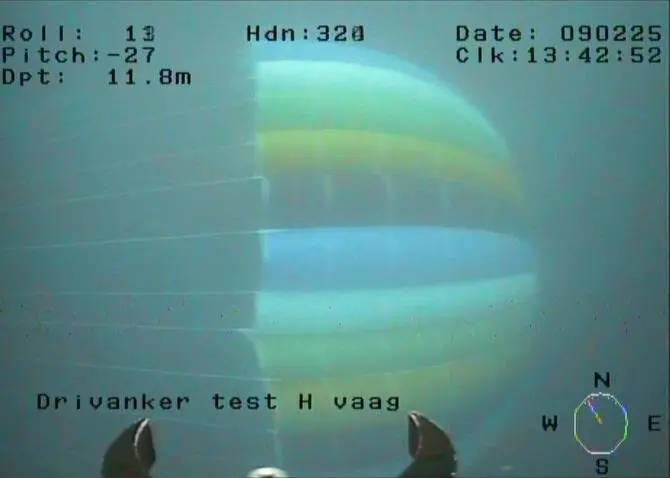
It has joined the fledgling organisation to support its aim of encouraging the shipping industry to build ships that include features that will enable them to cope better in an environmental crisis. Miko Marine has been welcomed into the Association as it has two product lines that can be carried as insurance against disaster and which clearly illustrate the MPSA’s objectives.
The ShipArrestor is an advanced sea anchor that has demonstrated an ability to turn a supertanker into the wind and halve the speed of its drift in the event of engine failure. The ShipArrestor project is also designed as a helicopter-delivered salvage tool where the anchor creates more time for a ship to be put on tow before grounding, with disastrous consequences for the environment and those onboard.
Following demonstrations of the ShipArrestor’s effectiveness, its implementation is now being discussed by the maritime authorities in Norway, United Kingdom, Germany and Sweden. The current trend of government financial cutbacks and the predicted loss of the UK’s emergency towing vessels (ETVs) has given the system additional emphasis as a high value salvage tool capable of creating more time for the ship to be reached by scarcer and less widely available towing vessels. Yet even when a rescue tug is available the sea anchor is important as it can be extremely difficult for salvors to get a tow line to a vessel drifting in extreme conditions. If the ship has been abandoned it becomes impossible and can only be achieved by putting a salvage crew on board by helicopter at tremendous risk to themselves.
The sea anchor can, however, be installed in a small container on the foredeck of any ship, from where it can be launched automatically if the need arises. It is also being recommended for inclusion as part of the Emergency Towing System (ETS), which is compulsory for tankers and other vessels above 30,000 DWT. A 30m diameter sea anchor made from modern high strength materials applies a 700 m2 braking force that research and full scale testing have demonstrated can turn the ship’s bow into the wind and reduce its drift speeds by more than 60%. This is particularly important as a ship without power will always drift beam-on to the weather, which can create extreme conditions on board. By keeping the bow up into the wind, rolling is reduced significantly and this minimises the risk of deck cargoes or container stacks being lost overboard. When, in 2008, a jack-up drilling rig was lost overboard from the heavy lift vessel Titan-1 under these conditions, it resulted in a $280m insurance claim that would have been avoided if a ShipArrestor had been used.
A sea anchor would also have substantially reduced the dangers faced by the 2,000 passengers and crew of the MSC Opera when its engines failed in the Baltic Sea on 14 May this year, where it drifted helplessly for most of the day. The slab sides of the luxury cruise ship created a windage estimated at around 7,000 m2, which is more than twice the sail area of the record breaking sailing clipper the Cutty Sark. Experts consequently believe that a stronger wind would have quickly blown a ship of this type ashore with potentially fatal consequences for those aboard. Although the MSC Opera was spared by the calm and windless weather it was, nevertheless, barely six miles (10 km) from the rocky coast of Gotland before it was rescued by a tug.
The Maritime Passive Safety Association is now working to encourage the construction of ships with features that will minimise their ecological impact by simplifying their recovery or salvage if things go wrong. The Fast Oil Recovery System from JLMD of France is a typical example as it is a product that enables the ship’s oil, whether cargo or bunkers, to be quickly and cleanly recovered if it is grounded. The Association is now keen to attract other manufacturers with products that can be added to the available inventory of passive safety technology.
Related Articles
 ACCESSORIES & EQUIPMENT
 ACCESSORIES & EQUIPMENT
 ACCESSORIES & EQUIPMENT