![MaritimeJournal[Seawork]](https://www.maritimejournal.com/wp-content/uploads/2026/09/MaritimeJournalSeawork.svg)





New broadband radar warns of pirates
Navico’s new Simrad IMO radar system takes a threefold approach to safenavigation, simultaneously acting as a docking aid, pirate detectionsystem and enhancing collision avoidance.
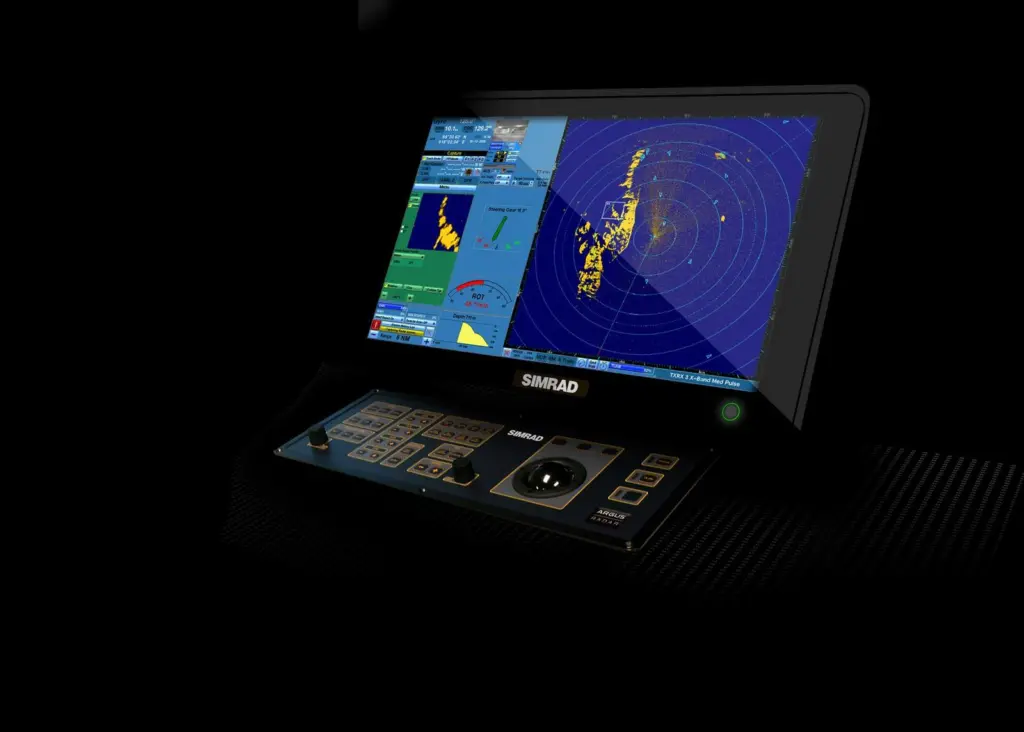
It does this by combining solid state Frequency Modulated Continuous Wave Broadband technology and pulse radars. Named Argus, this addition to the Simrad product range marks the company’s presence in the SOLAS market and entrance into a lucrative £12bn vessel protection segment and comes at an opportune time, with piracy being particularly high on the IMO agenda in 2011.
“The Argus radar allows identification and tracking of small targets such as pirate skiffs ahead of confrontation, giving them the time to assess and then address the situation. Forewarned is forearmed, said Navico CEO Leif Ottosson, adding that the product is the culmination of five years of research and development. “The vessel can change course to make it hard for the pirates to intercept it, the captain can roll the ship to prevent boarding, send out a request for assistance, ensure that staff are safely ensconced in a citadel if need be and deploy other protection measures that are carried onboard.”
The Simrad Broadband radar operates by transmitting a continuous wave with linear increasing frequency, allowing it to calculate the distance and flight of objects in the vicinity that reflect the wave back at the original frequency (as the rate of transmitted frequencies is known).
Argus is able to detect small targets as close as six feet from the antenna on the shortest scale and can also separate targets that are 30 feet apart in range on the scales used for navigation. The radar can be mounted on the bow or stern (or both), thereby supplementing the conventional IMO radar information and significantly reducing blind spots around the vessel. In addition to being able to zoom in on and track suspicious targets, the technology has been especially designed to reduce noise and interference and information can be viewed on a second screen in full colour (IMO specifications call for limited colours in radar presentation).
There are a number of other benefits. “Argus is easy to install due to an all in one black box unit and the Broadband dome’s small size. The Broad band radar requires very low maintenance since it has only two moving parts in addition to the drive belt, said Tim Ryder, Navico director for professional markets. “Also, it can be mounted close to crew quarters since, unlike traditional radars, there is very little radiation, less than 10% of the amount emitted by a mobile phone.”
Argus is particularly effective as a navigational safety tool as it is able to combine long range radar imaging with a close range view of potential collision hazards, thereby allowing precision docking.
“The navigator will be able to see the ships in the area, the dock, all moving targets and even buoys and navaids, Ottoson said, adding that being able to see all the information on one screen in one user friendly format decreases the risk of human error. With these features, CCTV camera control and more ‘”he Simrad Argus radar series is set to be the standard for tomorrow’s maritime fleet.”
Related Articles
 ACCESSORIES & EQUIPMENT
 ACCESSORIES & EQUIPMENT
 ACCESSORIES & EQUIPMENT