![MaritimeJournal[Seawork]](https://www.maritimejournal.com/wp-content/uploads/2026/09/MaritimeJournalSeawork.svg)






Personal Locator Beacon ups capabilities
McMurdo FastFind 220 and Kannad SafeLink Solo personal location beacons (PLB) can now operate on the Galileo Global Navigation Satellite System (GNSS) writes Dag Pike.
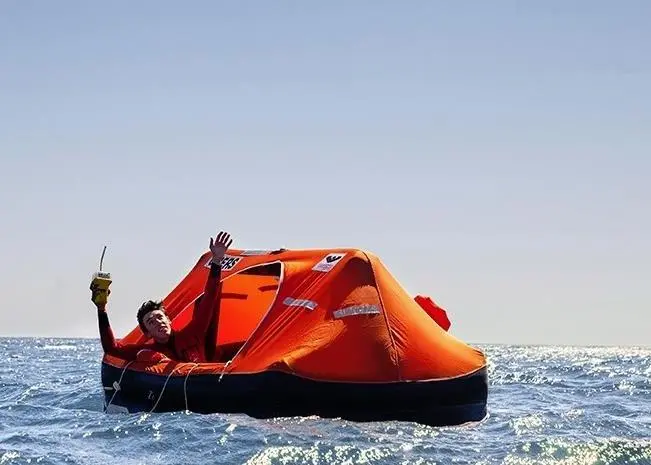
These PLBs are the world’s first to utilise Galileo’s capabilities and are the first in a series of new solutions coming from the EU-funded Helios project, led by Orolia, which was set up to utilise the power of Galileo. The launch of this advanced PLB follows approval from the U.S. Federal Communications Commission.
“We are proud of this achievement,” commented European GNSS Agency (GSA) Executive Director Carlo des Dorides. The fact that this is the world’s first Galileo-enabled personal location beacon is a significant milestone. That it comes as a result of a Horizon 2020 project managed by the GSA makes it even more satisfying. The GSA actively supports beacon manufacturers in implementing Galileo differentiators into their products and we are delighted to see these efforts deliver tangible results,”
Orolia multi-constellation capable beacons work with a wider range of satellites, offering increased coverage and supporting accelerated rescue in emergencies. Location detection is more precise because the beacons receive coordinates from both Galileo and the GPS constellations
The Galileo satellites make up part of the MEOSAR system, the next generation of the Cospas-Sarsat international Search and Rescue satellite system. The Galileo constellation now consists of 26 satellites out of the planned 30, with a target of 2020 for completion of the network. Although the Galileo system was down recently as far as position and timing were concerned it was reported that the search and rescue aspect satellite system continued to operate.
The McMurdo FastFind and Kannad SafeLink PLBs are part of Orolia’s comprehensive search and rescue ecosystem and join the McMurdo SmartFind G8 and Kannad SafePro series emergency position-indicating radio beacons (EPIRBs) as the first Galileo capable rescue beacons. Orolia’s McMurdo brand builds, integrates and tests products as part of a live search and rescue system. This ensures greater cohesion between distress signal transmission and reception so that beacon owners can feel confident that their signals will get to search and rescue authorities quickly.
Related Articles
 ACCESSORIES & EQUIPMENT
 OTHER NEWS
 ACCESSORIES & EQUIPMENT