



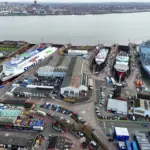


Port of Mobile Resorts to PORTS
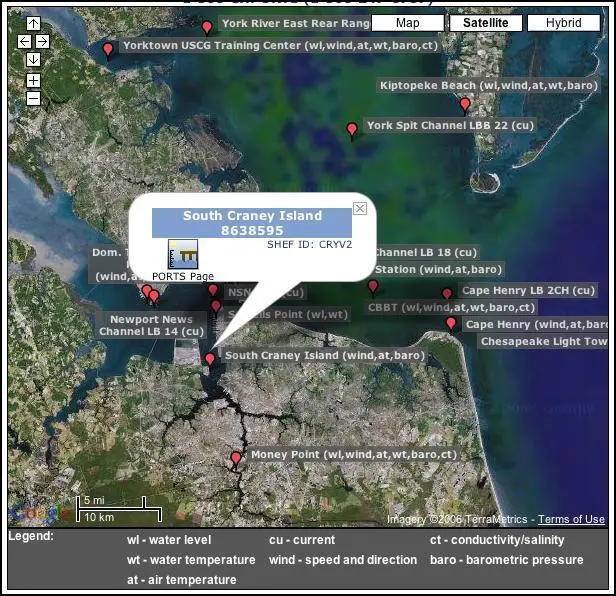
The Port of Mobile, Alabama in the USA has become the 14th location in the nation to install the Physical Oceanographic Real-Time System (PORTS), developed and operated by the National Oceanic & Atmospheric Administration (NOAA) to provide accurate real-time oceanographic and meteorological data to mariners that can significantly reduce the risk of vessel groundings and increase the amount of cargo moved through the port. The system became operational earlier this month.
‘NOAA is committed to providing real-time environmental data through PORTS and other integrated ocean observing systems to ensure safe, efficient navigation within our nation’s ports and beyond’, said John H. Dunnigan, NOAA assistant administrator for the National Ocean Service.
Administered by the NOAA Center for Operational Oceanographic Products and Services, PORTS measures, integrates, and disseminates observations of water levels, currents, salinity, wind, and bridge clearance. Knowledge of environmental conditions can significantly reduce the risk of vessel groundings and increase the amount of cargo moved through a waterway by enabling mariners to safely utilize every inch of dredged channel depth. Port of Mobile PORTS data are updated every six minutes and thoroughly quality controlled to ensure accuracy.
‘PORTS gives our shippers, pilots, and regulatory agencies important, real-time information on navigational conditions, which allows for the optimization of cargo carriage and improves safety’, said James K. Lyons, director and CEO of the Port of Mobile.
While designed to be of service to the marine transportation community, the data are freely accessible on the Internet at http://www.tidesandcurrents.noaa.gov/ports. NOAA PORTS information users include port authorities, vessel pilots, shipping companies, U.S. Coast Guard, U.S. Navy, recreational boaters, fishermen, coastal managers, environmental organizations and academia.
The Mobile system brings to 14 the number of PORTS in operation around the nation. Studies have shown more than a 50% decrease in vessel groundings following the installation of PORTS in other areas. Estimates of economic benefits directly attributed to PORTS range from $7m per year for Tampa Bay to $16m per year for Houston-Galveston. The Port of Mobile is the 11th largest in the United States, handling 24m tons of cargo in 2006, accounting for $89.5m in revenue.
Related Articles
 ACCESSORIES & EQUIPMENT
 ACCESSORIES & EQUIPMENT
 OTHER NEWS