![MaritimeJournal[Seawork]](https://www.maritimejournal.com/wp-content/uploads/2026/09/MaritimeJournalSeawork.svg)




Row sours Kiel Canal lock deal
German Government comment that funding of a €300m new lock on the Kiel Canal could mean years of delay for other equally urgent projects on the waterway has drawn criticism from local officials.
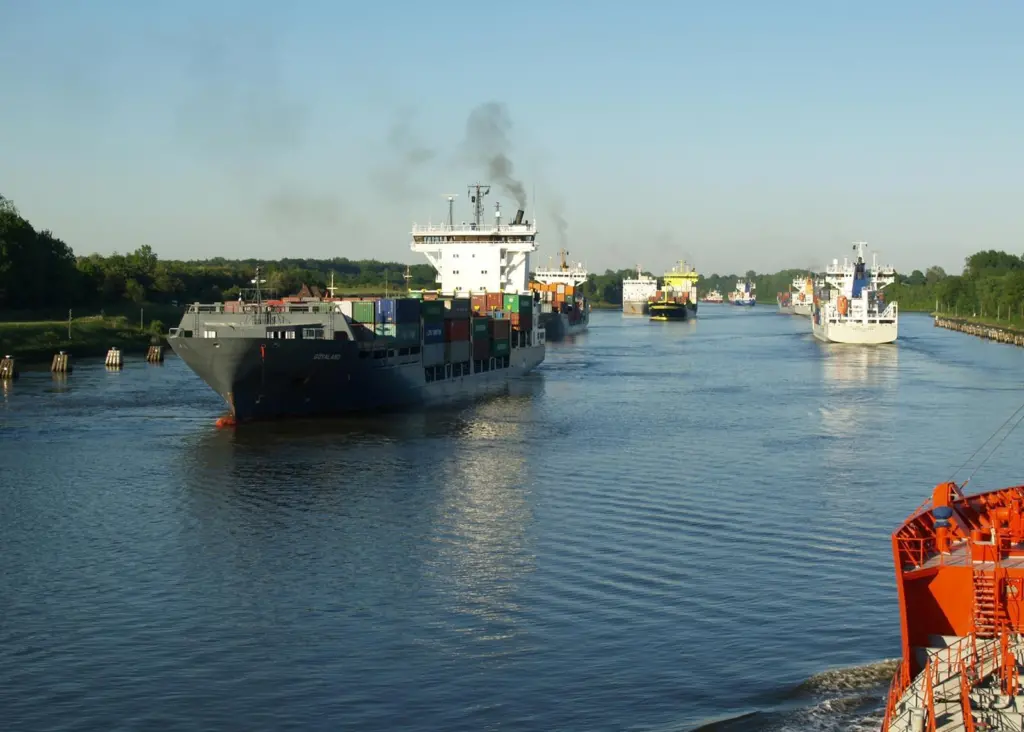
Ending years of delay and after much protest, the Berlin Transport Ministry recently recommended that €60m be spent this year and for four further years on building a new, fifth, lock in Brunsbüttel on the Elbe at the southwestern (North Sea) end of the canal.
The funding followed warnings that locks in Brunsbüttel are in danger of imminent collapse. They often break down, causing long and expensive shipping delays on what is the world’s busiest artifical waterway. Kiel Nautical Association head Jürgen Rohweder said the locks were “in a disastrous technical state”.
German Transport Minister Peter Ramsauer said, “The necessary construction measures have been put off for years. Now we are getting on with them, and as a result making the canal more efficient.”
The lock decision, work will reportedly start on 17 April, was welcomed by seaports, local authorities and state officials. However a Transport Ministry spokesman has now thrown the cat back among the pigeons by saying it means there could be no more cash available for the canal until about 2015. That would apparently mean shelving other major canal projects costing about €1.25bn and seen as just as vital for the future.
Schleswig-Holstein Chamber of Commerce President Christoph Leicht said the Ministry comments were “incomprehensibly disappointing”. His body says the waterway is vital for Germany and north Europe. It is now demanding an early Ministry pledge to carry out the additional work.
The canal projects now under threat are the straightening and widening of the 11km long northeastern stretch between Königsfelde and Kiel on the Baltic, work which Berlin itself ordered in 2010 and wanted to complete in 2014. That is to be followed by the deepening of the whole canal by one metre to 12m. Finally, the locks in Holtenau, at the Kiel end, also urgently need renovation.
Without the work, say officials, the Kiel Canal will be unable to handle ever-bigger container feeder ships and will have no future. They have a point. More than a third of about 10m containers handled in Hamburg, Germany’s biggest port, are shipped via the waterway. A spokesman said, “Without the Kiel Canal, Hamburg is nothing!”
The 100km long canal saves ships a journey of 250 sea miles around Skagerrak. The cargo carried on it has more than doubled since the end of the 1990s to nearly 100m tons last year, carried on 33,500 ships. The average size of ships has risen from 2,600gt in 2001 to 4,600gt in 2011.
By Tom Todd
Related Articles
 ACCESSORIES & EQUIPMENT
 ACCESSORIES & EQUIPMENT
 ACCESSORIES & EQUIPMENT