![MaritimeJournal[Seawork]](https://www.maritimejournal.com/wp-content/uploads/2026/09/MaritimeJournalSeawork.svg)






Safer sensors come down from the skies
A wireless fluid level measurement system has been developed by NASA scientists which eliminates the inaccuracy associated with a vessel’s movement, and the system can also be adapted to detect contaminants such as water.
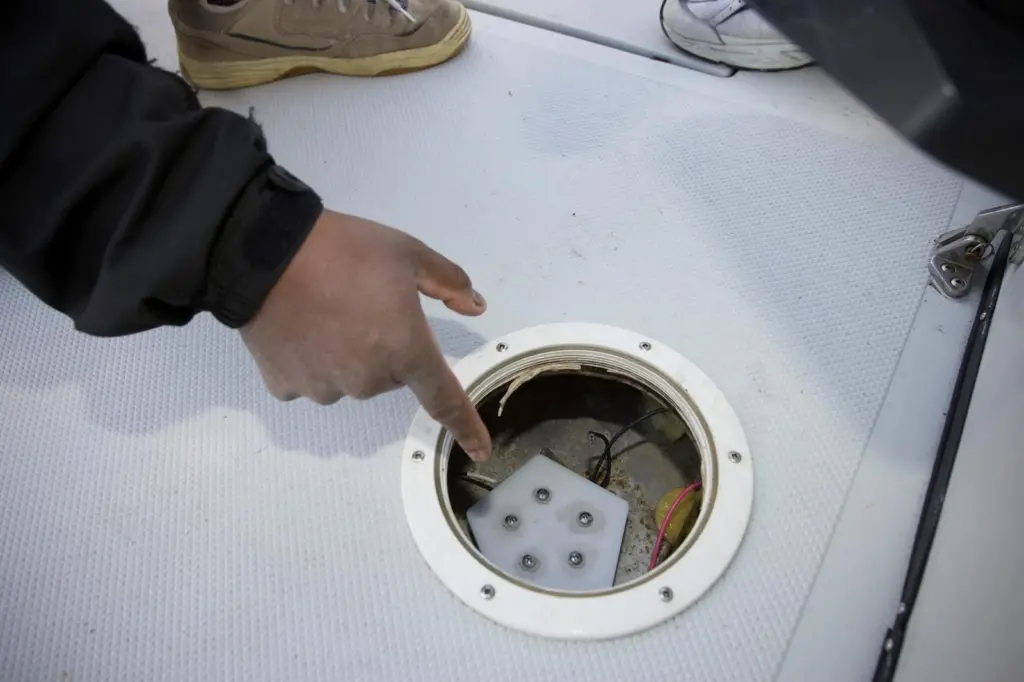
While normal pitch and roll in open waters can create a ‘seesaw’ effect on fuel gauges, this new wireless fluid level measurement system can mitigate the effect by taking readings from a number of inputs. It works through placing two stationary pieces of conducting material located in the fuel, connected to an inductor on the outside of the tank.
The thin-film fluid measurement sensor is configured with a spiral electrical trace on a flexible substrate. It uses a magnetic field response both to provide power to the sensor and receive measurements from it. This translates into allowing the sensors to be completely enclosed, so the fuel level can be measured without contact with any electrical components.
Also, as the unit receives power wirelessly, there is no need for a power source, which eliminates the potential for fires as a result of combustible fuel vapours being ignited by arcing from damaged or exposed electrical wires or panels. This particular design feature also allows the system to be used with fluids like acids or other harsh chemicals. And, as it is a non-mechanical system there are no moving parts, reducing the probability of failure.
Created by senior scientist Stan Woodard of NASA’s Langley Research Centre in Hampton, Virginia USA, and Bryant Taylor, an ATK Space Division electronics technician at Langley, the system was originally developed by NASA to retrofit ageing aircraft with safety equipment. However, the technology is very useful for sensors that need to avoid the shortcomings of many commonly used liquid storage measurement systems.
As noted, one other important aspect of the wireless fuel level sensor system is the design can be modified to detect water, a major concern for many vessels. It also can be altered to detect other non-fuel liquid contaminants in a tank. While this particular system is for a marine application, it easily could be modified for other uses.
In addition to measuring fluids, it could be placed external to any non-conductive container to measure the level of other non-gaseous substances like solids and semi-solids such as powder or granular substances.
The commercially developed wireless measurement system is simple to use and install. ‘This fundamental technology could be used to design an unlimited number of sensors for a variety of measurements’, said Mr Woodard.
NASA approved a partially-exclusive license agreement for wireless sensor technologies between the agency and Caplan Taylor Enterprises LLC, doing business as Tidewater Sensors. Located in Newport News, Virginia, Tidewater Sensors now markets and sells the units internationally.
Related Articles
 ACCESSORIES & EQUIPMENT
 ACCESSORIES & EQUIPMENT
 ACCESSORIES & EQUIPMENT