![MaritimeJournal[Seawork]](https://www.maritimejournal.com/wp-content/uploads/2026/09/MaritimeJournalSeawork.svg)






SharpEyes keep clear of costs
A high-quality commercial marine S band radar device is proving to be lowering running costs through dropping the traditional magnetron from the equation, reducing maintenance bills.
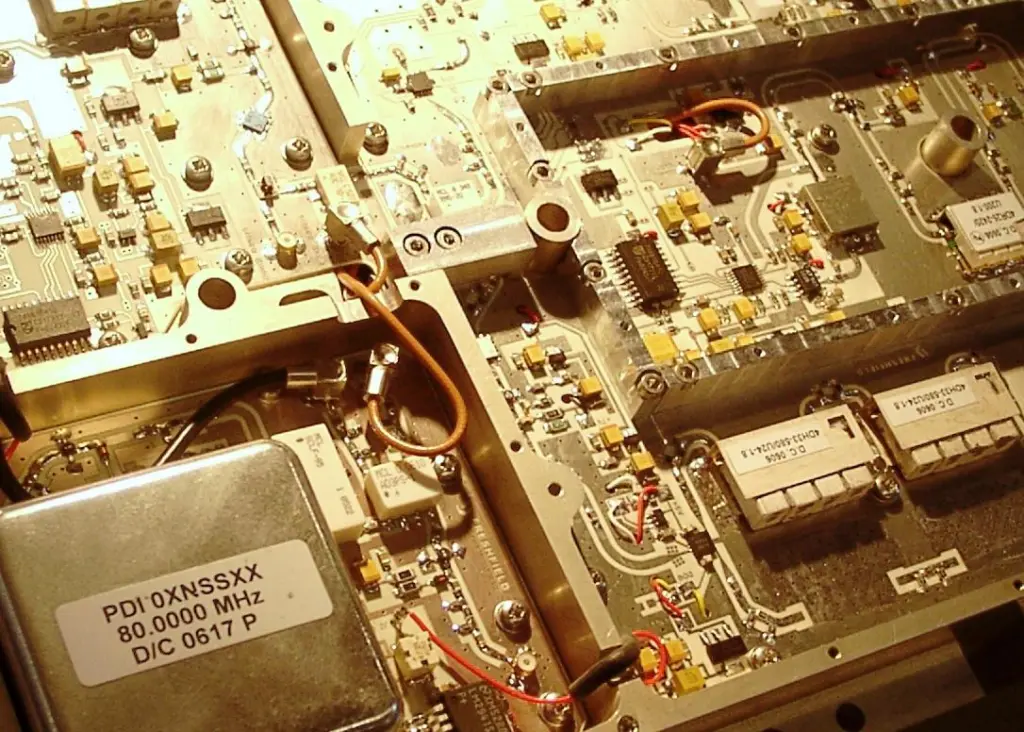
Unlike conventional radar, the SharpEye device is solid-state, and because it does not operate with a magnetron the unit avoids the cost of calling in an engineer every 8,000 to 10,000 hours to replace it.
‘We estimate that with a total of more than one million hours of fault-free operation, the SharpEyes have saved our customers at least £200,000 in maintenance costs,’ says Tony Taylor, head of World-Service at Kelvin Hughes. ‘These costs can quickly add up and the replacement can be a great inconvenience if the vessel is in a remote location when the magnetron does fail,’ he explains.
The technology behind the device is an innovative departure from current marine navigation radar practice in that it is a monostatic pulse radar which uses the doppler effect to determine target velocities.
This is achieved by processing received echoes in a bank of narrowband coherently integrating filters which resolve targets within particular velocity bands. SharpEye is able to separate targets from clutter due to their differing radial velocity components. This extra dimension gives a significant performance advantage in detecting small targets in clutter resulting in safer ship operations.
To obtain this extra information a coherent method of transmission must be used – which precludes the use of a magnetron. This is where the utilisation of solid-state technology wins, as it enables sophisticated processing receiver techniques to be used.
Transmission power can be reduced from a typical 25kW in a magnetron to under a hundredth of this in a solid state device. Further this solid-state approach also results in a radar transceiver with no ‘lifed’ parts. Since the company sold the first commercial SharpEye radar in September 2007, it has installed almost 200 units in a wide range of commercial vessels. It has also been installed by ports for marine VTS as well as in airports to detect birds and prevent potential birdstrikes.
However, its ability to work ‘out of the box’ has impressed other users. ‘Reduced power density, MTBF and reliability of solid state transmitters were factors in our decision making process, but in the end it is the performance at detecting small targets that was critical’, says DeTect.
Further, it can be very useful when incorporated into security systems, as the Sharpeye can be programmed to detect specific contacts in a wide range of conditions. Or, put it another way, the company points out that ‘the radar can be tweaked for specific applications.’
Related Articles
 ACCESSORIES & EQUIPMENT
 ACCESSORIES & EQUIPMENT
 ACCESSORIES & EQUIPMENT