![MaritimeJournal[Seawork]](https://www.maritimejournal.com/wp-content/uploads/2026/09/MaritimeJournalSeawork.svg)






The answer to ‘expanding environmental windows’
It started when the US Office of Naval Research and the National Science Foundation asked the National Academies what were the most important factors in research vessel design.
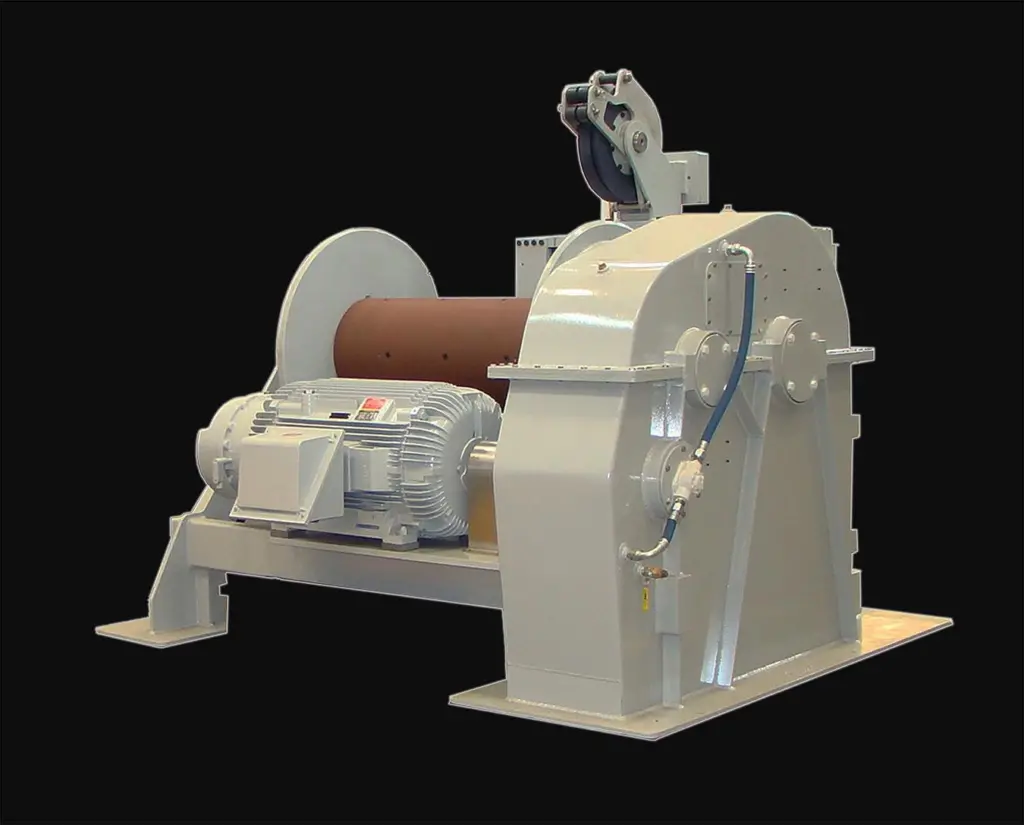
The report back, explained John Davis of Seattle USA based Markey Machinery, said “paramount to enable safe, effective operations” were permanently installed winches. These perform conductivity-temperature-depth (CTD) casts, deep tow, coring and trawling missions “in expanding environmental windows”, added Mr Davis.
It is these ‘environmental windows’ that are the nub of it. To meet the trend of operating in ever increasing sea states with safety, Markey engineers designed a third generation deep-sea research winch that is more responsive when automatic motion compensation and render-recover controls are engaged.
Mr Davis added that in this application render-recover controls integrate the CAST6 winch, which has a capacity that can take 10,000m of deep sea cable, featuring a close tolerance, low mass moment of inertia drum for precise motion control of sampling instruments in sea state five environments. The feature eliminates unwanted ship motion, thus extending the life of cables for improved safety.
It also has a specialised crane to launch and recover scientific packages without the use of tag lines, improving safety by removing hands from the deck.
The crane is outfitted with a docking head that provides the mating interface between the crane and scientific package. The winch operator engages the render-recover controls and adjusts the tension securing the package to the docking head. Then, the CAST6 automatically adjusts the speed of the cable paying in or paying out and automatically maintaining tension to keep the instrument securely docked and under control as the crane moves inboard or outboard for launching or recovering operations. “Automatic, secure, and safe, enabling deck operations in higher sea states,” said Mr Davis.
He also pointed out that the strength of materials and use of proven, non-proprietary electrical motors and motor controllers ensure the CAST6 and DETW-9-11 Traction Winch systems are both reliable and, importantly, maintainable for the 30 year and more life span of a general purpose research vessel.
Other features he points to as being especially notable are the independently driven, electronically controlled level wind system, which is adjustable for different lots, diameters, or types of tension members by the push of a button. Also, there are the two sheave fairlead head’s output sheave mounts in a flagging block to accommodate almost any possible overboarding point, without the need for hands to rig intermediate fairleads in the cable path.
“Less time in port spent mobilising the scientific party means more time underway sampling and increasing the effectiveness of these winch systems”, concluded Mr Davis.
Technical specification:
CAST6-125 winch
10,000m of deep sea cable
Motor-driven precision level wind system
Pushbutton operator interface
Two sheave instrumented fairlead head
Related Articles
 ACCESSORIES & EQUIPMENT
 ACCESSORIES & EQUIPMENT
 ACCESSORIES & EQUIPMENT