![MaritimeJournal[Seawork]](https://www.maritimejournal.com/wp-content/uploads/2026/09/MaritimeJournalSeawork.svg)



TTA forms to promote River Thames safety
The growth in passenger traffic on the Thames in London has brought increased employment opportunities for skilled crew members and many boat operators are actively recruiting staff.
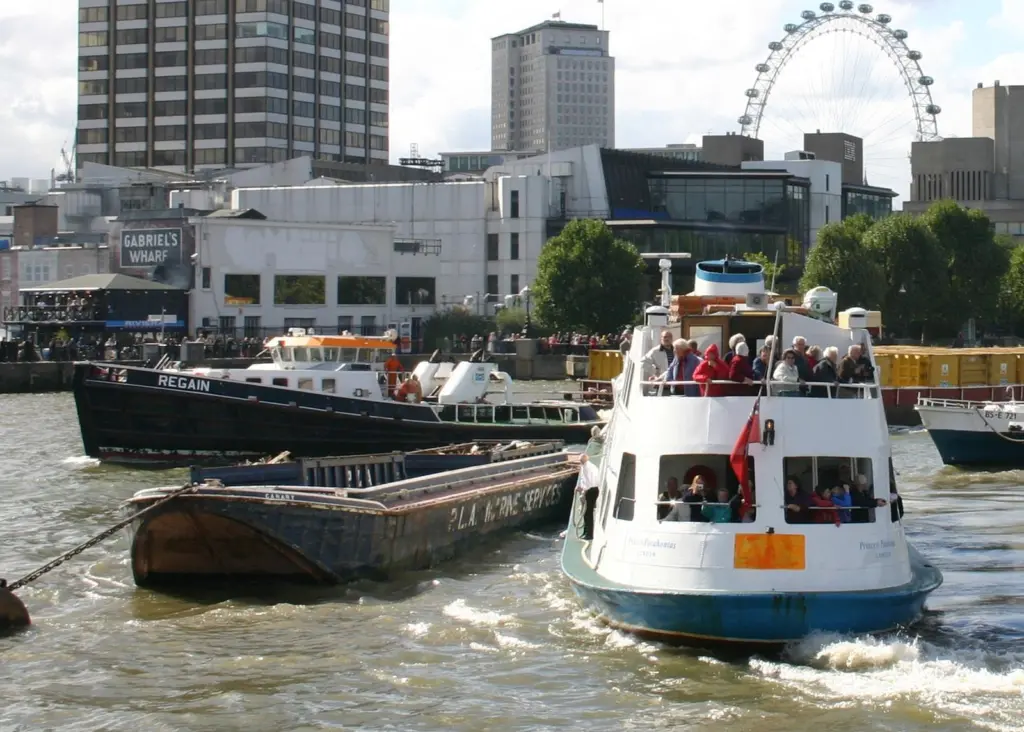
This is particularly true in the sightseeing sector and on the fast passenger ferries which run throughout the day all year round.
Cargo vessels, tugs and marine civil engineering craft also share the waterway within the London Gateway area with fast ‘adventure’ RIBs and amphibious DUKWs. Until now these differing trades have often worked in ignorance of each other’s needs and practices.
The basic requirement of a Boatmasters Licence (BML) has to be augmented by local knowledge endorsements and a recent initiative by several operators and administrators also emphasises the need for inter-disciplinary training to make crews aware of the characteristics and limitations of different types of vessel on the waterway.
With the support and encouragement of the The Port of London Authority, Watermen’s Hall, the Passenger Boat Association and the trade union Unite, a new organisation, the Thames Training Alliance (TTA), is being set up to provide integrated training in the ‘suite of skills’ needed to improve the safety culture and meet the challenges of this growing industry in which public safety is key.
The first companies to have pledged support and seed corn finance to the scheme include passenger boat operators such as Thames Clippers, Livetts Launches, City Cruises, London Duck Tours, and Thames Luxury Charters as well as GPS Marine Contractors, Briggs Marine Contractors, Thames Shipping, Clifford Shipping Services and Medtow Marine.
Until now the most comprehensive form of training on the Thames has been the Company of Watermen and Lightermen’s apprenticeship scheme in which trainees are versed in various forms of boat operation from towing to lighterage, barge handling, navigation and passenger boat operating. But most companies provide their own training and not all of them insist on time-served apprentices. With the growth of the tourist industry, new skills in customer relations, public safety and hospitality are also increasingly important.
To face these challenges the TTA has been formed to set up a structure for training employees in the various sectors by combining formal course work in established education establishments with on the job training afloat. This work experience will be arranged in a wide variety of different types of maritime businesses, not only to provide hands-on experience but, crucially, to improve awareness of the manoeuvring characteristics of the different types of vessel a trainee might come across during a typical day’s work on the river. These range from fast ferries keeping to strict timetables, through the thrill supplying RIB rides to loaded cargo vessels, cumbersome tug-and-tows swinging to come alongside wharves, or amphibious craft entering and leaving the water. The underlying aim is to improve overall safety awareness for all who work on the River.
This proposed innovation can only be made to work if employers, who might be in day to day commercial competition, come together with a financial commitment to its success. A major obstacle in the past has been the lack of government funding for such a scheme and the fact that integrated training has not been mandatory. Now, thanks to the efforts of the Company of Watermen, the Passenger Boat Association and the Maritime Skills Alliance, supported by the Port of London Authority (PLA), the government backed National Apprenticeship Service has approved these building block courses for financial support.
To set the ball rolling the PLA has pledged £25,000 on a raise-and-match basis and is looking at ways to raise a training levy from commercial river users. The first ten boat operators to sign up have also pledged financial support based on the scale of their operation and ability to contribute. The TTA is also seeking other sources of government support, in particular the ‘Employer Ownership of Skills’ programme. It will also seek support from maritime training charities in due course.
The TTA is asking for expressions of interest from companies or individuals who wish to bid to run the alliance training programme in partnership with suitable secondary education colleges.
Any organisation or individual that wishes to express an interest in joining the alliance or helping to run its training programme is invited to contact info@thames-training-alliance.org
By Graeme Ewens
Related Articles
 ACCESSORIES & EQUIPMENT
 ACCESSORIES & EQUIPMENT
 OTHER NEWS