![MaritimeJournal[Seawork]](https://www.maritimejournal.com/wp-content/uploads/2026/09/MaritimeJournalSeawork.svg)


Uncrewed boat surveys fish populations
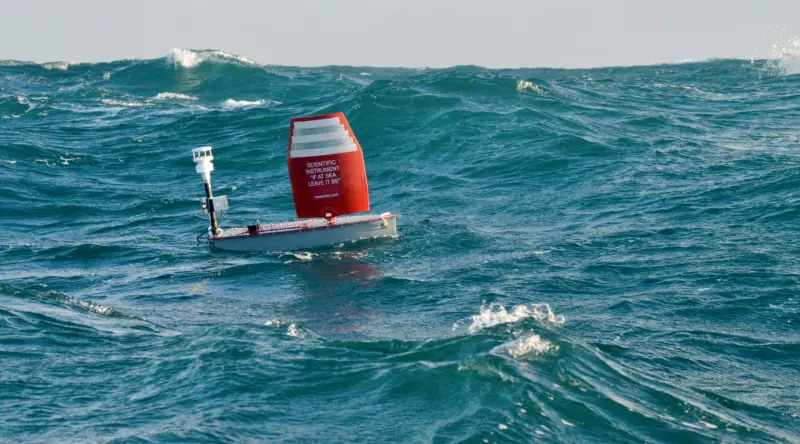
A robotic boat has been used for the first time to survey fish populations around oil platforms in the North Sea.
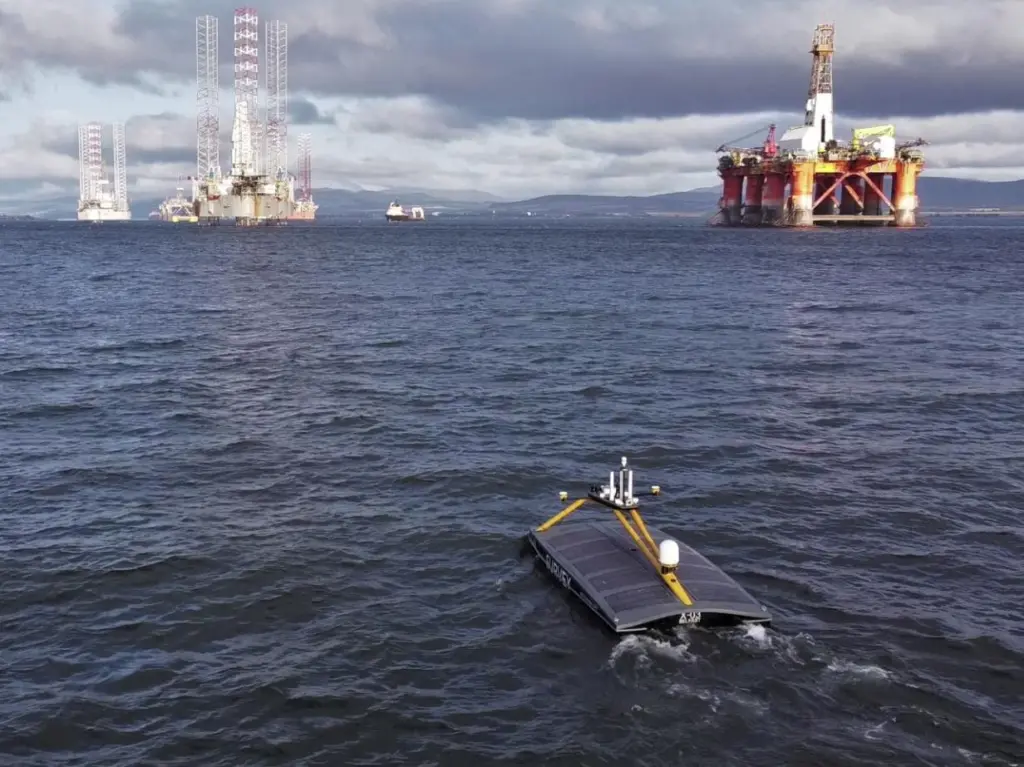
The survey was part of a project led by the University of Aberdeen, looking at the effects of decommissioning oil and gas structures on marine ecosystems. The Uncrewed Surface Vessel (USV), owned and operated by ocean data company XOCEAN, used sonar to collect data on fish numbers around several oil platforms off Scotland’s north-east coast.
XOCEAN’s USVs operate ‘over the horizon’ transiting unaccompanied hundreds of kilometres from shore, without the need for a mothership. Fitted with high end commercial fisheries sensors, the USVs perform the same task as a crewed vessel but without the need to send a single person offshore. Instead, XOCEAN’s innovative platform brings the surveyor online in real time to collect and validate the data from anywhere in the world.
XOCEAN’s XO-450 USVs are around the size of an average car (4.5 metres), allowing it to get within 10m of a platform – significantly closer than a conventional ship. The project, part of the UKRI-funded INSITE (Influence of Man-made Structures in the Ecosystem) programme, aims to better understand the influences offshore structures have on commercial fish populations in the North Sea.
The survey was led by Dr Joshua Lawrence, from the University of Aberdeen. He said: “The survey was a great success. After months of planning and working closely with XOCEAN and the platform operators, it was great to finally see the Uncrewed Surface Vehicle collecting data. It’s amazing how this sort of technology reveals new opportunities to advance our understanding of these structures and their influences on the North Sea ecosystem. Previous work has suggested that fish aggregate up to several kilometres away from some of these structures, so we designed the survey to make approaches to the structures from 10km away in each direction.’
The next stage of the project will see Dr Dougie Speirs and Prof Mike Heath from the University of Strathclyde use the survey data to model the expected effects of a range of decommissioning strategies on the surveyed fish populations.
Related Articles
 FEATURES & VIDEOS
 OTHER NEWS
 AUTONOMOUS VESSELS & TECHNOLOGY