![MaritimeJournal[Seawork]](https://www.maritimejournal.com/wp-content/uploads/2026/09/MaritimeJournalSeawork.svg)






Suez Canal expansion underway
The Egyptian government has signed contracts with six international dredging contractors and works have begun on the new Suez Canal.
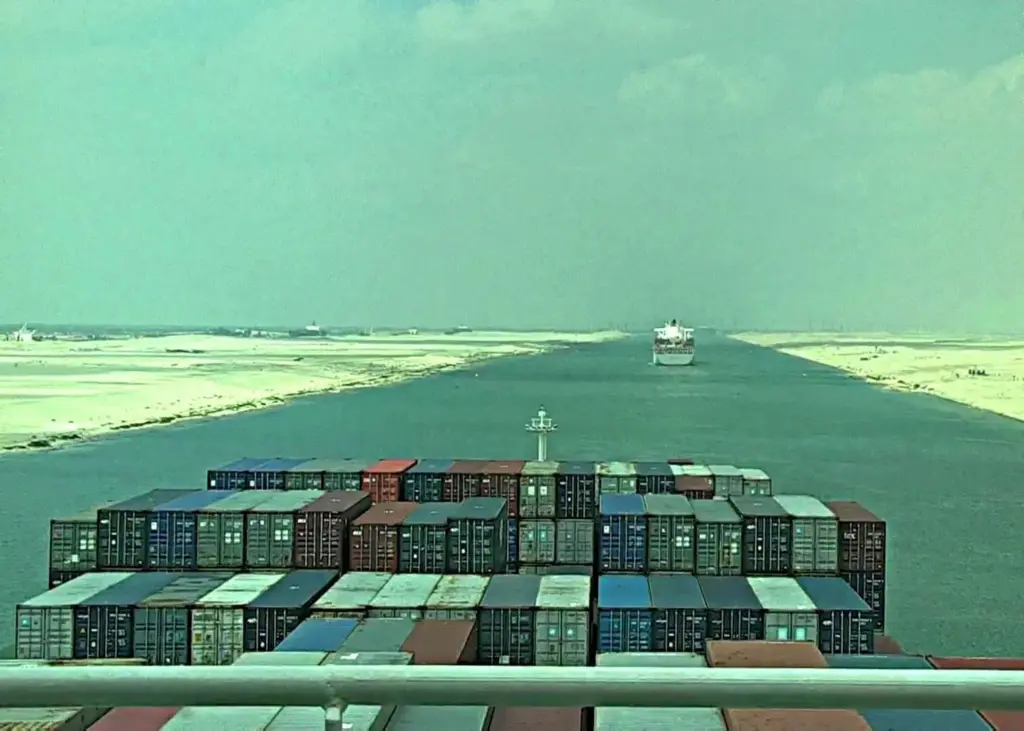
It is hoped that the flagship project will revive an economy damaged by political upheaval since 2011, which has hit both tourism and foreign investment. Canal revenues are projected to rise from the current $5bn per year to $13.5bn by 2023.
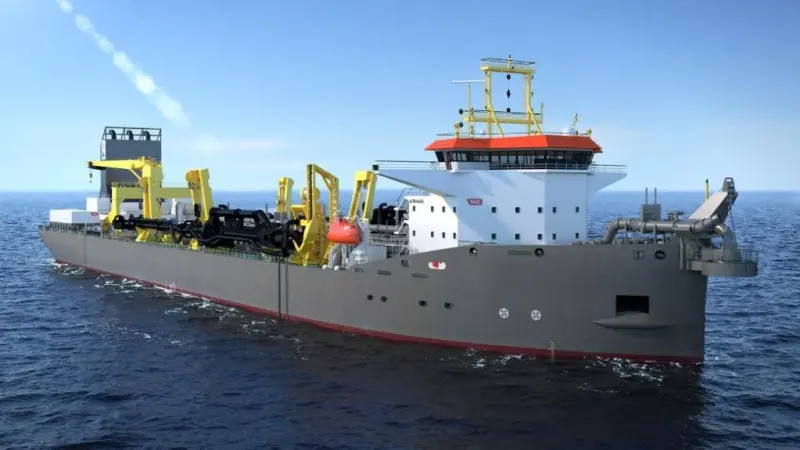
The new Suez Canal will partially run in parallel to the current waterway and partially entail widening and deepening of existing parts thereof. The contract includes the construction of the parallel section of the canal with a length of approximately 50km to allow ships to simultaneously transit in two directions as well as the widening and deepening of a number of existing sections to a depth of 24m. The majority of the dredging activities for the canal expansion will be executed with 17 cutter suction dredgers.
Egyptian engineers began working last August dredging one of the new canal’s six work zones, with the international companies operating in the remaining areas. A very ambitious target set by the government envisages completion by August of this year.
The companies winning work are the National Marine Dredging Company (NMDC) of the UAE), Royal Boskalis Westminster and Van Oord of the Netherlands, Belgium’s Jan de Nul Group and Deme Group, and USA based Great Lakes Dredge and Dock Company (GLDDC).
A consortium consisting of Boskalis, Van Oord, NMDC, and Jan de Nul has won works with total contract value of $1.5bn, with each partner entitled to an equal share of $375m.
The total project could require up to 36 dredgers to remove some 250 million cubic metres of dredged material.
Pierre Catteau, an official from Deme Group, said there would be a massive mobilization of equipment from around the world in order to meet the project’s ambitious deadline.
“I think we were all surprised at how fast this came on the market, how fast it was tendered and how fast it will be executed”, he said to Reuters.
William Murchison of GLDDC told Reuters the technical aspects of the project were straightforward but the challenge was one of scale and time frame.
“One key thing is good about this, the funding is in place. The money is there. We have a motivated employer.”
The Egyptian government has raised $8.5bn funding for the project, financed through the issue of investment certificates in the domestic market.
By Larz Bourne