![MaritimeJournal[Seawork]](https://www.maritimejournal.com/wp-content/uploads/2026/09/MaritimeJournalSeawork.svg)





Offshore wind to power Volvo car manufacturing
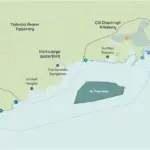
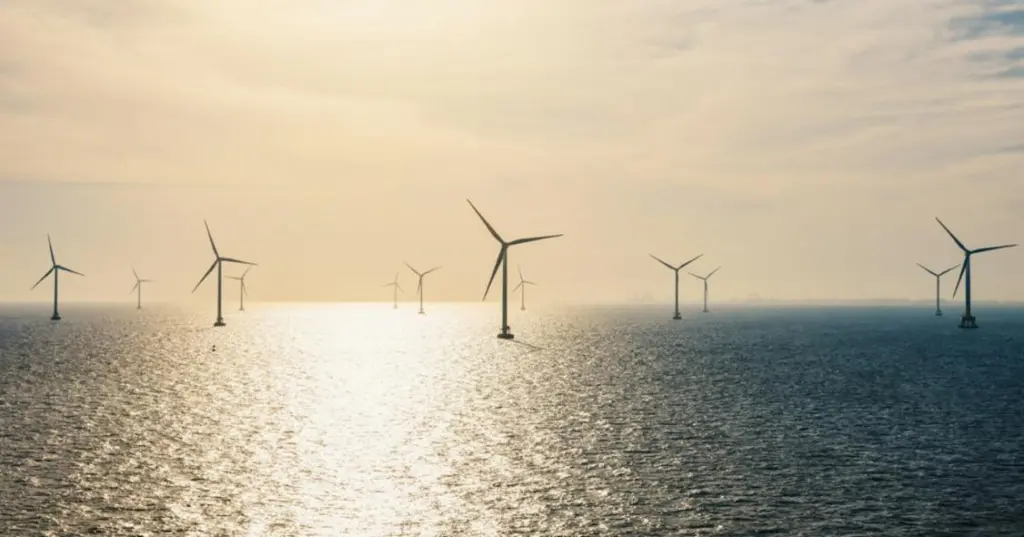
Volvo Cars and wind and solar energy firm Eolus have signed a letter of intent that could see the Västvind offshore wind farm off the coast of Gothenburg powering the car maker’s operations, including its new battery factory at Hisingen.
While electric vehicles are promoted as being ‘zero emissions’, this is not quite true with their manufactureding process, particularly their batteries.
By using electricity from the wind farm to make the batteries, Volvo can claim to be even greener.
It won’t happen for a while – the wind farm permit application has been submitted to the Land and Environmental Court and dialogues have begun with commercial fishing and other maritime activities, but the companies are hopeful construction can begin in 2027 with completion in 2029.
In a statement by Eolus, head of strategic collaborations at Volvo Johan Lannering said the car maker had a target to only sell fully electric vehicles by 2030.
“We are working hard to reduce the carbon footprint of the entire life cycle of the car, including the electricity used to manufacture the cars and their batteries,” Lannering said. “By committing to electricity from offshore wind power outside Hisingen, we want to secure our access to locally produced, renewable electricity at a reasonable cost.”
The Västvind wind farm has a planned capacity of 1,000MW, which gives it an annual potential of 4-4..5TWh generation capacity, which Eolus says is the equivalent of what the city of Gothenburg would yuse in a year.
“We are delighted to enter into a partnership with the leading industrial company in western Sweden,” said Per Witalisson, CEO of Eolus. “Volvo Cars has a very clear goal of becoming completely climate neutral by 2040. Being a part of that journey is strategically important for Eolus, and Västvind can contribute in a concrete way to Volvo Cars’ transition.”
Lannering said there was a significant shortage of electricity production in western Sweden, where the operations will be sited, hyet demand is expected to double by 2030.
“The conditions in western Sweden require us to take action today to establish new electricity supply and at the same time secure our own supply of renewable electricity in the future,” he said.
Related Articles
 ENVIRONMENT
 DREDGING & FLOOD DEFENCE
 ENVIRONMENT