![MaritimeJournal[Seawork]](https://www.maritimejournal.com/wp-content/uploads/2026/09/MaritimeJournalSeawork.svg)




Plastic: The poison in our oceans
Initially hailed as the wonder material of the 21st century, plastic surged in production from a mere five million tonnes in the 1960s to a whopping 460 million by 2019.

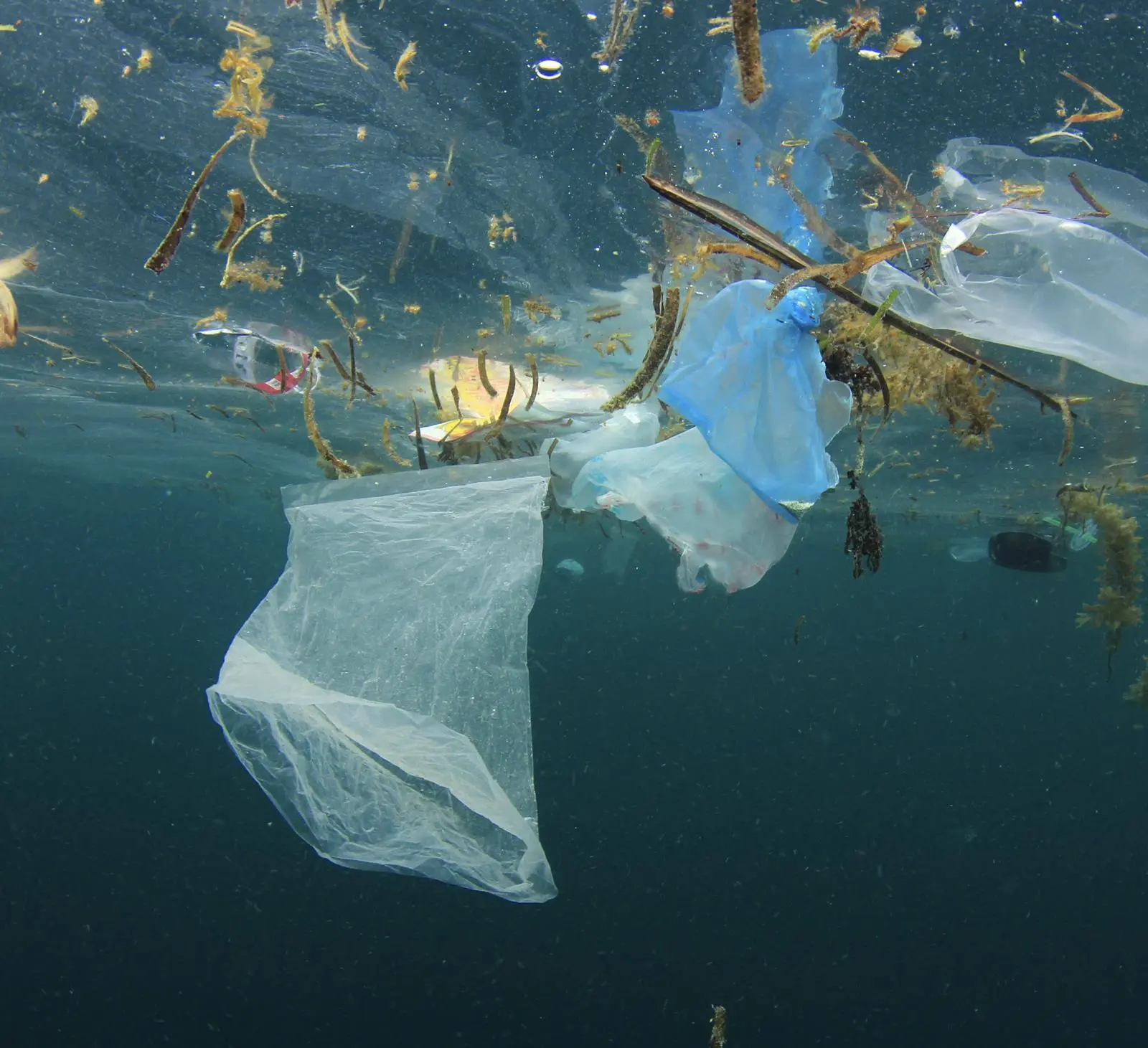
Its resilience, adaptability and lightweight properties contributed to its widespread adoption, but this has also resulted in the scourge of plastic pollution.
While international regulations exist to control intentional or accidental discharge of plastic from ships, there is an issue with enforcement, says Emma Forbes-Gearey, Loss Prevention Officer at West P&I Club.
Most (80%) of marine plastic debris originates from land-based sources like waste and litter, but the remaining 20% is down to shipping, whether it is accidental ship discharges, ship waste or the loss of fishing gear.
These plastics affect human health, aquatic ecosystems, and maritime industries such as sustainable fishing.
Lost fishing gear, or ‘ghost gear’, can affect shipping through delays and potential navigation hazards, such as plastic jamming the propellors, rudders and thrusters of a vessel.
Being largely buoyant, plastic drifts with the prevailing currents and winds, accumulating in spiralling ocean currents and ultimately leading to vast expanses of floating plastic litter like the “Great Pacific Garbage Patch” in the Atlantic, which is 4.5 times the size of Germany.
And floating plastic is only the tip of the rubbish pile.
The United Nations Environment Program estimates that approximately 15% of marine litter floats on the sea surface, 15% stays in the water column, and the rest remains on the seabed.
Plastic endurance
According to the National Oceanic and Atmospheric Administration, one plastic bottle can take about 450 years to decompose. A fishing line can last for up to 600 years.
Most plastics undergo gradual breakdown caused by ocean currents, UV radiation, wind and other natural elements. Over time, these plastics fragment into tiny particles known as microplastics (less than 5mm), which are readily ingested by marine organisms.
The Environmental Investigation Agency warns that by 2050, there could be more plastic than fish in our oceans. The UN Environment Programme estimates that at least 51 trillion microplastic particles could already be in the oceans.
When exposed to environmental toxins, they can absorb up to a million times more toxic chemicals than the surrounding water. There is research to show that toxic chemicals from plastics have already entered the human food chain, raising concerns about potential health issues.
So, with the challenges clear, is the current regulation up to the task?
Regulations
For almost 30 years, the International Convention for the Prevention of Pollution from Ships (MARPOL) Annex V has banned all ships from rubbish disposal.
The IMO then adopted an action plan to improve the effectiveness of port reception facilities. And guidelines for MARPOL Annex V to address single-use plastics onboard ships were developed and adopted in 2017.
Another significant regulatory framework is the London Dumping Convention, founded in 1972, aimed at preventing the intentional dumping of waste or other substances from ships into the sea, except for those on the “reserve list,” which excludes persistent plastics.
Deliberate dumping or discarding of fishing nets and other equipment is prohibited unless necessary for the safety of the vessel or human life.
Monitoring and enforcing the ban on plastic pollution in international waters is a challenge. Flag states often need more motivation, and there are no compelling incentives to prompt vessels to retrieve abandoned gear encountered while fishing.
Promising signs
Nevertheless, there are promising examples of initiatives from countries and organisations addressing these concerns.
For instance, Canada has enforced mandatory reporting of gear loss and mandates specific gear marking to enable traceability back to individual vessels, thus enhancing accountability.
The Thai Union, a major seafood company, enforces requirements for tuna suppliers to mark non-biodegradable equipment.
Plastic pollution from cargo or fishing gear is on par with oil pollution and is in some ways worse because it takes hundreds of years to break down.
Regulations are yet to address the issue aggressively, but recent developments suggest regulatory changes are coming in to tackle this issue.
In March 2022, the UN Environment Assembly created international legislation that would be legally binding on plastic pollution, with sections focusing on the marine environment. The completion date for the treaty negotiations should be December 2024, although details regarding the final content are unknown.
In a separate development, the International Maritime Organisation has agreed on draft recommendations for transporting plastic pellets on ships. These considerations were submitted to the Marine Environment Protection Committee for approval in their next meeting.
Related Articles
 FEATURES & VIDEOS
 ENVIRONMENT
 OTHER NEWS