![MaritimeJournal[Seawork]](https://www.maritimejournal.com/wp-content/uploads/2026/09/MaritimeJournalSeawork.svg)


Salvage success of a ‘ticking time bomb’
The decaying oil tanker FSO Safer could have been a humanitarian and environmental disaster. For once, though, the ultimate outcome was one of success rather than failure. Peter Barker reports on how a tragedy was averted.
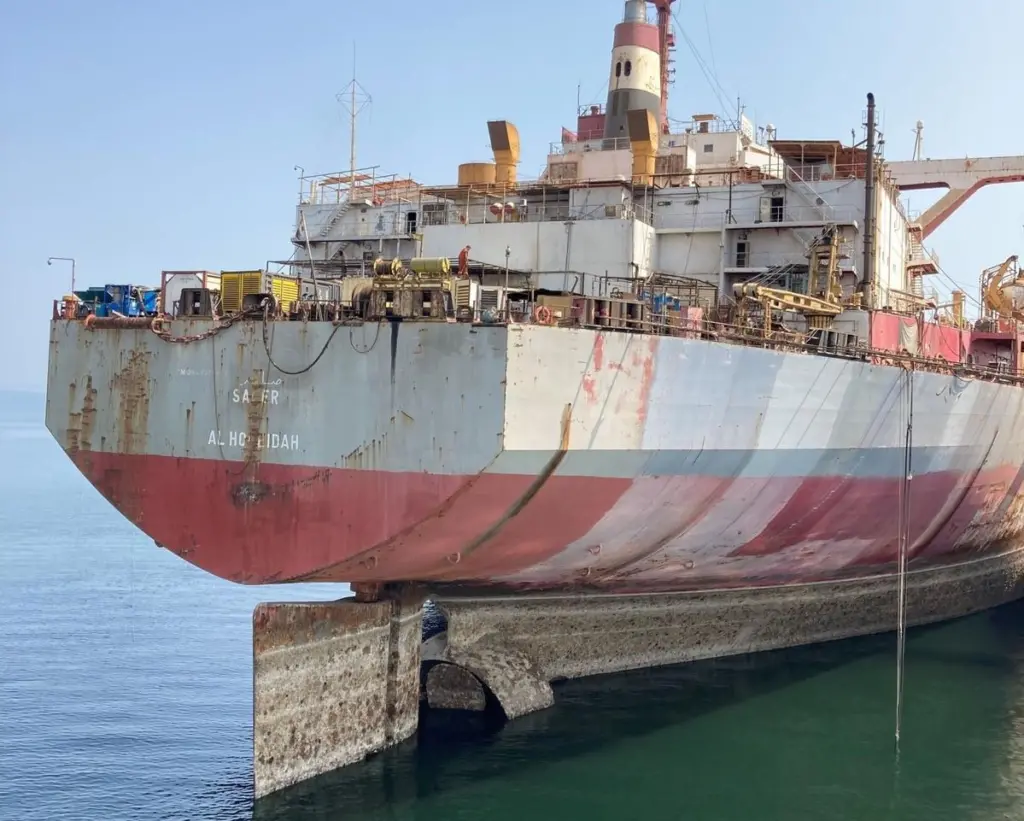
With Boskalis having now completed the removal of oil from what was the “ticking time bomb” FSO Safer off Yemen, and the release of the logs, it is possible to reflect in more detail on another success story for the marine salvage industry.
It is said the press only like bad news. Not entirely true but people’s natural interest in matters of concern can mean that good news stories, for example a difficult task that actually goes according to plan, fail to make the cut. The success of Boskalis in dealing with the Safer, along with the unusual funding arrangements, is a good news story deserving closer examination.
Reporting marine salvage stories in a world where people want instant news can be difficult with operations lasting days, weeks, months, even years. It often needs a ‘story so far’ approach. Sometimes, drawn-out legal procedures reaching a settlement between the various parties can also restrict reporting.
In the case of the Floating Storage and Offloading vessel Safer, while things started to go wrong for the 47-year-old converted tanker around eight years ago, the story of this sad vessel’s life after a period of normal trading started around 30 years ago, when it was moored some 4.8nm southwest of the Ras Issa peninsular on Yemen’s west coast.
In 2015, production and maintenance on the tanker stopped due to the eight-year conflict between a pro-government Saudi-led coalition and Houthi rebels. At the time, Safer had 1.13 million barrels of crude oil on board, and should things go wrong could potentially create the fifth largest tanker oil spill in history, containing four times the amount spilled by Exxon Valdez off Alaska in 1989. With Safer reported as being “beyond repair”, the region faced a humanitarian and environmental disaster.
The United Nations Development Programme (UNDP) warned an oil spill would mean the closure of all ports in the area, cutting off food, fuel and other life-saving supplies to Yemen, where 80% of the population already rely on aid with a spill “likely to wipe out 200,000 livelihoods instantly” and fish stocks requiring 25 years to recover.
Obviously something had to be done, but the usual process of the vessel owner, along with various insurance interests working with contractors to tackle the problem, appeared not to be possible with the UN and in turn UNDP becoming involved in what for them was a “first of its kind” operation.
The aim was also to eventually dispose of the vessel following removal of the oil while ensuring a replacement vessel could be secured to a specialised safety buoy.
Groundwork and funds
Raising funds for the project became key, with UNDP estimating the two-track operation would cost US$144 million, including US$79.6 million for the emergency operation (US$35 million for the salvage operation); but to put that into context, the UN warned that if the vessel and its cargo were lost, clean-up costs alone would be $20 billion. It is hoped to recoup some of the cost with subsequent sale of the oil.
Nearly two years of political groundwork, fund raising and project development followed, including in May 2022, the Kingdom of the Netherlands and the UN co-hosting a pledging event in The Hague in support of the UN-coordinated plan to address the threat.
Approximately US$38 million in funding was raised during the event, UN saying that additional funding commitments would be needed to implement the plan before it was too late, adding: “An investment of tens of millions of dollars now will save tens of billions of dollars in the future.”
Work to progress this complex and unusual project for the UN bore fruit in April 2023, when Boskalis, through its subsidiary Smit Salvage, announced it had reached agreement with UNDP for the removal of oil from the Safer, eliminating the greatest environmental risk associated with the vessel’s situation.
“We have been assisting the UN in their endeavours to avert a potential massive environmental and humanitarian disaster off the coast of Yemen since 2021,” said Boskalis CEO Peter Berdowski. “We are extremely delighted that these efforts and the perseverance of the UN to raise the necessary funds has brought us to this agreement. Following a long planning period, our salvage experts are keen to get to work and to remove the oil from the Safer.”
Salvage begins
The project scope for Boskalis involved a number of phases and its multi-purpose support vessel Ndeavor was allocated the main support asset for the task.
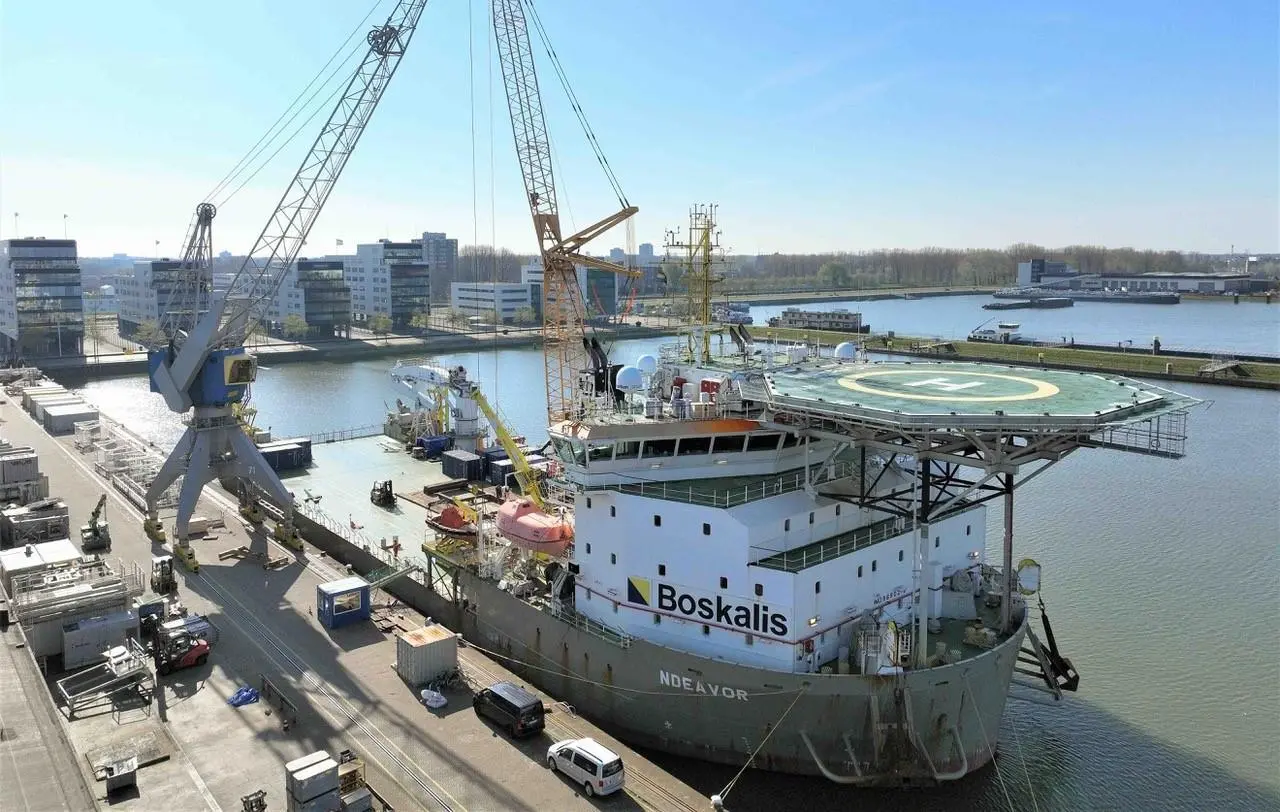
Ndeavor along with near-sister vessel Ndurance were built in 2013, their initial roles including cable-laying at a time of rapid growth for the offshore wind industry.
Ndeavor was originally under the ownership of Boskalis Group subsidiary Smit International BV and in 2017 came under the Koninklijke Boskalis BV banner and subsequently given the role of Offshore Support Vessel.
Ndeavor was at this time moored at the Boskalis facility at Wallhaven in Rotterdam, where preparations for her new mission got under way, and late in April 2023 she set sail, destination Djibouti, where the salvage crew could make final preparations before departing for the Safer off the Yemeni coast. She sailed from Djibouti for the 48-hour passage to the tanker on 29 May 2023.
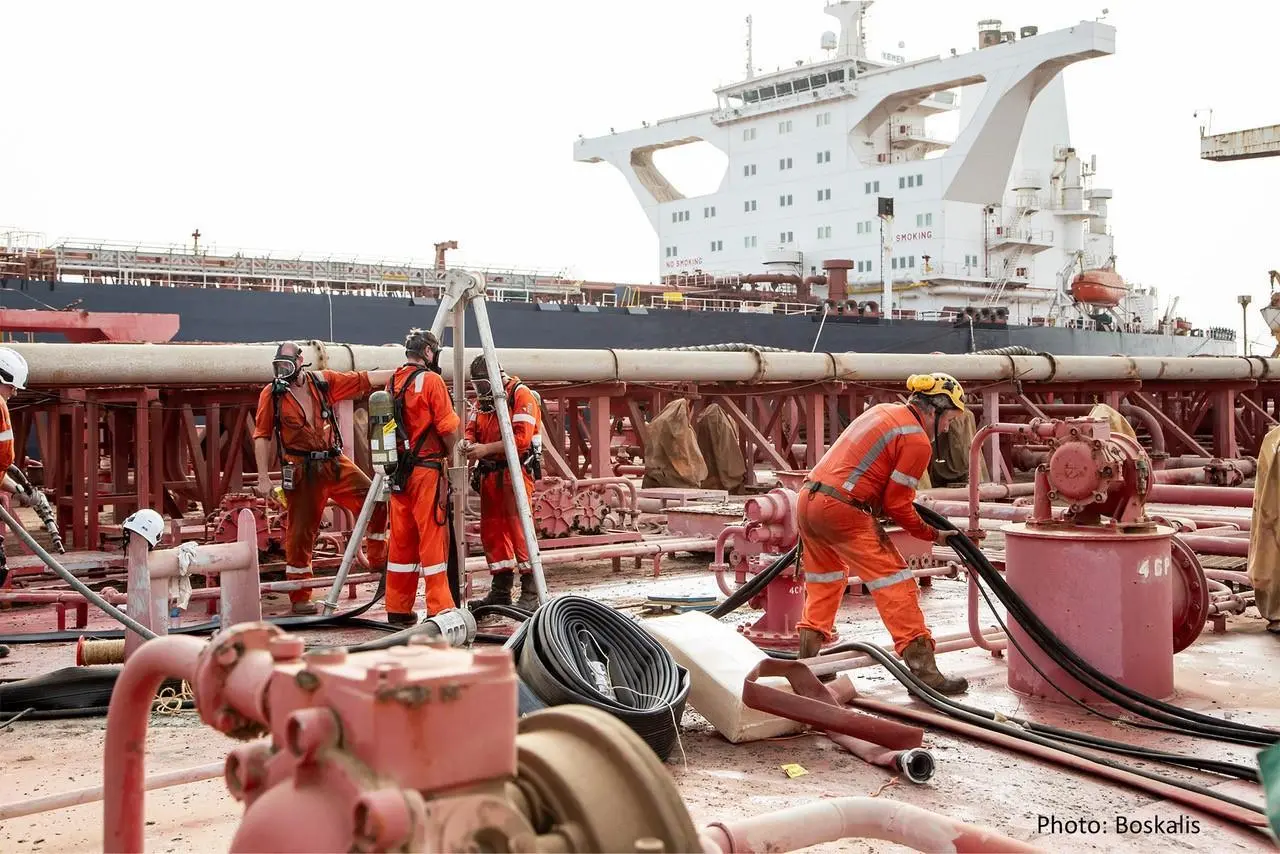
Upon the salvage team’s arrival the next phase commenced, involving a detailed assessment of the vessel. Initial actions included obtaining gas measurements from inside the vessel before declaring it “safe to access”; visual inspections including the pump and engine rooms; cargo assessment; inspection of cargo and inert gas lines, valves and manifolds; and finally inspection of the mooring arrangement.
Eleven days later Ndeavor was moored alongside the Safer, a mobile fixed staircase built to facilitate easy access between the vessels.
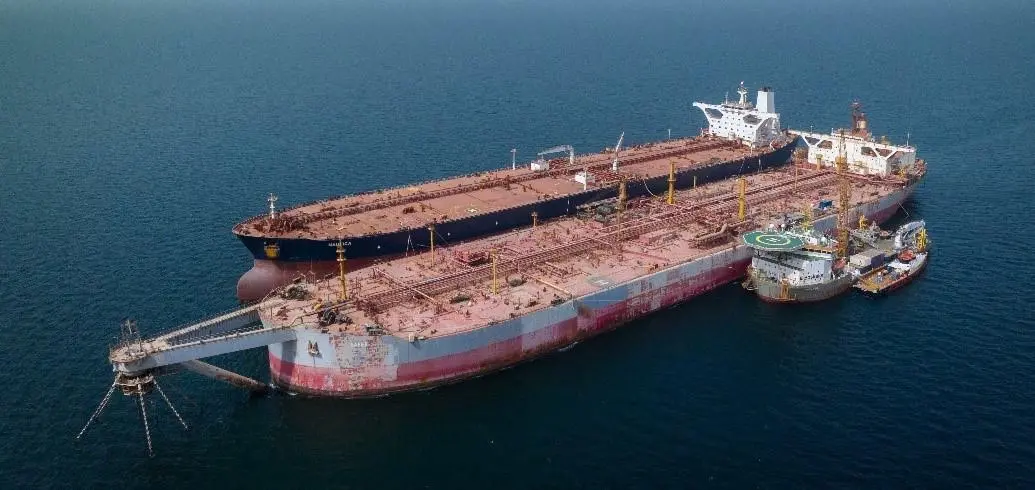
Two weeks later, two Smit Lamnalco tugs – SL Aden and SL Manakin – arrived to assist with berthing of the receiving VLCC Yemen, which was acquired by the UN for the task, the team’s ongoing work including inspecting and reinstating winches and pumps on Safer and an underwater diving inspection of the hull.
Following the connection of hoses between the two vessels, pumping of the 1.13 million barrels of oil that had threatened local and regional communities for so long began on 25 July, just three months after Boskalis announced the agreement with UNDP.
The process involved lowering hydraulic pumps into each of Safer’s tanks, with inert gas supplied to keep the tank atmosphere at safe levels during the transfer. The operation was estimated to take two to three weeks and indeed just 17 days later, Boskalis reported that the main transfer of the oil into the receiving tanker Yemen had been completed. Once the pumpable oil had been removed, a thick layer remained on the bottom of the tanks, which was removed by a mobile spray tank cleaning machine in an operation taking around one week.
The next stage for what Boskalis described as the now “dismantled ticking time bomb” involves preparing the vessel for transport to a green scrapping yard under the responsibility of the UN.
“I am very pleased that we have succeeded in removing the oil from the FSO Safer and transferring it to a modern double-hulled tanker,” said Berdowski. “With our salvage activities, we have once again averted an environmental disaster of unprecedented proportions.
“Thanks in part to the efforts of the Dutch Ministry of Foreign Trade and Development Cooperation and over two years of preparations by Boskalis, we were able to successfully execute this complex operation on behalf of the United Nations. I would like to compliment our salvage experts in particular for carrying out the work under very challenging conditions in the Red Sea.”
A tale almost concluded
All this is just the end of a story with an interesting timeline. It started 43 years ago, in 1976, when the single-hulled tanker (not unusual at the time) entered service.
A decade later it was converted into an FSO and moored off Yemen. In 2015, the war saw the suspension of operations leading to the ensuing years where Safer’s structural integrity “significantly deteriorated”.
Planning and negotiations, including securing of funding, continued behind the scenes during this period of the story that started eight years ago, and it was in April 2023 that Boskalis announced its commitment to removing the cargo. Just four months later Boskalis reported ‘job done’.
The salvage industry, through its umbrella organisation the International Salvage Union, regularly highlights the importance of the sector being able to maintain investment during what can be lean periods – in effect a ‘use it or lose it’ situation.
That Boskalis, with its subsidiary Smit Salvage having the hardware and more importantly the expertise to respond in such an efficient way, is testament to the importance of this mantra. And this is just one chapter in a story still not quite complete.

Related Articles
 ENVIRONMENT
 DREDGING & FLOOD DEFENCE
 ENVIRONMENT