![MaritimeJournal[Seawork]](https://www.maritimejournal.com/wp-content/uploads/2026/09/MaritimeJournalSeawork.svg)






Sea.AI enhances safety onboard offshore CTVs
Sea.AI’s Sentry system is helping revolutionise offshore renewables and crew transfer vessel safety, combining digitisation, AI and advanced marine safety for operational intelligence.
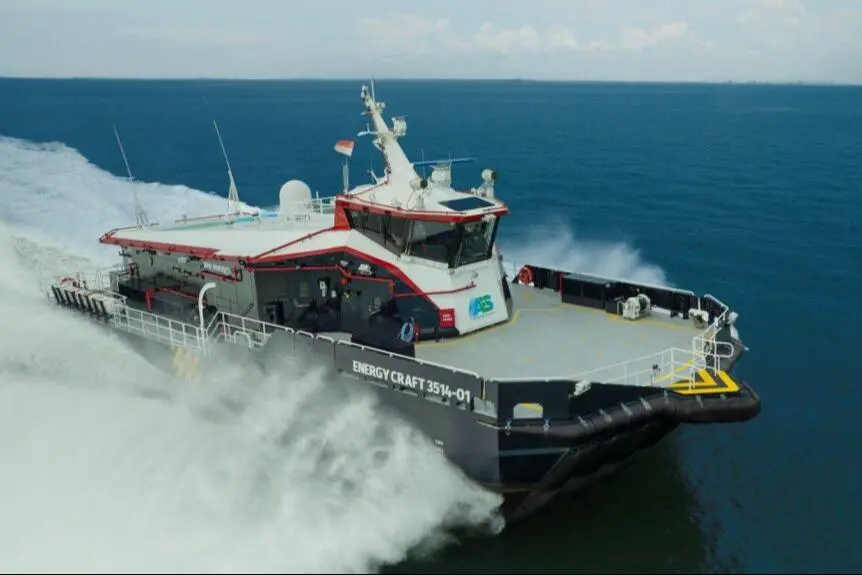
The company is integrating its Sentry system into three cutting-edge AIRCAT vessels, which it said marks a major advancement in offshore navigational safety.
“From the very start, we saw the immense potential of machine vision technology for maritime safety. It was only natural for us to integrate such innovative and proven technology into our vessels,” said Jérôme Arnold, CEO of AIRCAT Vessels.
“With the speeds and operational environments we navigate, having Sea.AI’s Sentry onboard is not just an upgrade, it’s a game-changer for safety and efficiency.”
The power of AI
Designed for crew transfers in offshore industries like windfarms and oil and gas installations, AIRCAT vessels use powerful fans to create an air cushion between their catamaran hulls.
Their Surface Effect Ship (SES) design reduces drag, cuts emissions and boosts efficiency. Now, with Sea.AI’s Sentry system onboard, these vessels will be able to achieve enhanced situational awareness and marine safety.
Sentry provides 24-hour, 360-degree surveillance to the horizon, even in adverse conditions.
Using high-performance thermal and optical sensors with AI-driven object detection, target tracking and collision avoidance, the system identifies floating debris, buoys, boats without AIS and persons overboard.
“The integration of our Sentry system into AIRCAT vessels underscores our commitment to making maritime operations safer and smarter,” said Marcus Warrelmann, CEO of Sea.AI.
“Our AI-driven technology provides a new level of confidence for operators working in offshore environments.”
Related Articles
 FEATURES & VIDEOS
 ENVIRONMENT
 OTHER NEWS