![MaritimeJournal[Seawork]](https://www.maritimejournal.com/wp-content/uploads/2026/09/MaritimeJournalSeawork.svg)


Surveys begin for Denmark’s largest offshore wind farm
Surveys will begin on what will be Denmark’s largest offshore wind farm, energy firm RWE has confirmed.
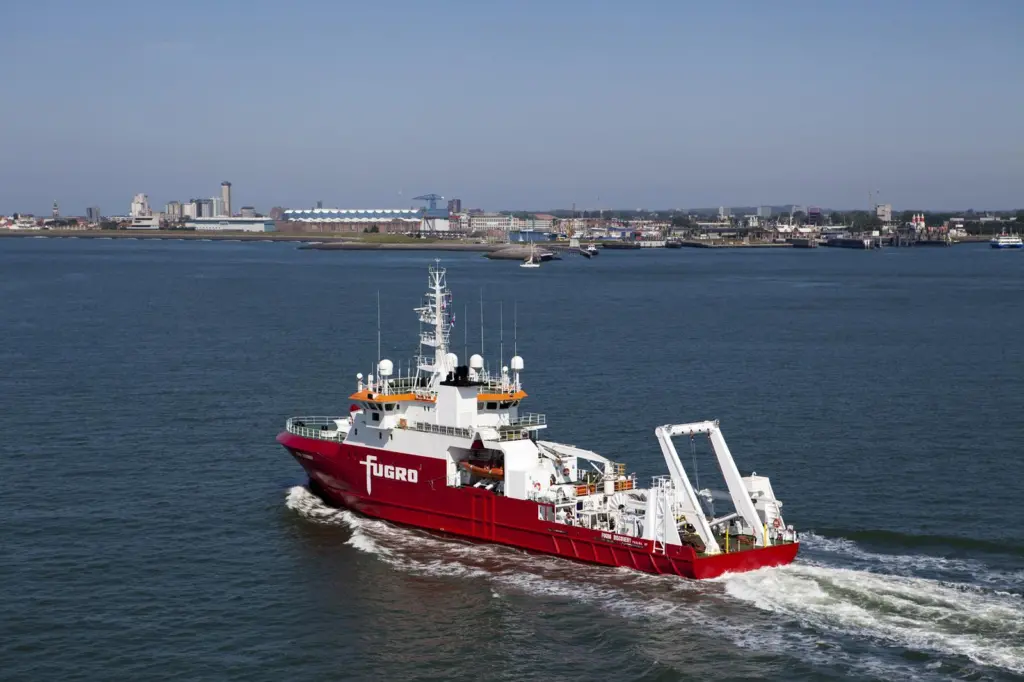
The pre-construction work on the Thor wind farm will be carried out by Fugro, which will use three of its survey vessels and a range of techniques to examine seabed conditions including a search for unexploded ordnance (UXO) about 34 kilometres off the coast of Thorsminde.
Cable routes and turbine locations for Thor, which has been designed to generate 1,000MW of electricity, will be defined during the survey.
“We are using a wide range of survey techniques, comprising offshore and nearshore standard geophysical and UXO survey techniques, a seismic land refraction survey, and Fugro’s rapid airborne multibeam mapping system for comprehensive mapping of the shallow area and beach in the transition zone,” said Marc Kebbel, service line director of hydrography and cable route surveys for Fugro.
“The metocean challenges posed by Thor’s exposed offshore location, such as high waves and strong wind in autumn and winter, are adding to the complexity.”
Thor is planned to begin operating by 2027.
Denmark has 15 established offshore wind farms with a total capacity of almost 2.3GW, according to Denmark’s Energy Agency.
The country is hoping to expand this to a massive 35GW in the North Sea by 2050, with 9GW to be offered by 2030, it says.
The total number of offshore wind farms in the pipeline, whether at tender stage or earlier, is 121, according to the consultancy firm 4C Offshore.
RWE also has a 20% involvement with the much smaller 207MW offshore wind farm 10km southeast of Rødbyhavn, which has been in operation since 2010.
RWE says it will expand its ‘green generation capacity’ to 50GW by 2030, spending more than €50 billion to make it happen in this decade alone.
The capacity also includes onshore wind, solar power, hydropower, hydrogen, batteries, biomass and gas, it says, and the company intends to reach ‘net zero’ by 2040.

Related Articles
 ENVIRONMENT
 DREDGING & FLOOD DEFENCE
 ENVIRONMENT