![MaritimeJournal[Seawork]](https://www.maritimejournal.com/wp-content/uploads/2026/09/MaritimeJournalSeawork.svg)





The business case for a UK Floating Wind Test Centre
The European Marine Energy Centre (EMEC) and Renewable Risk Advisors (RRA) have published a white paper setting out the needs case for a National Floating Wind Test Centre in the UK.
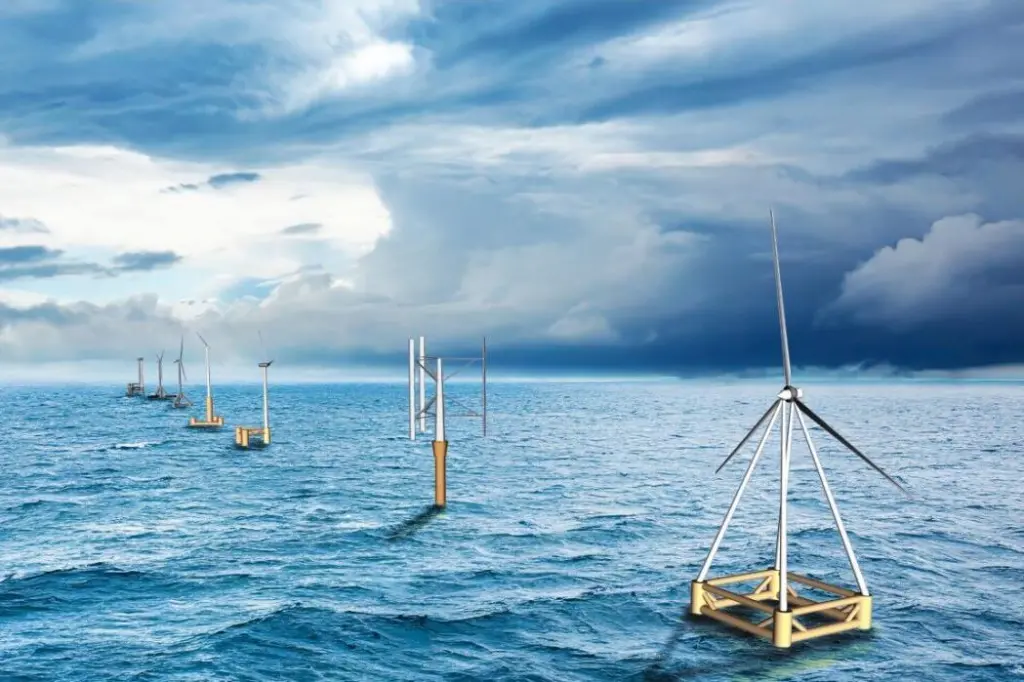
It argues that the centre is needed to fully prove floating technologies in metocean conditions that are truly representative of the locations into which they will be deployed.
“A National Floating Wind Test Centre is essential to accelerate project insurability and therefore financeability,” said Michael Bullock, director, renewable Risk Advisers Ltd. a co-author of the white paper.
”It addresses the very particular needs of certification bodies and insurers, who typically will be looking for a minimum of 8,000 hours of normal operation ‘in a representative environment’ to demonstrate the technology is no longer a prototype and can withstand a harsh ocean environment.”
Insurance essential
Mr Bullock said that insurers rely heavily on this project certification to address and assess the fitness for purpose of designs given particular metocean conditions at a project site.
“Data obtained solely from a less energetic location will make project certification far more problematic and insurers are likely to be very uncomfortable with engineering calculations extrapolated from numbers they may see as non-representative,” he said.
“The outcome of this is that if you test at a less energetic location your technology might not be considered sufficiently ‘proven’ for deployment into a ScotWind, INTOG or Celtic Sea project and your level of insurance might be reduced, and/or premiums and deductibles increased, with more of the risk and consequence of failure falling on the developer.”
The paper compares five-year average and 100-year storm event conditions at existing and proposed floating wind test sites across Europe with the metocean resources that project developers will face at typical ScotWind, INTOG and Celtic Sea sites.
This analysis shows that existing European sites are ”insufficiently energetic” to be truly representative of commercial floating wind projects in UK waters. The authors argue that the UK needs its own dedicated floating wind test centre to adequately prove and de-risk floating wind technologies for project insurability and bankability.
The EMEC said that a dedicated test site will also help ensure that the UK captures and retains the innovation benefits and cements its leading position in the floating wind sector.
It has been investigating and examining options for a national floating wind test centre since early 2020 and has identified a specific site 20km west of Orkney which it believes will be the perfect location. The site has ideal water-depths and seabed conditions, and consistent mean wind-speeds well in excess of 10 m/s.
To progress the test site’s development EMEC has a 60 MW grid connection offer to connect the site into Orkney’s soon-to-be-connected 220 MW cable to the Scottish mainland and thus the UK national grid.
Given timely investment EMEC said, the site can be ready and energised in time to meet the needs of most planned floating offshore wind projects in UK waters.
The concept design for the floating wind demonstration site has been supported by the Interreg North West Europe AFLOWT project which aims to accelerate market update of floating offshore wind technology.

Related Articles
 ENVIRONMENT
 DREDGING & FLOOD DEFENCE
 ENVIRONMENT