![MaritimeJournal[Seawork]](https://www.maritimejournal.com/wp-content/uploads/2026/09/MaritimeJournalSeawork.svg)

Hydrex champions its mobile docks: Case studies
Underwater repair work on commercial vessels has increasingly shifted toward techniques that avoid the need for drydocking, saving cost and hassle.
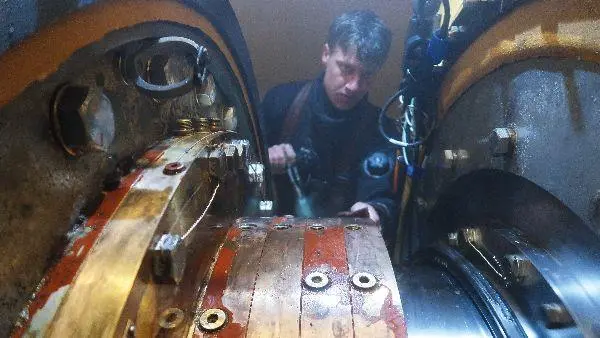
Hydrex, the Belgian marine services company that specialises in underwater ship repair and maintenance, claims to be the first company to use a prefabricated cofferdam for hull repairs in 1979, when it repaired MV Lunar Venture.
“By 1983 the technology was in use to perform insert repairs on double bottom tanks from the inside,” it says. ”This concept has been advanced extensively since then to ensure work can be done while the vessel stays afloat and even while continuing normal commercial activities.”
Initially used mainly when repairing and replacing bow thrusters, Hydrex used steel cofferdams as a ‘mobdock’, or mobile dock, to seal off the thruster tunnel with an access shaft above water while engineers accessed the tunnel and could work in complete dry safety.
From there the technology was developed to bring in lighter weight, flexible mobdocks – mini drydocks, essentially. These were first used in 2002, says Hydrex, and it is now unnecessary to go to a drydock to repair any other part of the vessel underwater.
Hydrex cites two examples of drydock repairs carried out using its mobdock method.
Case study 1: Seal replacement on a semi-submersible unit
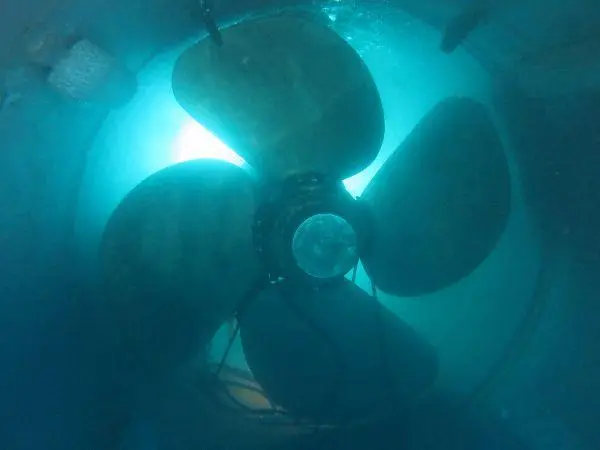
A semi-submersible platform berthed in Veracruz required replacement of stern tube seals on both assemblies. The unit had completed field work and was scheduled for repairs alongside.
The dive team began by removing the rope guard on the port assembly and carried out an underwater inspection. A flexible mobdock was then installed to provide a dry working space. Four damaged aft seals and two forward seals were removed and replaced in sequence. After reassembly and a successful leakage test, the mobdock was removed and the rope guard refitted.
The starboard assembly’s six seals underwent the same procedure, and a portion of the team remained on standby until the operator confirmed that the system was functioning as expected.
Case study 2: Bow thruster replacement on a cruise vessel
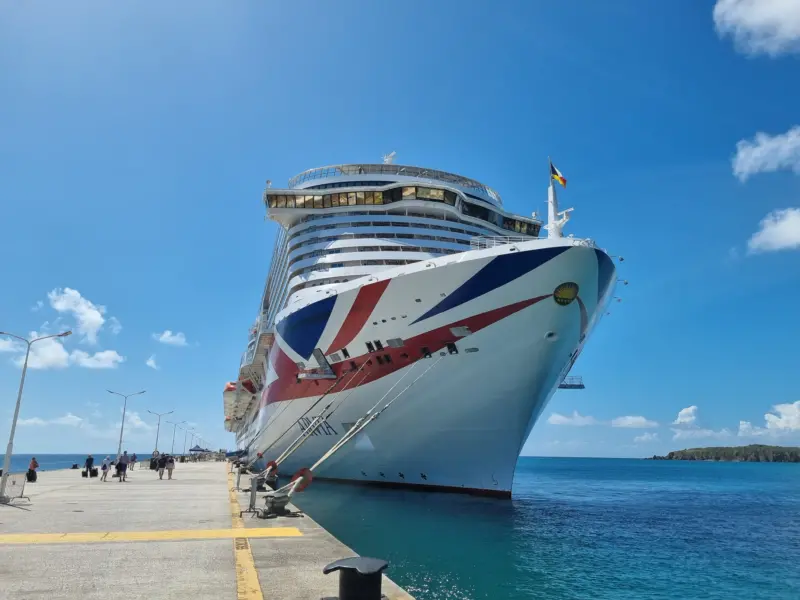
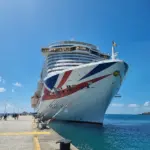
A 208-metre cruise vessel operating in the Caribbean experienced steering difficulties after one of its bow thrusters failed.
Relying on tugs at each berth would have been too costly, but taking the ship off schedule to replace the thruster was not feasible either.
The repair had to be completed during regular port calls, which provided work windows of only eight hours. The operation was divided into stages that matched these short intervals, which needed precise planning and constant communication between the technical department and the divers on site.
The staged approach allowed the replacement work to progress without altering the vessel’s itinerary.