![MaritimeJournal[Seawork]](https://www.maritimejournal.com/wp-content/uploads/2026/09/MaritimeJournalSeawork.svg)


Opinion: Are today’s VTS systems fit for small, complex ports?
According to International Maritime Organisation (IMO) guidelines, vessel traffic services (VTS) contributes to the safety of life at sea, navigation efficiency, and protection of the maritime environment.

However, the surge in maritime traffic, fuelled by international trade on the one hand, and the global recreational boat market on the other, has proved that current VTS isn’t suitable for small, complex ports, says Rachael O’Connor, Navtech Radar’s business development manager – Industrial Automation division.
A report by Statista (Ocean Shipping Worldwide), highlights that approximately 11 billion tonnes of goods, accounting for 90% of the total merchandise globally, navigate the world’s seas each year. For economic powerhouses like the European Union, maritime shipping dominates, constituting 80% of total exports and imports by volume and approximately 50% by value.
This uplift in maritime traffic, especially in nearby coastal areas, straits, and channels, has brought about increased congestion. Ports, crucial links in the maritime transport chain, have witnessed a transformation in navigation demands due to the rise in maritime transport of goods and the increasing size of ships today.
Furthermore, the global recreational boat market is on a growth trajectory, expected to reach an estimated $26 billion by 2030. This is driven largely by the rise of tourism, growing interest in outdoor recreational activities, water sports, and recent advances in autonomous marine technology.
All this points to potential challenges, and with maritime growth and congestion comes a higher risk of accidents, most notably collisions. Half of the 2,400 global maritime incidents in 2022 occurred within ports or the terminal boundary.
VTS was initially designed to minimise traffic delays and improve flow efficiency, but over the years the growing threat around potential disasters in port approaches has led to significant changes in guidance. Subsequently, the digitisation of the maritime sector has meant that sophisticated VTS tools are being used not only for movements and communication between ships, ports and other agencies, but also to provide timely updates on tidal and weather conditions.
The IMO updated its guidelines on VTS in 2021 to take account of various organisational, operational and technological developments that had taken place since the previous update in 1997. Contracting governments must arrange for the undertaking of VTS, where, in their opinion, ‘the volume of traffic or the degree of risk justifies such services’. Likewise, there are further responsibilities that fall on governments, VTS operators, ports and ships to keep port operations and personnel connected and safe at all times.
Yet amidst the evolving landscape of maritime transport, the question emerges: are current VTS systems equipped to meet the unique challenges faced by small, complex ports? As ports and their traffic navigate tight channels, low bridges, and accommodate vessels of various sizes, the need for tailored solutions has become increasingly apparent.
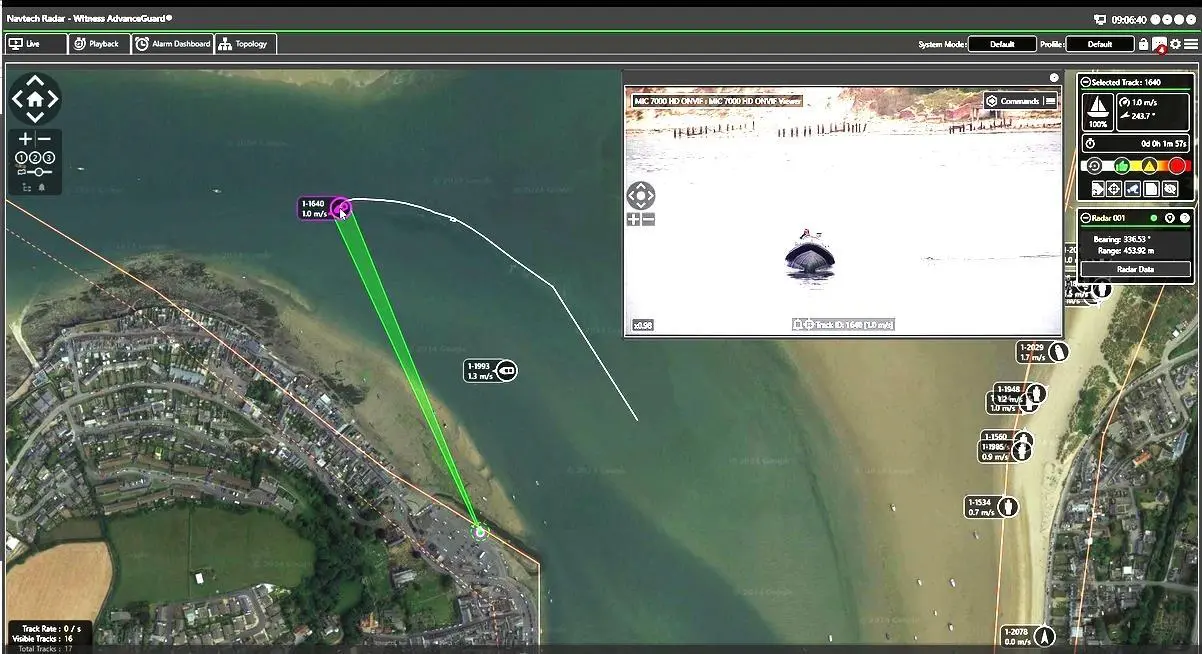
While major ports often boast robust VTS infrastructure, smaller ports may find themselves lacking adequate support.
The small, complex port challenge
An IRB Industry Report Analysis valued the global VTS market at $266.2 million in 2023, which is projected to grow to $363.6 million by 2030, with an anticipated compound annual growth rate of 4.5% from 2024 to 2030. That’s big business by any scale and the majority of that is being stumped up by port and harbour operators.
Typical VTS systems use a raft of modern technologies, which all come with a price tag both for capital outlay and installation, and for operating. It’s clear then that smaller and more complex ports need a more tailored solution to help manage this.
Secondly, the technology built for major ports may not be fit for smaller ones. Orthodoxy may suggest that radar systems as outlined in the cost conversation are effective in many scenarios, but struggle to adapt to the intricacies of smaller ports. Challenges conventionally cited include low-resolution radar systems with large blind spots, or inadequate coverage of narrow waterways and under bridges, or even smaller objects that may be a potential collision hazard, such as kayaks or even swimmers.
Finally, many ports are extremely complex in their nature, with blind spots, varying water levels, narrow entries and sometimes only have the capacity to receive vessels in transit for refuelling, waste transfer or for the transfer of cargo. These have their own set of challenges when considering current VTS systems, albeit under the same guidance, and potential constraints and reporting procedures, as the world’s largest.
The importance of high-resolution radar in smaller ports
Radar has been a maritime mainstay for nearly a century, and makes up one of the three key sensor technologies alongside ‘AIS’ (automatic identification system), a broadcast system that allows for updating data on connected vessels automatically; and ‘radio detection finder’, which helps to obtain maritime information that will help locate the direction and source of the radio signal.
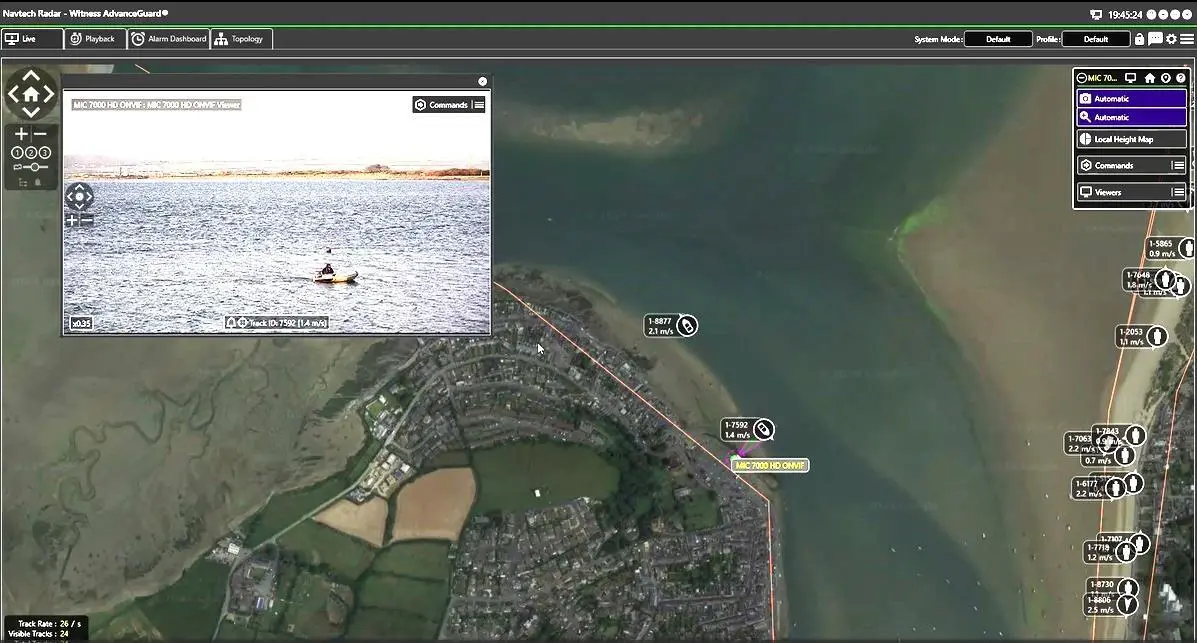
With radar taking the lead on the transmission of navigational information to determine the size and speed of any incoming object to a distance of several miles, it’s critical that this component of VTS can operate in and around small, complex ports, so situational awareness and response efficacy within VTS operations are not compromised.
To address these challenges, it is essential to incorporate the latest high-resolution marine radars operating in the W-band (76-77 GHz). These advanced systems can augment traditional marine radar (X-band and S-band), offering high-resolution detection capabilities in all weather conditions. In addition, W-band radars are much smaller and require much less infrastructure overhead.
While X-band radars provide long-range detection, they invariably compromise on resolution to achieve their extended range. This trade-off can diminish their effectiveness in situations where distinguishing between different targets in cluttered spaces is vital. Consequently, this reduces their operability and effectiveness in smaller ports, creating a gap in sensing capabilities. W-band, however, has high update rates, meaning it can react to, track and monitor fast-moving objects and see objects that are closer to other ones – known as target separation.
These radars promise to enhance safety and efficiency where it’s needed most, providing a critical layer of support for vessels navigating the intricate waterways of small ports.
But can current VTS systems be effectively deployed in small, complex ports, or do we need tailored solutions to navigate these intricate channels? The answer lies in a holistic approach that combines technological innovation, such as high-resolution radar, with a deep understanding of the unique challenges faced by smaller ports and the ability of providers to be flexible in responding to these.