![MaritimeJournal[Seawork]](https://www.maritimejournal.com/wp-content/uploads/2026/09/MaritimeJournalSeawork.svg)




Privilège Marine integrates SEA.AI system across entire vessel range
French catamaran builder Privilège Marine will install SEA.AI technology as standard across its entire range of vessels in a shift towards integrating AI-assisted situational awareness into offshore cruising design.
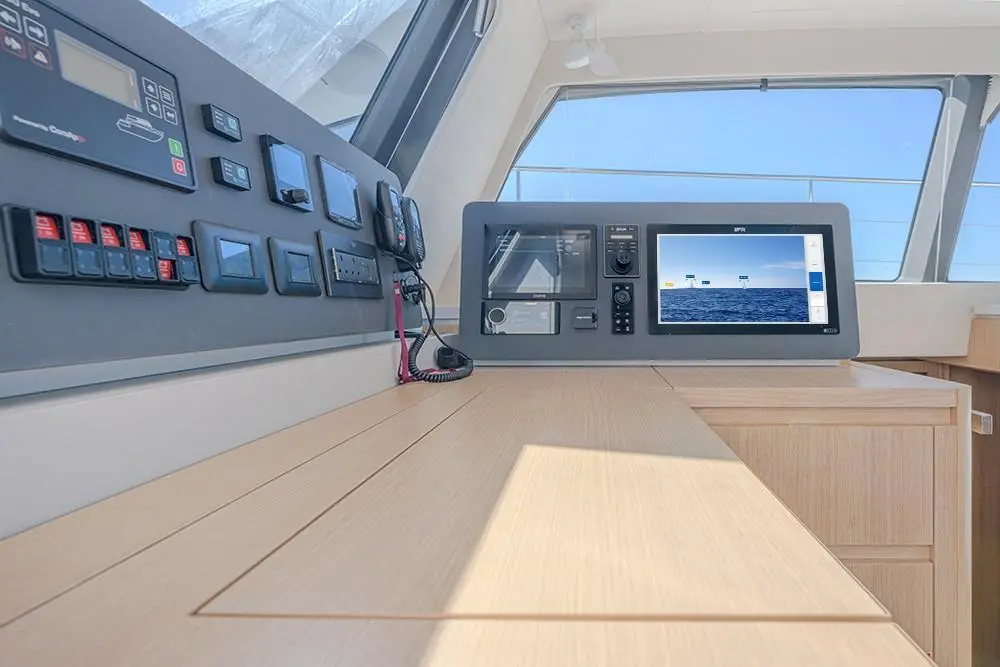
The decision follows years of collaboration between the shipyard and the AI navigation company, and reflects growing interest in safety technologies among long-range sailors and cruising families.
Antoine Maillot, CEO of the company, said the technology reinforces the shipyard’s core values.
“SEA.AI naturally strengthens Privilège Marine’s long-standing philosophy: creating yachts that combine ocean-proven robustness, absolute safety, and bespoke comfort for long-range cruising,” he said, describing the system as ‘an intelligent layer of vigilance’ that helps crews detect potential risks earlier while under way.
The integration of AI-based monitoring is intended to support crews during demanding offshore conditions and long passages, particularly when fatigue can become a factor.
Charles Dauzet, Product Marketing manager at Privilège Marine, said existing navigation systems already met high standards but traditional equipment could struggle to reliably detect floating hazards such as shipping containers, especially in poor visibility.
He said SEA.AI adds continuous forward-looking monitoring and AI-assisted object detection designed to supplement conventional sensors and human observation.
Maillot said the decision reflects a broader strategy focused on innovation and long-term development.
“This decision affirms that Privilège Marine shipyard is committed to pushing safety standards further,” he said, describing the technology as part of a wider evolution in offshore cruising.
The integration signals a growing trend in the marine industry towards combining traditional seamanship with advanced monitoring tools as cruising vessels adapt to new expectations around safety and navigation.
SEA.AI’s solutions
SEA.AI, which recently sponsored a Maritime Journal Special Report, Autonomy at Sea, is based in the US and has offices in European countries and Australia.
Its optical and thermal vision systems use artificial intelligence to detect, identify and alert skippers to objects around the vessel, including those that radar and AIS may miss.
Its high-resolution cameras and maritime-trained algorithms provide:
- Continuous vigilance and improved security onboard
- Detection of unidentified floating objects, debris, containers, or small craft
- Whale strike prevention
- Night-time and low-visibility awareness (fog, glare, rain)
- Visual and audible alerts for high-risk detections or people in the water (MOB)
- Lookout assistance, especially during short-handed sailing
- Bird’s-eye view from the top of the mast, helping to choose a safe anchoring spot
- Safer manoeuvring and arrival in marinas, especially at night.