![MaritimeJournal[Seawork]](https://www.maritimejournal.com/wp-content/uploads/2026/09/MaritimeJournalSeawork.svg)



Second partnership aims to give ageing fleets second wind
A new European research partnership is seeking to demonstrate how artificial intelligence and low-cost retrofit technologies can help reduce emissions from vessels already in service, reflecting a growing trend towards collaborative projects aimed at improving fleet efficiency without major capital expenditure.
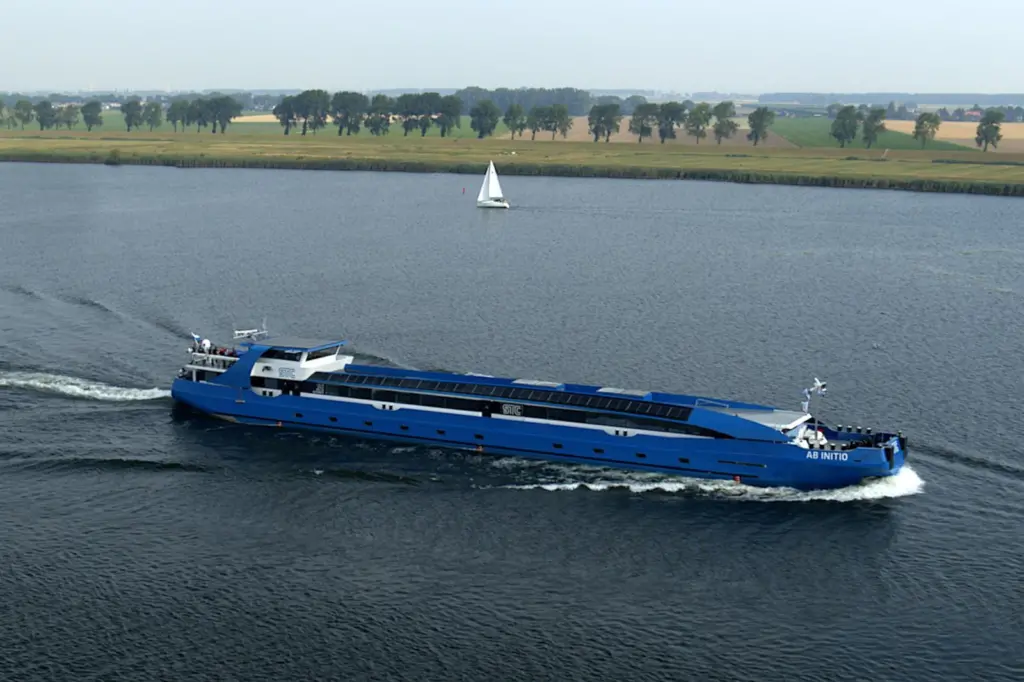
Maritime Journal reported last week on another project that aims to help shipowners modernise ageing vessels rather than build new ones, also using AI.
The one announced in Germany today is called AIMPERES (AI-driven Modular Platform for Emission-Reduction & Efficient Shipping), and is a three-year project bringing together 10 organisations from six countries, such as research institutes, maritime academies, technology providers and vessel operators, to develop and validate an AI-based energy management platform for inland, coastal and deep-sea ships. The initiative is coordinated by Germany’s Fraunhofer IEM and has secured €4.17 million in Horizon Europe funding.
The project will focus on reducing fuel consumption and emissions from existing tonnage, recognising that much of today’s fleet is expected to remain in operation beyond 2040.
Rather than relying on newbuilds, the consortium aims to demonstrate how operational optimisation and retrofit technologies can provide near-term environmental gains.
Intelligence and monitoring
At the core of the initiative is a modular energy management system that combines real-time emissions monitoring, artificial intelligence, hybrid digital twins and crew decision-support tools.
Designed to interface with existing onboard systems, the platform is intended to provide recommendations to crews and operators based on continuously analysed operational data. The system incorporates low-cost exhaust monitoring, vessel performance models and AI-driven optimisation algorithms to identify opportunities for improved efficiency.
The technology will be tested aboard inland, coastal and deep-sea vessels, with the project targeting fuel savings and emission reductions of at least 5%, including cuts in CO₂, NOₓ, SOₓ and particulate matter. The consortium says the demonstrations will assess how AI-assisted optimisation can be deployed across different vessel segments while minimising the need for extensive modifications.
Partners include organisations from Germany, Belgium, France, Italy, the Netherlands and Norway, illustrating the increasing role of multinational collaborations in developing practical retrofit solutions for the existing European fleet.