![MaritimeJournal[Seawork]](https://www.maritimejournal.com/wp-content/uploads/2026/09/MaritimeJournalSeawork.svg)




Expeditionary survey boat completed
A newbuild Expeditionary Survey Boat (ESB) that provides insight into underwater conditions has been completed for the Royal Netherlands Navy (RNLSN).
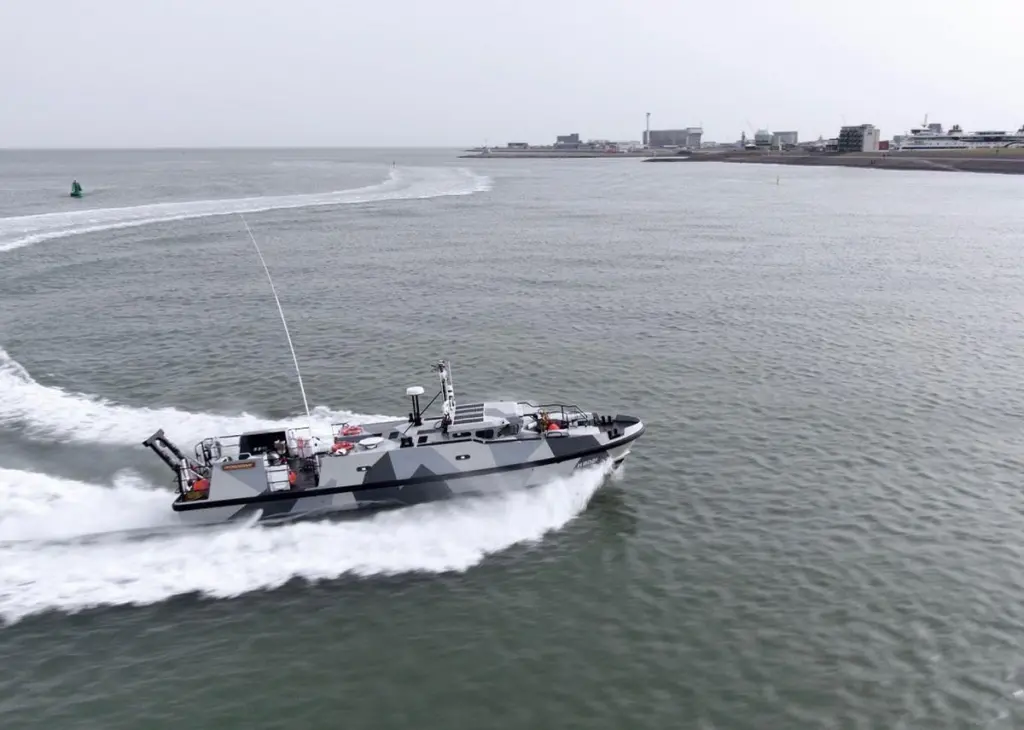
Last month, the naming ceremony of the 16m long Hydrograaf ESB took place at Damen Shipyards Den Helder (DSDH). After the naming ceremony, the ESB was symbolically handed over by DSDH to the Defense Materiel Organization (DMO). The ESB is now being prepared for handover to the RNLSN, which will start operating the vessel after a work-up period of several weeks.
The design and construction of the Hydrograaf was realised in close collaboration between the DMO and DSDH. Peter van den Berg of DSDH, said: “Our project manager, together with the Ministry of Defence team, delivered a high-tech performance in the design and construction of this new type of ship.”
Facilitating safe navigation
The Hydrograaf’s main tasks are gathering environmental information to make decisions about the possibilities of an amphibious operation; performing hydrographic survey operations in support of emergency relief operations; and supporting with civil hydrographic tasks on the national continental shelf.
This ESB will provide up-to-date information about the soil conditions and the situation below the waterline in places where that insight is required. With this information, the RNLSN supports expeditionary maritime operations and provides an environment in which ships can navigate safely.
24t holding weight
The Hydrograaf can receive a maximum weight of 24t, in connection with the maximum permissible loading weight of the Davits hoisting installation on ships such as HNLMS Johan de Witt. At the same time, the ship was designed to reach a speed of at least 20 knots, with very low noise requirements and has met the challenge of limited space for carrying hydrographic equipment.
The ESB can be deployed from the so-called big decks, such as on Zr. Ms. Johan de Witt. The ESB can independently perform hydrographic surveys under tactical conditions at a greater distance from the mother ship. She is a fully fledged platform that is comparable to a hydrographic survey vessel (HOV) and meets the highest survey standards.
The name Hydrograaf has been chosen in honour of the National Inspection Vessel Hydrograaf from 1910, as well as being a reference to the primary task.
By Rebecca Jeffrey
Related Articles
 OFFSHORE RENEWABLES
 OTHER NEWS
 MERGERS & ACQUISITIONS