![MaritimeJournal[Seawork]](https://www.maritimejournal.com/wp-content/uploads/2026/09/MaritimeJournalSeawork.svg)





Transit array trial success
A new high-resolution deep-water multibeam echosounder system has just successfully completed its first trials off the coast of Florida.
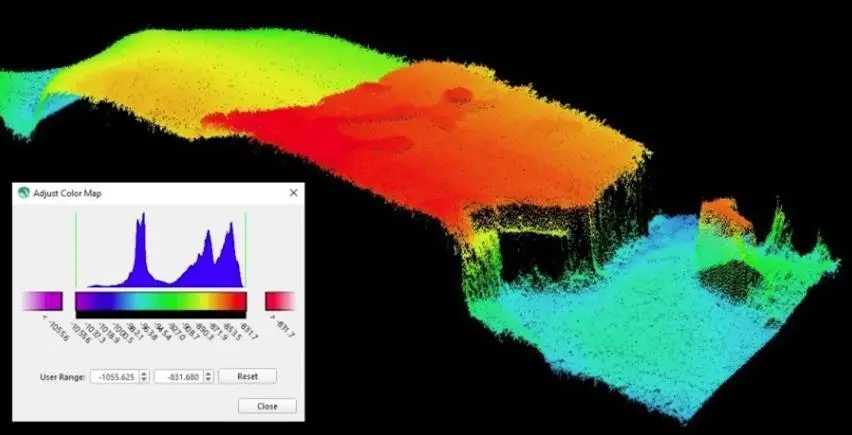
Okeanos Explorer is the first vessel in the world to be fitted with Kongsberg Maritime’s EM 304 MKII transmit array – an upgrade of the EM 302 deep-water multibeam system which has been deployed daily since the ship was originally launched in 2008. The new EM 304 MKII was put through its paces over the course of a 25-day expedition on board Okeanos Explorer, conducted by a team from NOAA Ocean Exploration, the US federal organisation devoted to the exploration of deep ocean environments.
The motive behind the expedition was to assess the functionality and readiness of all mapping-related equipment on the vessel – including an official authorisation of the new EM 304 MKII system – before the remainder of the field season commences. Receiving a green light from the NOAA verifies that this equipment is capable of collecting the most accurate, high-quality survey data and sharing it with hydrographic communities. By enabling the team to optimise the planning and execution of surveys, it will ensure that all forthcoming missions produce definitive results in the most cost-effective manner.
The EM 304 MKII has been designed to increase the efficiency of deep-water mapping work by enhancing the quality of harvested data and expanding the achievable coverage area. KM’s multibeam systems have a well-founded reputation for producing exceptionally clean data across the entire swath width, but the improved, future-proof MKII EM platform uses an innovative datagram format which supports several new features including extended backscatter calibration. More new features are currently being developed.
As with all Kongsberg EM multibeam echo sounders, the EM 304 MKII has been designed to minimise any potential impact on ocean ecosystems, emitting the lowest-possible sound levels so as to help in safeguarding marine organisms within survey areas.
By Jake Frith
Related Articles
 OFFSHORE RENEWABLES
 OTHER NEWS
 MERGERS & ACQUISITIONS